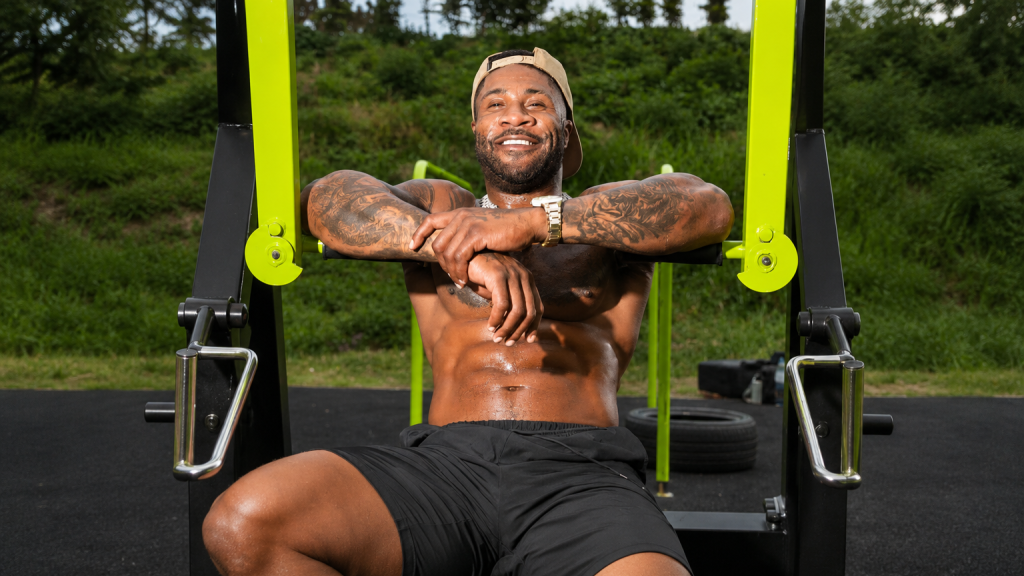
As a young man, Andrew Akuruka imagined a very different future for himself. A traditional Nigerian wedding, a family and his relatives’ approval were to give him a socially respected life. To achieve this, the gay Briton of Nigerian heritage was prepared to keep his sexual orientation secret for good. Today, he is about to take a step he could scarcely have imagined back then: he will represent Nigeria at the international Mr Gay World competition – openly as a gay man.
Key points at a glance
- Nigeria at Mr Gay World: Andrew Akuruka, a gay Briton of Nigerian heritage, will represent Nigeria at the international Mr Gay World competition.
- Planned sham marriages: He and his partner once intended to marry a lesbian each to conceal their homosexuality from their families and society.
- Criticism of his participation: After announcing his candidacy, Akuruka faced hostile comments. These included claims that his participation on Nigeria’s behalf was illegal.
- Identity and heritage: Akuruka was not born in Nigeria but grew up in south London. Nevertheless, he regards his Nigerian roots as an essential part of his identity.
- Questioning ideas of masculinity: He criticises social expectations that pressure men to hide their fears, vulnerability and sexual orientation.
- Coming out remains a personal decision: Akuruka wants to encourage other gay men, but stresses that nobody should have to put their safety at risk by coming out publicly.
A sham marriage to a lesbian
To lead an outwardly socially acceptable life, Akuruka once developed a specific plan. He and his partner at the time intended to marry a lesbian each. Both marriages were meant to create the appearance of traditional family arrangements, while the actual sexual orientation of all four people involved would have remained hidden. Akuruka hoped this would allow him to continue to be seen as a respectable son and avoid disappointing his family. “I used to believe I could have a traditional Nigerian wedding, gain approval and respect, and at the same time hide the part of me that is gay,” he recalls. The planned weddings were intended to offer him more than just social security.
He also wanted his relatives to attend, a big celebration and the feeling that he had lived up to the expectations of the people who mattered to him. Looking back, he sees this idea in a fundamentally different light. Four people would have had to organise their entire lives around a secret. For the outward appearance of a respectable future, he would have been willing to deny essential parts of himself. “I thought marriage would make me belong. In reality, though, I was planning a life in which I would only have been welcome as long as nobody knew the real me.” In doing so, he says, he had overlooked a crucial distinction: being tolerated by society was far from the same as being accepted in every aspect of one’s personality. “Having a seat at the table is not the same as being able to bring your whole life openly to that table,” Akuruka writes.
Under Nigeria’s flag
His life today stands in stark contrast to those earlier plans. Rather than hiding his homosexuality, Akuruka will appear publicly as a gay man at Mr Gay World, carrying the Nigerian flag. To outsiders, this may primarily look like an appearance at an international competition. For him, taking part has a much deeper meaning. “Other people may see a flag, a sash and a man on a stage. I see a part of my life that I once believed I had to hide, now visible to everyone.”
Akuruka describes himself as British Nigerian. He was not born in Nigeria but grew up in south London. Nevertheless, through his family and heritage, the West African country is closely connected to his personal identity. At the same time, he makes clear that he does not claim to speak for gay men living in Nigeria. Their circumstances and experiences could differ considerably from his own. However, he refuses to let his heritage be denied because he is openly gay. “Nigeria is part of my family and my identity. I can stand under its flag without having to hide any part of myself,” he explains.
Criticism of his candidacy
Akuruka discovered that this stance was not universally welcomed soon after publicly announcing his participation. Responses included claims that it was illegal for him to represent Nigeria at the competition. Akuruka describes one comment that particularly reminded him of his own past. In essence, he says, it reflected precisely the contradiction he had once been willing to accept himself: he could identify with Nigeria, but only if he hid his homosexuality. “Keep the flag, but give yourself up. Give your family the wedding, but hide the man you love. Preserve their honour by making your life a secret,” he says, summing up this expectation.
He believes such messages can have a particularly strong influence on young gay men. Those who repeatedly hear that their sexual orientation is incompatible with their heritage may begin to shape their future around that idea. Akuruka knows this conflict from personal experience. After all, he himself had long believed that he could only be regarded as a full member of his family and cultural community by hiding his homosexuality. In Nigeria, same-sex relationships are criminalised and can be punished by up to 14 years in prison; in twelve northern states, they can even carry the death penalty under Islamic law. Gay men and lesbians also face considerable social hostility (German): human rights organisations report arbitrary arrests, violence, discrimination and blackmail.
Heritage and identity
Through his appearance at Mr Gay World, Akuruka hopes to offer other men a different perspective. A young Nigerian who sees him on stage might realise that being gay does not make him any less Nigerian. “Perhaps one day he will see me standing under that flag and realise that it was never his sexual orientation that made him any less of a true Nigerian. It was other people’s acceptance that came with conditions.” However, Akuruka cautions against overestimating the impact of public role models.
His participation in a competition cannot eliminate social prejudice or ensure that families accept their gay relatives. Above all, it cannot guarantee that coming out will be safe for another man. “My public visibility can show him that there is a life beyond hiding. But it cannot make the decision for him about whether he should be open about his sexual orientation. That decision belongs to him alone.” Akuruka thus explicitly rejects the notion that every gay man must make his sexual orientation public to live confidently or authentically.
Troubling ideas of masculinity
Alongside attitudes towards homosexuality, Akuruka examines traditional ideas of masculinity. Many boys learn early on that men should not show weakness or ask for help, and should keep their fears to themselves as far as possible. These expectations can lead them to conceal important parts of their lives even from close confidants. “A man can be praised for needing nobody and at the same time have nobody he can confide his fears in,” Akuruka writes. For some gay men, a particularly masculine manner therefore becomes a kind of defence mechanism. Those who meet society’s expectations of masculinity may be able to avoid others questioning their sexual orientation.
Yet this protection comes at a price. Acceptance then depends on essential personal qualities remaining unknown. “Some gay men use their masculinity as camouflage. That can protect them. But if people only accept you because they do not really know you, then you may be accepted, but you remain unknown as a person.” Akuruka does not observe these mechanisms solely in Nigerian communities. In other societies too, gay men face the expectation that vulnerability is a sign of insufficient masculinity. Added to this are the experiences of men who face disadvantage because of their skin colour or heritage. While they may sometimes be welcomed as visible representatives, they are excluded from important decisions.
A positive example
By taking part in Mr Gay World, Akuruka wants to set a positive example for men who feel torn between their sexual orientation, traditional ideas of masculinity and their cultural heritage. “If a man watching me in Nigeria, London or anywhere else in the world thinks, ‘I can be masculine and gay and still belong to the place I come from,’ then that is exactly the message I want to convey to him.” For Akuruka, his forthcoming appearance under the Nigerian flag is therefore more than a personal accolade. It represents a journey from a planned double life to a public affirmation of his own identity – without any expectation that other gay men must follow the same path.








