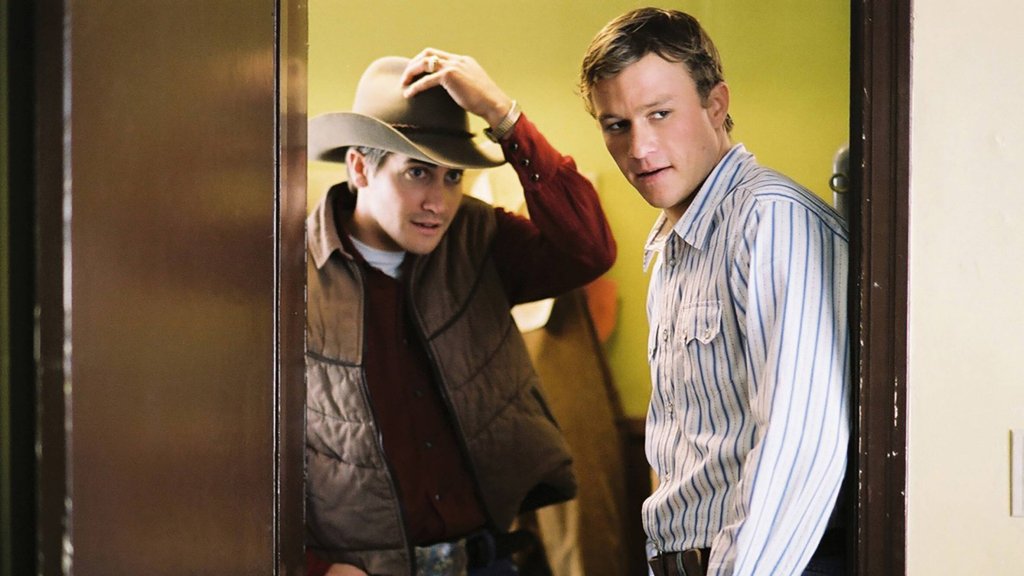
The world-famous love story between two men in “Brokeback Mountain” (German), whose film adaptation celebrated its 20th anniversary last year, was not originally planned that way at all. American writer Annie Proulx has now explained that her two main characters, Ennis del Mar and Jack Twist, were not initially conceived as gay men. It was only an experience in a remote restaurant, she said, that prompted her to fundamentally change the plot.
Key points at a glance
- Surprising origins: Annie Proulx had not originally planned to portray the two main characters in “Brokeback Mountain” as gay men.
- A homophobic incident as the catalyst: A restaurant owner told the writer how she had treated two presumably gay customers badly and thrown them out. Proulx then changed her story.
- Criticism of misguided expectations: The Pulitzer Prize winner later became frustrated with readers who demanded a happy ending. In her view, the story is primarily about homophobia and social constraints.
- Famous ending added later: The short story's final sentence was also written only shortly before the manuscript was completed.
A hateful restaurant owner
In an interview with US radio broadcaster NPR, the Pulitzer Prize winner recently spoke to presenter Scott Simon about the origins of what is probably her best-known short story. She made clear that her original aim had primarily been to describe the difficult living and working conditions of two men in the US state of Wyoming. “It's about two men who could find no work in Wyoming other than herding sheep – an extremely unpopular job,” Proulx explained. The love affair between the two main characters emerged only relatively late in the writing process. By then, the author had already completed a substantial part of the story. A chance lunch stop provided the decisive impetus. While driving, Proulx had stopped at a small restaurant on a remote road.
There she encountered an owner who was fuming about two customers from the previous evening. “I happened to stop for lunch at an odd little restaurant on a remote road,” Proulx recalled. The owner had been in an extraordinarily agitated state. The reason, she said, was two men who had visited the restaurant the evening before. “The owner was beside herself with rage, ranting and stamping her feet. She had had two customers the night before. From the way she described them, they were obviously two gay men. She didn't like that at all. She had served them quite badly and eventually asked them to leave.”
Homophobia as the catalyst
The overt hostility towards the two men apparently made such an impression on Proulx that she decided to take the story she had already begun in a different direction. “At that point, I was about halfway through writing my story about the two sheepherders,” she reported. “After that experience, I made them gay.” Before that, Ennis and Jack “had not been gay up to a certain point in the story”, the writer explained. What had originally been planned as a story about two sheepherders thus became a story about a secret love affair and the social conditions under which it had to take place.
Secret love
“Brokeback Mountain” first appeared in the American magazine “The New Yorker” in 1997. Two years later, the short story was published in Proulx's collection “Open Range”. It centres on Jack Twist and Ennis del Mar, who meet while working as sheepherders in Wyoming in 1963. A love affair develops between the two men, which they keep largely secret over the following two decades. Their story is shaped by social expectations, personal conflicts and fear of the consequences of living openly in a gay relationship. The story ends tragically and became one of the best-known works of literature about love between two men. In the author's view, “Brokeback Mountain” appeared at precisely a time when the subject had particular social significance. The story was “published at a time when such a story was needed”, Proulx said in the NPR interview.
Oscar-winning film adaptation
“Brokeback Mountain” reached an even wider audience through director Ang Lee's 2005 film adaptation of the same name (German). Heath Ledger took on the role of Ennis del Mar, while Jake Gyllenhaal played Jack Twist. The film received international acclaim and won several Oscars, and still ranks among the best gay films. The adaptation played a decisive part in making the two men's story known worldwide. At the same time, the work became an important reference point for the portrayal of same-sex relationships in mainstream cinema. For Annie Proulx, however, this success also had unexpected consequences. For years, the author faced reactions to her story that became an increasing burden. In the latest interview, she joked about how difficult it was to escape “Brokeback Mountain”. She had already made clear on earlier occasions how much certain reactions to the work irritated her.
Anger and frustration
Proulx spoke particularly openly about her disappointment in a 2009 interview with the literary magazine “The Paris Review”. “I wish I'd never written the story. Since the film came out, it has brought me nothing but anger, problems and frustration,” the writer said at the time. Her anger was prompted above all by readers who refused to accept the love story's tragic outcome. Some had apparently expected Jack and Ennis to be able to live happily together in the end after all. “Many men have decided that the story should have had a happy ending,” Proulx said.
In her view, however, this missed the story's real point. The author had not simply wanted to write a romantic story about two men, but to show how social rejection and moral attitudes shape their lives. “They can't understand that the story isn't about Jack and Ennis. It's about homophobia, about social conditions, about a particular place and a particular mindset and morality. They just don't get it.” For Proulx, the tragedy of “Brokeback Mountain” is therefore directly linked to the social environment of its two main characters. As she sees it, the story shows the consequences when same-sex relationships have no place in an environment shaped by prejudice.
The crucial final sentence
The writer's latest comments make clear how closely the story's origins were linked to a specific observation of homophobia. As well as revealing the surprising origins of the love story, Proulx also shared a detail about the ending of “Brokeback Mountain” in the NPR interview. The final sentence, which is among the short story's best-known lines, was not originally in the manuscript. In the English original, it reads: “If you can't fix it, you've got to stand it.” The German rendering of the sentence means, in essence, “If you cannot change it, you must endure it.” According to the author, this wording emerged only at a late stage of completion. Proulx explained that she generally attaches great importance to the closing sentences of her stories and often revises them. Her literary agent could also confirm that Proulx sometimes makes changes to the final sentence even after completing a manuscript. That was exactly what happened with “Brokeback Mountain”. “The final sentence wasn't there yet. I had to call her and add it.”








