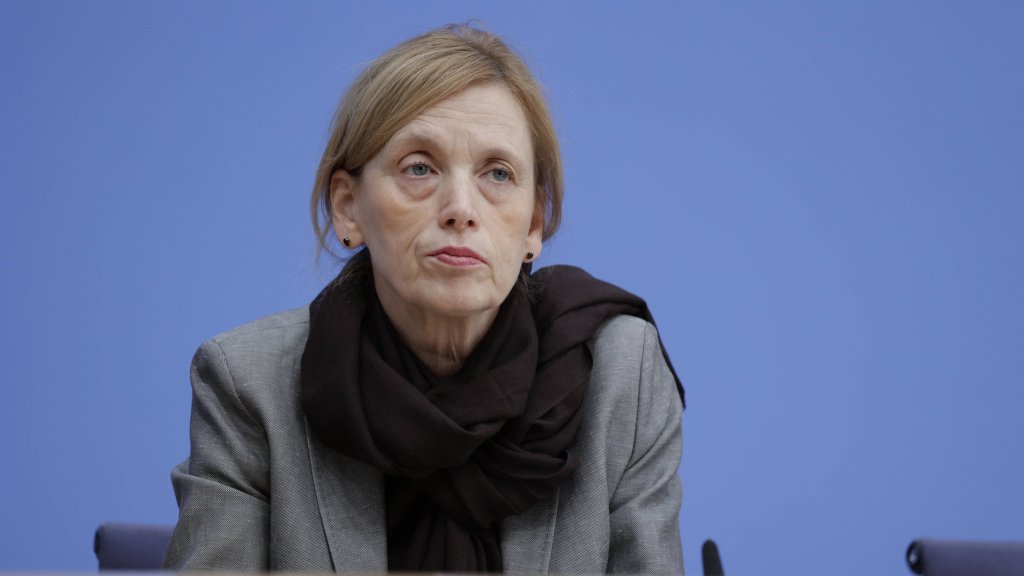
Numerous initiatives tackling discrimination, right-wing extremism and hostility towards others face an uncertain future. The German government has fundamentally restructured its “Demokratie leben!” funding programme. Since mid-November, organisations across Germany have been receiving rejections for projects, some of which had been established for years. The decisions appear to be hitting smaller LGBTQ+ organisations and centres offering advice, civic education and prevention work particularly hard.
The key points at a glance
- Major cuts: numerous organisations previously supported by the federal “Demokratie leben!” programme will receive no further funding. Projects originally scheduled to run for longer are also affected.
- Only 150 projects selected: of around 1,200 expressions of interest submitted in the autumn, 150 were selected. Around 40 per cent of the selected providers are new to the programme.
- LGBTQ+ services at risk, including several organisations. Support centres for LGBTQ+ young people and adults face closure, particularly in eastern Germany. Fixed-term employment contracts are coming to an end.
- Criticism of new funding guidelines: explicit references to anti-LGBTQ+ hostility and the term “diversity” are absent from the new requirements.
- Schools also affected: the “Schule ohne Rassismus – Schule mit Courage” network says it is losing around 40 per cent of its previous funding.
- Ministry defends new direction: Federal Education Minister Karin Prien (CDU) wants to reach more people in everyday social settings and involve new providers.
Many projects being wound down
The consequences range from substantial financial losses and job cuts to the closure of support centres. Projects originally intended to continue until 2028 or 2032 are also affected. It is not just the number of rejected applications that is drawing criticism. Representatives of civil society organisations accuse Federal Education Minister Karin Prien (CDU) of using the restructuring to weaken precisely the structures she says she wants to strengthen: services in schools, youth centres and rural areas. The ministry has not yet published a complete list of the organisations whose applications were rejected.
The federal “Demokratie leben!” programme was developed as a political response to the far-right murders committed by the Nationalsozialistischer Untergrund (NSU). Since 2015, the federal government has used it to support projects that promote democratic participation, strengthen social diversity and tackle extremism and discrimination. In spring 2026, the German government decided to end the current funding period early, at the end of the year. This also affects projects whose funding was originally intended to last until 2028 or even 2032. At the same time, the funding structures were reorganised.
150 out of 1,200 applications
The existing programme areas “Innovation Projects” and “Development of a Nationwide Infrastructure” are being discontinued. The latter covered 70 projects that had built cross-regional networks and partnerships addressing issues including LGBTQ+ matters and right-wing extremism. They are being replaced by the areas “Democratic Education and Extremism Prevention” and “Digital Space”. A special initiative, “Integration and Participation”, is also being added. The new digital focus specifically covers media literacy, democratic education online and the prevention of online extremism.
According to the Federal Education Ministry, around 1,200 expressions of interest were received in the autumn for the first stage of the two-stage selection process. Just 150 projects were selected for funding. The ministry says around 40 per cent of the organisations selected are new providers that had not previously submitted a project under the programme. In addition, each organisation will be allowed funding for no more than one project in future. A ministry spokesperson told the Frankfurter Rundschau: “This creates a balanced mix of new and established organisations. Alongside a diversity of providers, the selection takes account of a carefully balanced weighting of subject areas and a broad and equitable regional distribution, with projects and impact in all 16 federal states.”
LGBTQ+ organisations lose out
Organisations campaigning for the rights of gay, lesbian, bisexual, trans and intersex people have reacted with particular concern. Feedback from the LGBTQ+ community suggests that numerous smaller initiatives are among those losing out from the restructuring. Local services in particular could disappear permanently as a result. Among the institutions affected is Akademie Waldschlösschen, an education and conference centre known beyond its region. Among other things, it offers workshops for adults on civic education, anti-discrimination, and gender and sexual diversity. The organisation “Intergeschlechtliche Menschen” is also among those whose projects will receive no further funding. Both institutions are cooperation partners of the Berlin-based national association “Queere Vielfalt”.
The national association itself is also facing substantial financial losses. A spokesperson confirmed “major financial cuts” to the Frankfurter Rundschau. With attacks on minorities increasing, the association considers the decisions particularly problematic. “The rise in extremism and hostility towards others should really have led to an expansion, not cuts,” the spokesperson said. In the organisations’ view, there is a risk that existing advice and education services will be reduced just as demand is growing.
Support centres forced to close
The example of an LGBTQ+ organisation in an eastern German federal state shows the practical consequences of the funding decisions. The organisation had submitted funding applications for two areas of work. One project was intended to train professionals in working sensitively with LGBTQ+ people. The other addressed gender-based violence and was aimed at teenagers and young adults in schools. Both applications were rejected. The organisation’s staff jointly decided to remain anonymous. They fear that publicly criticising the ministry could harm their chances in future funding applications.
Speaking to the Frankfurter Rundschau, one person from the organisation described an increasingly tense situation. “We are seeing a massive rise in anti-queer attacks. It is regrettable that diversity projects like ours are not being funded on a scale that reflects this,” the person said. The financial consequences are substantial. According to the organisation, advice and support centres for LGBTQ+ young people and adults will also have to close at the end of the year. Fixed-term employment contracts are also expiring. The organisation will have to significantly reduce its presence in rural areas. Specialist services are often particularly difficult to access there. The loss of individual centres can therefore leave local people with hardly anyone they can turn to in person.
“Diversity” disappears
Alongside the financial cuts, a change in the substance of the funding conditions is drawing criticism. While the previous German government, formed by the SPD, Greens and FDP, explicitly set out diversity, tolerance and democracy as central aims, the corresponding terms are missing from the new guidelines. The previous requirements explicitly named anti-LGBTQ+ hostility as a form of group-focused hostility. Under Federal Education Minister Prien, the term “diversity” was removed from the funding guidelines. LGBTQ+ people are also no longer explicitly mentioned. The ministry justifies the change by arguing that “diversity” is too vague as an umbrella term.
Instead, various forms of extremism are explicitly listed under the focus on extremism prevention. These include right-wing extremism, left-wing extremism, Islamist extremism and other forms of group-focused hostility. Responding to an enquiry, the ministry also explained that it understood extremism to mean “right-wing and left-wing extremism, antisemitism, antigypsyism and other manifestations of group-focused hostility”. Preventing violence against LGBTQ+ people is thus no longer mentioned separately, but is at most subsumed under the general term group-focused hostility. For the organisations affected, this raises the question of how much importance work tackling anti-LGBTQ+ hostility will be given within the federal programme in future. It had already emerged in the summer that Lambda, the largest queer youth network, would also lose all its funding at the end of the year.
Funding in everyday settings
The Federal Education Ministry rejects criticism of the programme’s overall direction. It says that in future, more funding should flow directly into specific projects. The aim is to bring “democratic education and extremism prevention more firmly (…) into everyday social life”. At the same time, more people from the “mainstream of society” are to be reached. To achieve this, the ministry is focusing particularly on services in schools, vocational schools, youth work settings and sports clubs. The German government says it wants to embed democratic education more firmly in existing social structures.
However, numerous existing providers point out that their projects have already been working in precisely these areas for years. Many organisations work directly with schools, youth centres and local institutions. They therefore see a contradiction between the political justification for the reform and the actual funding decisions. The ministry recently announced an additional €10 million to promote democracy in the eastern German federal states.
“Schule ohne Rassismus”
The cuts do not only affect LGBTQ+ projects. The national coordinating office of the “Schule ohne Rassismus – Schule mit Courage” network must also cope with substantial reductions. The nationwide network supports schools in addressing racism, discrimination and democratic values. Managing director Carsten Völtzke reports that, based on the announcements so far, around 40 per cent of funding from the federal programme will be lost. In view of social and political developments, he considers this dangerous.
The network’s work is increasingly coming under attack from right-wing political actors, particularly in the eastern German federal states, he said. “The AfD submits countless questions and motions about us and our work at state level,” Völtzke said. Dealing with these parliamentary initiatives takes up substantial staff resources. At the same time, the attacks repeatedly cause uncertainty within the network and among its cooperation partners. Expectations of the organisation from state authorities are also rising, he added. “We are observing that official expectations of us are increasing,” Völtzke explained. Additional training was being demanded, for example, and there were “attempts to transfer the state’s responsibility for democratic education to us”. This was putting civil society institutions under increasing pressure while their financial resources were being restricted.
Lack of transparency
Alongside the substantive and financial consequences, associations are criticising the process for allocating funding. According to several organisations, providers were asked during the summer break to register their interest in further funding at short notice. They also said that long-running projects had been rejected without sufficient reasons being given for the decisions. Several organisations confirmed to the Frankfurter Rundschau that they had received no specific explanations for the rejection of their applications. Heiko Klare of Bundesverband Mobile Beratung sees this as a sign of an increasingly difficult relationship between state bodies and civil society institutions. His association supports organisations and institutions across Germany in dealing with right-wing extremism. “This entrenches the narrative of good and bad civil society,” Klare criticised. He observes growing mistrust towards his association and other civil society structures. The handling of funding applications reinforces this impression, he said.
Staff being laid off
The financial consequences of the reform also directly affect Bundesverband Mobile Beratung. According to Heiko Klare, its national coordinating office will be unable to retain around a third of its staff. This threatens not only to create staffing shortages in the support provided to individual organisations. The nationwide exchange of experience and findings from prevention work will also be restricted. The association pools information on far-right developments and supports institutions in responding appropriately to the resulting challenges. With the loss of funding, a key area of its existing work will have to be discontinued. “We can no longer make the information and findings from our work publicly available and usable, produce guidance materials or advise national associations such as welfare associations,” Klare said.
The future of democracy funding
The restructuring of “Demokratie leben!” is thus leading to a fundamental conflict over future state support for civil society organisations. The Federal Education Ministry is pursuing a different distribution of funds, new providers and a stronger integration of democratic education services into everyday social life. Critics counter that established structures could be lost before new services can take over their tasks. This contrast is particularly clear among smaller LGBTQ+ initiatives, whose work often depends on individual funded projects. While the ministry points to a balanced distribution of funds across all 16 federal states, affected organisations are already reporting closures, expiring employment contracts and withdrawal from rural areas.








