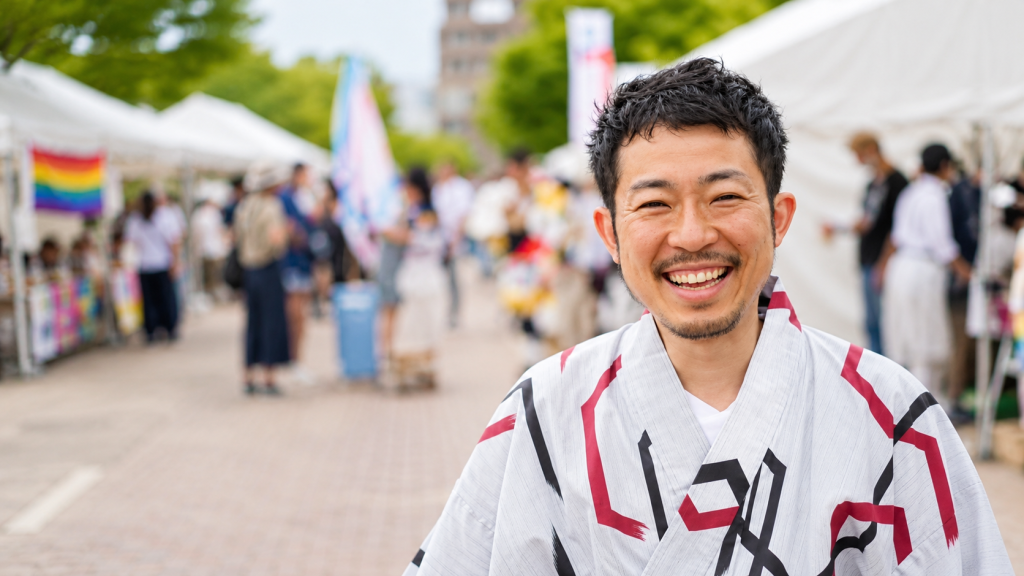
Japanese trans activist Akira Aramaki won over only a small number of voters in the first round of voting in his historic bid to become mayor of the city of Fukuoka. In the election in mid-November 2026, the 41-year-old received just 3,757 votes, representing a share of around 0.63 per cent. This put him in twelfth place out of 13 candidates. The community is nevertheless celebrating his courage and determination.
Key points at a glance
- Trans activist Akira Aramaki, 41, stood for mayor of the Japanese city of Fukuoka.
- He was the first openly trans person to seek the highest municipal political office in a major Japanese city with special administrative status.
- In the election on 15 November, Aramaki received 3,757 votes and finished second to last among 13 candidates.
- As none of the candidates reached the legally required minimum of 25 per cent, the election must be rerun.
- Aramaki's election platform focused on adapting the education system to the age of artificial intelligence.
- It remains unclear whether the long-standing LGBTQ+ activist will stand again in the rerun.
A historic step
The decision on who will lead the city remains open, however. None of the candidates reached the legally required minimum of 25 per cent of valid votes. Former member of parliament Shuji Inatomi received the most votes (23.23 per cent). Turnout was around 46 per cent. The election rerun is expected to take place on 17 January 2027. It is not yet known whether Aramaki will stand again, although the local queer community is encouraging him to do so.
Regardless of his election result, Aramaki broke new political ground with his candidacy. He was the first openly trans person to seek the highest municipal political office in one of Japan's major cities with special administrative status. Fukuoka is the largest city on Kyushu, an island in southern Japan. Aramaki has been active in the regional LGBTQ+ community for years. He heads the Fukuoka-based awareness-raising organisation “Over The Rainbow” and is a member of the organising committee of Kyushu Rainbow Pride. He also co-founded a non-profit organisation that works with property companies to help LGBTQ+ people find safe housing.
Education and AI
Standing for the Kokoro Party, Aramaki set political priorities that went beyond questions of gender identity. His election platform centred on reorienting the education system in response to the growing importance of artificial intelligence. His aim was to give people better opportunities to develop their individual potential. “Starting in Fukuoka, I want to create entirely new forms of politics and economics with education at their heart,” Aramaki said ahead of the election.
In a statement to the media, the activist also made clear that his personal experiences as a trans man influence his political ideas. “I have spent my life feeling uneasy about things that society takes for granted as the ‘norm’,” Aramaki said. “Because of these experiences, I can pay attention to the difficulties faced by people who struggle to make their voices heard or who have fallen through the cracks in the system.” He said his aim was not to represent only the interests of particular sections of the population. Rather, his life experience helped him “develop policies that improve the lives of all citizens”.
The outgoing mayor
The mayoral election was shaped by the withdrawal of incumbent Soichiro Takashima, who had led the city since 2010. Takashima was regarded as a supporter of the LGBTQ+ community. Under his leadership, Fukuoka introduced a partnership system in 2018 that gives same-sex couples a form of legal recognition. Following his withdrawal, 13 candidates sought to succeed him. Aramaki's candidacy is part of a trend towards greater visibility for trans people in Japanese politics. Back in 2003, trans politician Aya Kamikawa was elected to the ward assembly of Tokyo's Setagaya ward. In 2017, Tomoya Hosoda became the first openly trans man in Japan to be elected to public office. Despite this progress, significant legal barriers to the recognition of gender identity remain in Japan. Marriage also remains unavailable to same-sex couples. Despite his small share of the vote, Aramaki's bid to become mayor of a major city represents a slow but discernible shift in Japan's political landscape.








