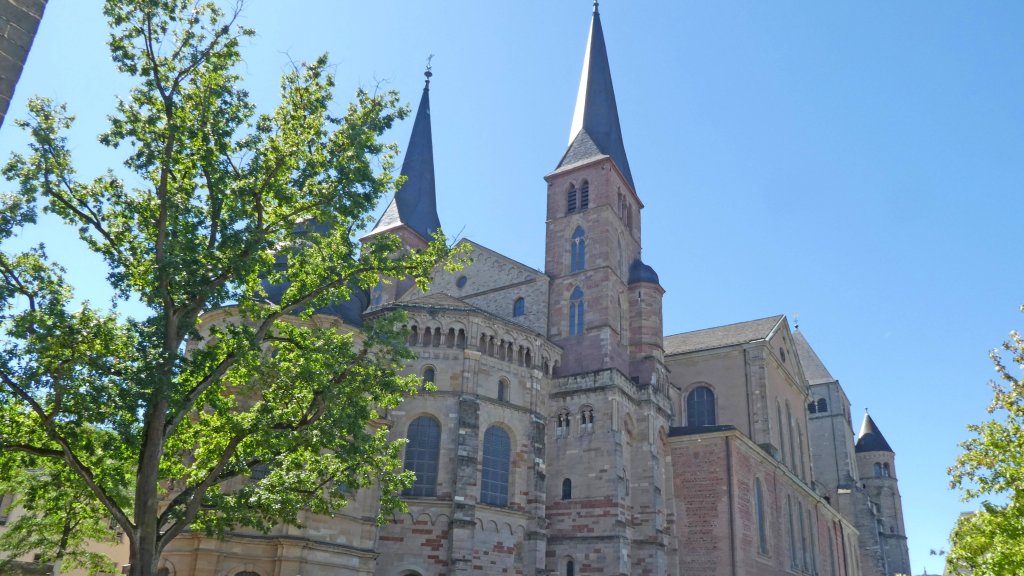
Officials in the Catholic Diocese of Trier covered up cases of sexual abuse and shielded perpetrators for decades, according to historians' findings. A historical study by Trier University documents almost 800 people who were sexually abused by priests and members of religious orders as children or adolescents between 1946 and 2021. The researchers identified more than 250 perpetrators and accused individuals, as reported by SWR. Most of the underage victims were boys under 14.
Key findings at a glance
- Historians at Trier University identified almost 800 people affected, as well as more than 250 perpetrators and accused individuals, for the period from 1946 to 2021.
- Just 35 prolific offenders were proven to have abused at least 438 children and adolescents.
- Around 70 per cent of the victims were boys under 14.
- Church officials protected perpetrators for decades and used international contacts to arrange transfers abroad.
- The researchers are calling for further investigations and a sustained examination of the history of sexual violence.
- The Bishop of Trier, Stephan Ackermann, acknowledges his own failings and apologises.
Church leadership protected perpetrators
Historians Lena Haase and Lutz Raphael spent four years working on the study. They examined numerous files and spoke to people affected and witnesses to the period. However, the figures they established reflect only known cases. It is impossible to quantify how many people remained silent about their experiences out of shame or fear, or how many offences went undetected. The final report brings together the findings of four previously published interim reports and examines the handling of sexual violence during the terms of six bishops of Trier. The researchers found that former bishops Bornewasser, Wehr, Stein, Spital and Marx consistently treated perpetrators leniently.
One particularly serious finding of the study is that some clergymen were able to continue offending across the terms of several bishops. The perpetrators identified include 35 prolific offenders who were proven to have sexually abused at least 438 children and adolescents. Some were already known during Bishop Stein's term, but were able to commit further offences under his successors Spital and Marx without being punished. Only from 2010 onwards, under the incumbent bishop, Stephan Ackermann, did the approach to abuse cases gradually begin to change. In the historians' assessment, however, this shift was primarily a result of public pressure rather than the diocese's own initiative.
Perpetrators sent abroad
The study also examines the role of international Church connections in transferring perpetrators of abuse. Numerous bishops delegated responsibility for such cases to other office-holders. During Bishop Hermann Josef Spital's term between 1981 and 2001, this task fell to the then auxiliary bishop Leo Schwarz. The clergyman, who died in 2018, was shown to have used his contacts with international Church aid organisations such as Adveniat, Renovabis and Justitia et Pax to arrange placements abroad for perpetrators. The relevant authorities in the countries concerned received no information about the previous acts of abuse. In a note held on file, Schwarz pointed out that Ukraine was, after all, a long way from the Diocese of Trier.
The historians identify the period between 1960 and 1974 as a time when much of the documented sexual violence occurred. For the years 1969 to 1974 alone, the study records 18 first instances of sexual abuse each year. Until 1980, many young men chose to enter the priesthood. There were around 100 in total during this period. At times, one in five members of the clergy was suspected of having committed sexual abuse. This proportion declined after 1980. The researchers believe that closer examination of the perpetrators' life histories is also necessary with a view to the training of future priests. The historical investigation has already had an impact on Trier's cityscape. The square behind the cathedral was named after Bishop Stein in 2011. After the researchers made public cases of abuse from his term and his handling of them in 2022, the square was renamed once again. It is now called Platz der Menschenwürde.
Victims were mostly boys
Comparing age groups, the historians found that children aged between nine and 13 faced the greatest risk of abuse. First Communion and, for boys, serving as altar servers played a particular role. Girls were not allowed to take on this role in the Diocese of Trier until 1994. Before then, only boys were therefore affected by sexual violence in this setting. Overall, 70 per cent of those affected by abuse were boys who were younger than 14 at the time. According to the researchers' findings, presbyteries, churches and sacristies were among the most common locations of abuse. Clergymen also exploited confession to sexually assault children and adolescents. Numerous offences also took place in Church-run care homes and boarding schools. In 20 documented cases, the abuse even occurred in the victims' family homes.
The historians see the social and religious structures of the predominantly Catholic diocese as a major factor in many offences remaining undetected for so long. For decades, clergymen enjoyed high and often unquestioned standing. This was compounded by the frequently close personal relationships between priests and the parents of the children affected. Those who tried to speak about the sexual violence they had experienced therefore often met with rejection. According to accounts from those affected, in numerous cases it was their own parents who forced them to remain silent.
Lifelong suffering
For many of those affected, the health and personal consequences of sexual abuse extend into adulthood. According to the study, the consequences are particularly severe for people who were unable to confide in anyone and had to live with their traumatic experiences for decades without support. Possible consequences include depression, anxiety disorders and addiction. The study also documents profound disruptions to the lives of those affected. It was not until the mid-1990s that trauma resulting from sexual abuse was recognised and the corresponding therapies were approved by health insurers. For some of those affected, this development came too late. The historians document three cases in which people took their own lives after suffering sexual abuse.
External pressure
The researchers regard the events at Berlin's Canisius-Kolleg in 2010 as a decisive turning point in the Catholic Church's handling of sexual violence. In February, the institution made cases of sexual abuse public and called on others affected to come forward. The development had an immediate impact on the Diocese of Trier. Between February and May 2010, its vicar general's office received new reports of past sexual assaults almost every day. In the historians' assessment, it was primarily this external pressure that forced Church officials to make changes.
Bishop Ackermann set up an advisory group for the Diocese of Trier in 2010. That same year, he also took on the role of commissioner for abuse issues at the German Bishops' Conference. According to the researchers' findings, however, at the time there was neither the staffing capacity nor the organisational framework to adequately investigate the numerous historical cases that had come to light. Further measures followed only years later. In 2018, the diocese reached an agreement with the public prosecutor's office under which cases of sexual abuse were to be reported immediately. Three years later, a crisis team was established and the independent commission of inquiry was appointed. Those affected had to wait until 2025 before they were granted access to the perpetrators' files.
Many cases remain hidden
Through their study, the historians aim in particular to expose the structures and patterns of behaviour that developed over decades, enabling sexual abuse and making it harder to uncover. The findings are intended to help prevent similar developments in future. At the same time, the researchers acknowledge the limits of their study. Although all available leads had been gathered, they said, there had not been enough time for a more in-depth investigation into the specific circumstances behind the sexual violence. Nor had it been possible to incorporate additional documents, such as those from the seminary. The historians therefore recommend further research into sexual violence perpetrated by priests, taking account of the particular characteristics of different generations.
Bishop's apology
The victims' initiative MissBit responded to the final report with strong criticism of Church officials. The study highlighted the extent of complicity through cover-ups and breaches of official duties, as well as the criminal determination of episcopal office-holders, the association said. The initiative also pointed out that the period examined extended only to 2021. Further cases of sexual abuse had occurred after that date, it said. The Unabhängige Kommission zur Aufarbeitung sexuellen Missbrauchs im Verantwortungsbereich des Bistums Trier (UKA) also commented on the findings. The historical study once again made clear the appalling scale of sexual violence, the commission said. The Bishop of Trier, Stephan Ackermann, said he took the historians' final appeal seriously. Ackermann also acknowledged personal failings. His work as commissioner for abuse issues at the German Bishops' Conference had at times meant that he had not devoted enough attention to those affected in his own diocese. “I deeply regret this and apologise for it,” Ackermann said.








