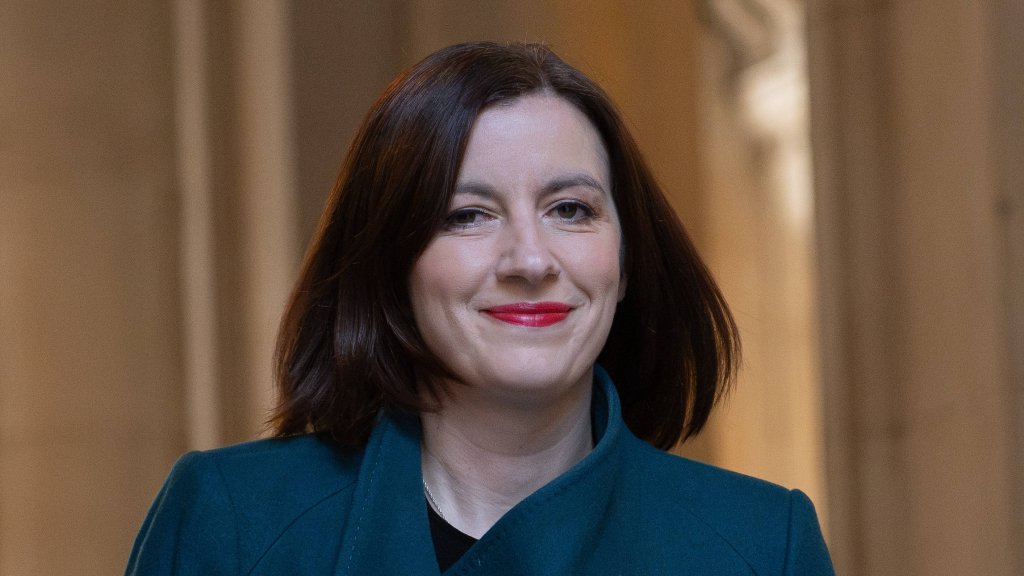
The British Labour government is standing by its planned ban on conversion practices despite growing opposition. Equalities Minister Bridget Phillipson has now rejected calls to question the fundamental premise of the proposed legislation. Religious representatives and other critics had previously called for amendments or for the bill to be withdrawn entirely. Their concerns include restrictions on freedom of expression, according to the British newspaper The Guardian.
Key points at a glance
- British Equalities Minister Bridget Phillipson reaffirms plans to ban conversion practices by law.
- The bill provides for unlimited fines and up to five years in prison.
- Critics fear restrictions on freedom of expression, freedom of religion and parents’ right to bring up their children.
- LGBTQ+ organisations reject these concerns and warn against watering down the proposed legislation.
- Around one in three LGBTQ+ Britons has personally experienced conversion practices at least once in their life.
Staying the course
Phillipson said there was “no doubt about the principle of the bill”. Nor would “normal parenting be affected”. The proposed legislation aims to ban abusive practices intended to change a person’s sexual orientation or gender identity in England and Wales. “The underlying principle is right,” Phillipson said. “There is a reason why we put this in our manifesto. We deliberately chose to publish a bill for further discussion, and we welcome all feedback. But there is no doubt about the principle of the bill: in a modern society, we should not treat LGBTQ+ people abusively.”
Up to five years in prison
The bill published in June (German) provides for unlimited fines and prison sentences of up to five years for people convicted of carrying out conversion practices. Courts would also be given the power to issue preventive protection orders. These could protect people at risk before such practices cause them serious harm. The legislation is also intended to cover cases in which people could be taken abroad to undergo conversion practices. Criticism of the plans has come from religious representatives and the former leadership of Britain’s human rights watchdog, among others. Opponents of the bill argue that harmful practices are already punishable under existing law. Additional legislation, they say, could instead undermine the rights of parents and religious communities.
Support withdrawn
The government and supporters of the ban suffered a setback last week. Paediatrician Hilary Cass, who led a major British review of healthcare for children and young people with questions about their gender identity, distanced herself from the proposed legislation. Cass is a member of the House of Lords and had been quoted when the bill was introduced. She has since said, however, that she can no longer support the proposed legislation without fundamental changes. “The bill is already having a chilling effect on healthcare professionals who fear being accused of falling significantly below professional standards, even when appropriate and ethical therapy has been provided,” she said. Equalities Minister Phillipson said she was grateful to Cass for her feedback and took her objections seriously.
Protecting those affected
Representatives of LGBTQ+ organisations reject the concerns raised by opponents of the legislation. They warn that the debate about possible restrictions on existing rights could overshadow the experiences of people who have themselves been subjected to conversion practices. Kai O’Doherty of Galop, an organisation working to combat violence and abuse against LGBTQ+ people, accused critics of “constructing scenarios that we do not recognise as conversion practices and distracting from the actual victims and survivors seeking protection so that others do not have to suffer what they themselves experienced”. The requirements for a criminal prosecution are already relatively stringent, O’Doherty stressed.
“The threshold for harm is very high. That is why it is disingenuous for opponents of the bill to suggest there is a risk of inadvertently criminalising parents or people in the workplace. In some respects, the bill is already weaker than comparable legislation internationally. That is why it is crucial that it is not watered down any further.” Simon Blake, chief executive of the LGBTQ+ organisation Stonewall, also challenged the critics. He described some of the examples cited by opponents as “clear scaremongering”. “Open conversations and disagreements between parents and children are not covered by the legislation,” Blake said. Nor would a ban fundamentally call into question the work of doctors and counsellors. “We know that healthcare professionals and counsellors have a job to do and need to ask challenging questions too. What they do not have, however, is the right to try to change a person on the basis of a preconceived view of their sexual orientation or gender identity.”
Fundamental rights at risk?
The campaign group Sex Matters, by contrast, is calling for the bill to be withdrawn entirely. Helen Joyce, the organisation’s director of advocacy, sees no sufficient justification for introducing a stand-alone ban. She said the previous Conservative government had made serious efforts to introduce a ban. However, it had proved difficult to enshrine effective protection against abuse in law without restricting existing human rights. Joyce cited freedom of belief and expression, parents’ right to bring up their children and protection of family life.
There are also differing views on the proposed ban within Christian churches. The Anglican Church of England has supported a ban on conversion practices aimed at changing sexual orientation since 2017. However, a church spokesperson stressed that the legislation must not “inadvertently criminalise the provision of appropriate prayer and pastoral care for those who request it”. The Catholic Bishops’ Conference of England and Wales goes further in its criticism. It is calling for the proposed legislation to be abandoned entirely.
Several governments have failed
The political dispute over a legal ban on conversion practices has been going on in Britain for several years. Various Conservative governments announced such plans but did not implement them. The then prime minister, Theresa May, first promised to ban conversion practices by law in 2018. Her successor, Boris Johnson, reaffirmed that commitment in 2019. In 2022, Johnson initially abandoned the plans, but reversed that decision following fierce criticism. However, he proposed excluding trans people from the scope of the ban. The subsequent prime minister, Rishi Sunak, also announced plans to introduce legislation. However, the plans had not been implemented by the time the Conservatives lost power in 2024. Numerous studies in recent years demonstrate how important a ban would be: 31 per cent of gay and queer Britons have already been victims of conversion practices (German), while one in ten LGBTQ+ people has experienced exorcism and/or rape as part of conversion therapy.








