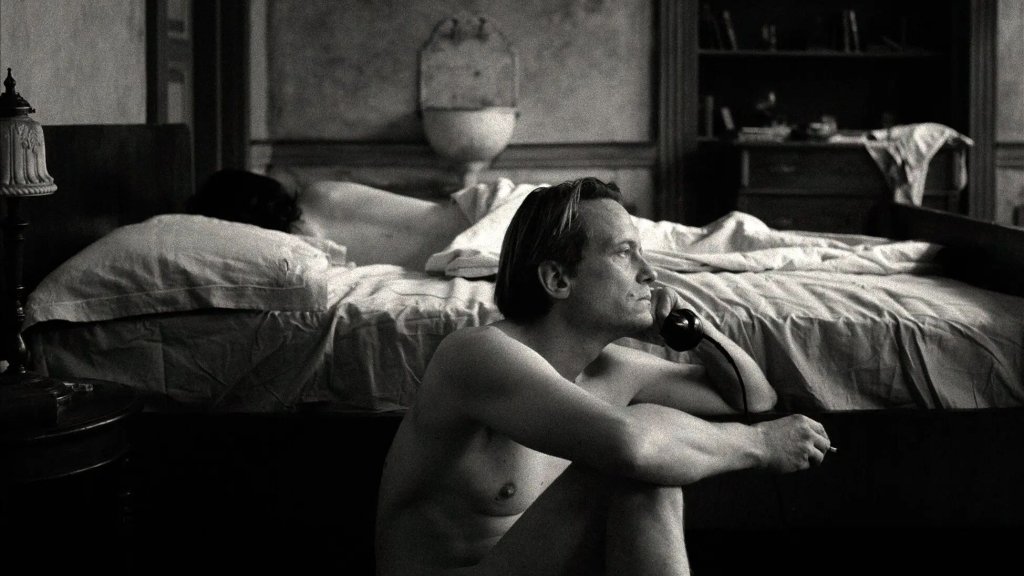
Director Paweł Pawlikowski’s new film “Vaterland” opens in German cinemas, sparking intense discussion in the queer community: the story of the Mann family is retold here as a poetic, profoundly queer road movie, centred on Thomas Mann’s return to post-war Germany in 1949, accompanied by his daughter Erika – and overshadowed by the suicide of his gay son Klaus Mann. With masterful visual storytelling, the film creates a drama about family solidarity and existential rootlessness.
Key points at a glance
- “Vaterland” by Paweł Pawlikowski has been showing in cinemas across Germany since 9 July 2026.
- The film depicts Thomas Mann’s journey back to a devastated Germany in 1949, accompanied by his daughter Erika Mann.
- At its heart is the Mann family’s response to homosexuality and exclusion.
- Sandra Hüller and Hanns Zischler receive particular praise for their performances.
- The film condenses historical events, with episodes adapted for dramatic purposes in the screenplay.
- The writer and Nobel laureate in literature Thomas Mann ("Buddenbrooks", "Tonio Kröger", "Death in Venice") is considered one of the most significant storytellers of the 20th century.
Thomas Mann’s journey through Germany as a queer cinematic event
In the newly released biopic, Thomas Mann’s existential return journey in 1949 is presented not merely as a historical and political event, but as a multilayered family drama. According to Neue Visionen Filmverleih, the focus is on the emotional tension between Thomas and his daughter Erika, who acts as her father’s companion and driver on his journey to the Goethe Prize ceremony. Pawlikowski and co-writer Henk Handloegten portray the Mann family as a dysfunctional, queer microcosm: both siblings, Erika and Klaus Mann, lived queer lives, something that becomes particularly apparent in the intergenerational conflict with their towering literary father.
The visual precision, black-and-white aesthetic and disciplined Academy aspect ratio give “Vaterland” a stylistic rigour that painfully heightens the family’s emotional coldness, but also its fragile cohesion. Allusions to homosexual desire, for instance in Thomas Mann’s encounter with a Soviet border guard, are handled with cinematic restraint yet clarity.
Personal tragedies, queer identity, social coldness
Sandra Hüller portrays Erika Mann as a perceptive yet vulnerable daughter who wavers between rebellion and conformity towards her authoritarian father. According to the film’s distributor, historical details were added to the role in the screenplay: here, Erika, rather than his wife, accompanies her father – a deliberate decision to bring the queer dynamic more strongly to the fore. The character of Klaus Mann, impressively played by August Diehl, frames the film and highlights the family’s painful response to openly lived homosexuality and suicide.
The question of how much openness is possible within a family becomes the all-determining driving force of this quiet road movie. Private history merges with political history: the encounter with post-war Germany reveals home as a contradictory concept, shaped by guilt, prejudice and the struggle for recognition. For German cinema audiences interested in queer themes and biographical films, “Vaterland” is an invitation to experience this story from a new perspective.