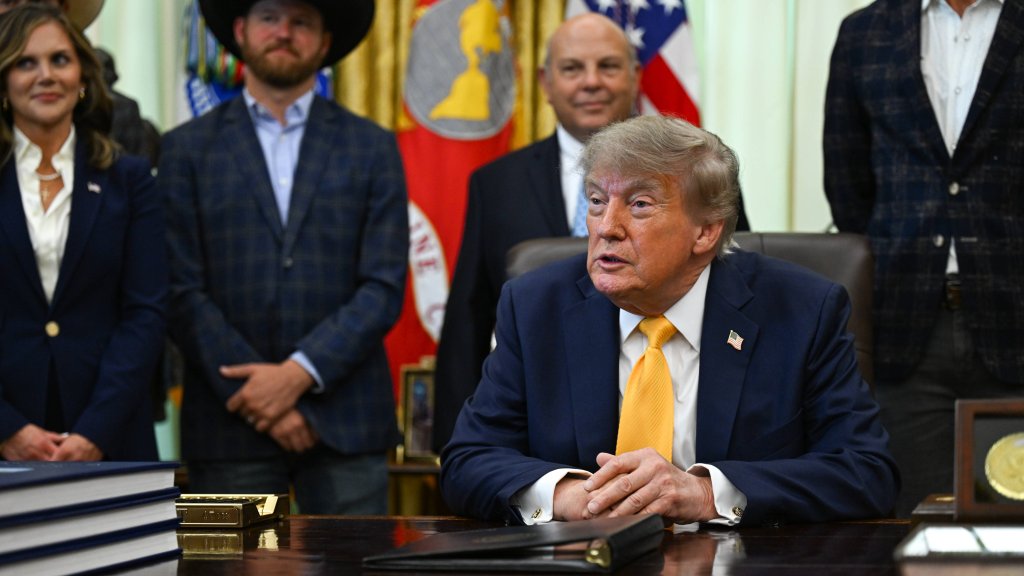
US President Donald Trump's administration has sued a public school district in the state of Kansas. The Justice Department accuses Kansas Public Schools of supporting trans pupils in using their chosen names and gender identities without sufficiently involving their parents.
Key points at a glance
- The US Justice Department is suing a public school district in Kansas over its approach to trans pupils.
- The schools allow pupils to use their chosen names and gender identities without involving parents in every case.
- The administration considers this a violation of federal laws protecting parental rights.
- The Department of Education describes the action as an “unprecedented lawsuit of its kind”
- LGBTQ+ organisations stress that confidentiality can be important for trans young people in unsupportive families.
Lawsuit against school district
The US Department of Education described the proceedings as the “first lawsuit of its kind”. It said the school district had enabled “secret ‘gender transitions’ of children at school without their parents' knowledge or consent”. According to the Department of Education, the practice violates two federal laws: the Family Educational Rights and Privacy Act (FERPA) and the Protection of Pupil Rights Amendment (PPRA). Both laws cover, among other things, parents' rights concerning their children's education and pupil records.
Harmeet K. Dhillon, deputy attorney general in the Justice Department's Civil Rights Division, said: “Parental rights are paramount to the operation of public schools in America, and Kansas City, Kansas Public Schools do not know children better than their own parents do.” She said the department would not tolerate school districts taking a lax approach to federal law in the service of a “radical gender ideology”. The Trump administration had already begun stepping up enforcement of existing parental rights regulations in 2025. The Department of Education focused particularly on school policies that, in the department's view, concealed trans pupils' gender identities or possible gender transitions from their parents.
Federal government ends protection agreements
In April 2026, the Department of Education also ended several agreements protecting trans pupils. The agreements previously in force had provided, among other things, for staff training on pupils' names and pronouns, as well as access to gender-appropriate toilets. US Education Secretary Linda McMahon said: “For decades, schools were able to operate with little accountability while federal parental rights laws such as FERPA and PPRA went unenforced. This allowed some school districts to shut parents out of deeply personal matters concerning their own children. That era is over.” She said the Trump administration was now enforcing these laws on an unprecedented scale and making it clear that schools could not hide sensitive information from parents without facing consequences.
LGBTQ+ activists voice warnings
LGBTQ+ organisations view the development critically. They argue that confidentiality can be crucial for young trans people, particularly when they grow up in families that do not accept their identity. Sean Ebony Coleman, founder of Destination Tomorrow, said trans pupils deserved schools they could trust. At the same time, he said, Trump's political agenda made safety impossible for them: “The question before us is whether rights and dignity are treated as fundamental values or as privileges that can be granted and taken away again.”








