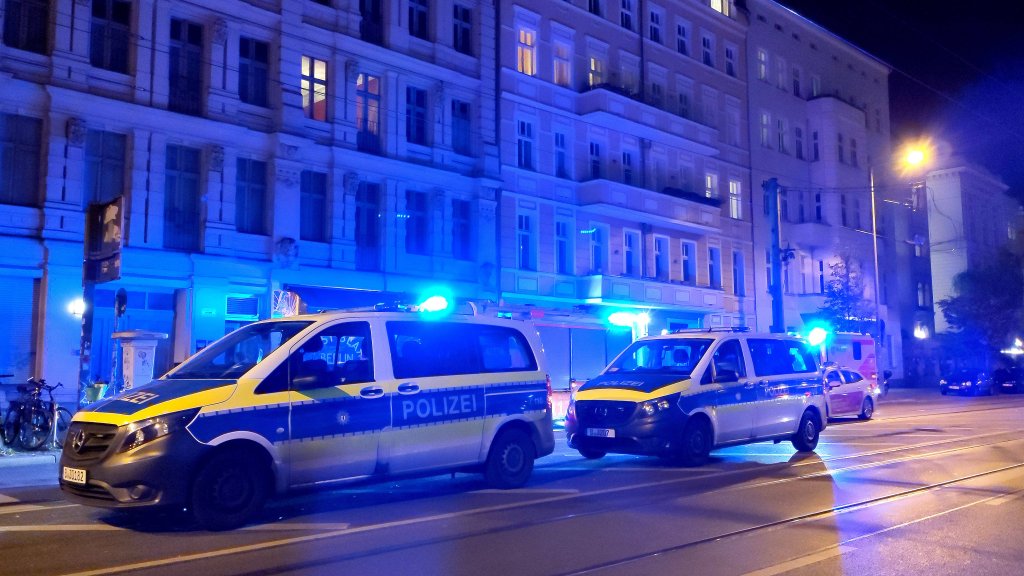
A search by the State Criminal Police Office at a queer centre in Berlin-Kreuzberg has prompted criticism from advocacy groups and protests. While police are investigating suspected illegal trading in prescription medicines, LSVD+ – Verband Queere Vielfalt sees the operation as reflecting a fundamental problem with trans people's access to healthcare.
Key points at a glance
- Search in Berlin: On 18 October, the State Criminal Police Office searched the queer centre Casa Kuà in Kreuzberg and seized medicines, data storage devices and cash.
- Suspected illegal trading in medicines: According to police, prescription medicines are suspected of having been traded illegally. There are also allegations of hormone treatments without medical supervision.
- LSVD+ criticises police operation: Verband Queere Vielfalt warns of repression against self-organised support services and points to significant gaps in healthcare provision for trans people.
- Protest following the search: Around 140 people gathered outside the centre. According to police, there were clashes with officers.
- Demands on the federal government: LSVD+ is calling for nationwide access to gender-affirming healthcare and stronger legal safeguards.
- Die Linke queer stressed that the search by Berlin police was “part of the appalling tradition of police raids on queer spaces.”
Investigations continue
Last Sunday evening, 18 October, investigators from Berlin's State Criminal Police Office searched the queer centre Casa Kuà on Naunynstraße. The operation targeted premises where, according to LSVD+, a support group for trans people meets regularly, including on the day in question. During the search, officers seized numerous prescription medicines, including hormone preparations, as well as controlled drugs, data storage devices and a four-figure sum in cash. The investigation is being led by the Berlin public prosecutor's office and is ongoing.
Police explanation
According to Berlin police, the operation was not about the gender identity of people at the centre or the existence of a support group. Rather, it was prompted by initial grounds for suspicion of a criminal offence. Investigators were following up information about possible illegal trading in prescription medicines. Police had initially also stated that hormone therapies for trans people were alleged to have been carried out in the building without medical supervision.
According to the official police statement of 19 October, investigators from the State Criminal Police Office, together with officers from the 36th operational police unit, executed a search warrant on behalf of the Berlin public prosecutor's office. The case concerns the legal requirements governing the handling of prescription medicines. These may not be dispensed or traded without restriction. Among other things, the rules are intended to ensure that medicines are placed on the market under controlled conditions and that health risks are kept to a minimum.
Medical supervision is also important for hormone preparations in order to monitor dosage, possible side effects and individual health risks. However, simply possessing hormone preparations or attending a support group does not automatically constitute a breach of the German Medicines Act. The decisive question is whether criminal acts can be proven in the specific case. Police pointed to the evidence seized during the search, which is still being examined. Whether the suspicions will be substantiated, and which individuals are specifically under investigation, has not yet been conclusively established.
LSVD+ highlights serious gaps
LSVD+ responded to the operation with strong criticism. In a statement, the association has now focused on the difficulties faced particularly by trans and non-binary people in accessing medical treatment. Alva Träbert, a member of LSVD+'s federal executive board, said that safe, discrimination-free healthcare tailored to people's needs remained difficult to access for many of those affected. The situation was particularly problematic for people without a German passport, secure residency status or health insurance.
In the association's assessment, these groups were not merely excluded from having the costs of such treatments covered. They often had no access at all to hormone replacement therapies or other gender-affirming medical services within the mainstream healthcare system. According to LSVD+, even people who could in principle receive medical care repeatedly reported discrimination, medicine shortages and a lack of specialist knowledge among treating doctors. Under these conditions, self-organised networks could play a crucial role. They enabled people to share experiences and helped them gain access to the medicines they needed. Träbert therefore described Casa Kuà as a “place vital to survival”.
Around 140 people protested
Numerous people gathered outside the building in Kreuzberg while the search was still under way or after it had ended. According to Berlin police, around 140 people attended the spontaneous rally at its peak. The demonstration's slogan was “Hormones for all”. Participants voiced their anger at the operation and chanted slogans protesting against the investigating authorities' actions. At times, the situation led to tensions between demonstrators and police. Additional officers from the local police station and an operational police unit were called in to provide support. According to the official police account, some participants tried to force open a lowered privacy screen on the outside of the building. Officers then pushed them back. One person was ordered to leave the area. According to police, nobody was injured.
Repression against safe spaces
For LSVD+, the significance of the search extends beyond the specific investigation. The association fears that state action against self-organised health services could undermine the trust of people who already have difficulties accessing the mainstream healthcare system. The organisation stresses that safe meeting spaces for trans, intersex and non-binary people are not merely places for social interaction. They could also help share medical information, facilitate mutual support and provide a safety net for people who had experienced discrimination in other areas of healthcare. LSVD+ therefore explicitly warns against repression targeting such services.
In response to the incident, LSVD+ is calling for comprehensive improvements to healthcare for trans people in Germany. In the association's view, this should include, in particular, nationwide access to gender-affirming healthcare with minimal barriers. The organisation is also calling for clear legislation that provides lasting safeguards for entitlements to such treatment. People must be able to access necessary medical services safely and without discrimination, regardless of their gender identity. The association sees the federal government as bearing primary responsibility. It must close existing gaps in provision, legally safeguard access to gender-affirming treatments and consistently combat discrimination in healthcare.
Criticism from Linke queer
Criticism of the police's actions had already come the following day from Die Linke's spokesperson on LGBTQ+ policy, Maik Brückner, who described the incident as “shameful” and accused police of “double discrimination”. Linke queer has since responded similarly, with federal spokespeople Daniel Bache and Maja Tegeler saying that the state apparently wanted to “make life as difficult as possible at present” for trans and non-binary people. The two spokespeople also stressed: “The search of Casa Kuà by Berlin police is part of the appalling tradition of police raids on queer spaces. This repression is unacceptable, particularly given the precarious state of healthcare provision.”








