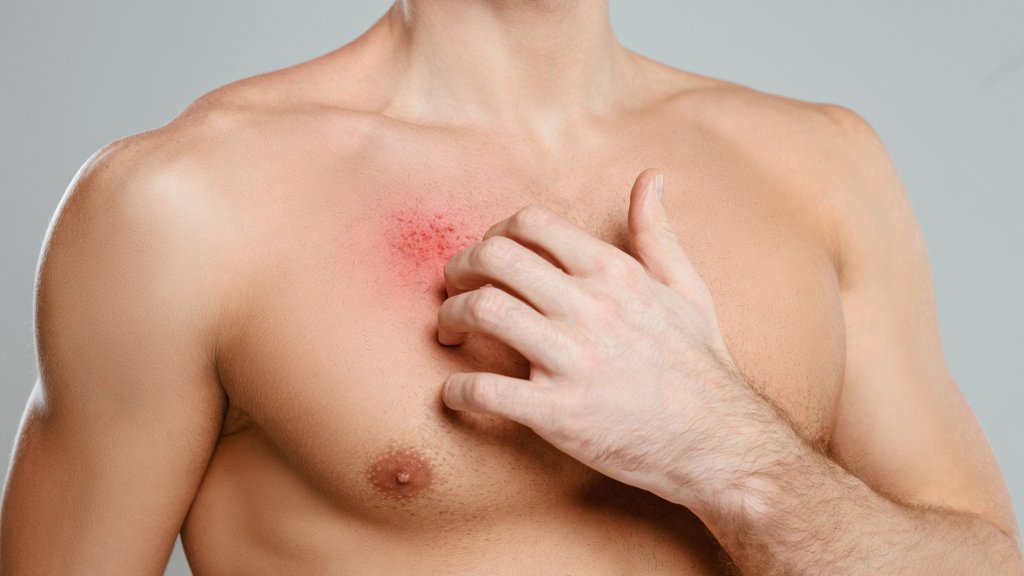
A bacterium primarily known in veterinary medicine is currently concerning health authorities in Germany and Europe. According to the Robert Koch Institute (RKI), 17 people in Berlin and Brandenburg have so far been infected with Dermatophilus congolensis. The pathogen normally mainly affects horses, cattle and other ruminants. Those affected are predominantly gay and bisexual, sex-positive men.
Key points at a glance
- The Robert Koch Institute (RKI) has recorded 17 cases of a rare bacterial skin infection in Berlin and Brandenburg.
- The disease is caused by the bacterium Dermatophilus congolensis, which mainly occurs in horses, cattle and other ruminants.
- The infections were detected between December 2025 and June 2026; all those affected were men.
- According to findings so far, those affected are predominantly gay and bisexual men from Berlin and neighbouring Brandenburg.
- For the first time, there are indications that the pathogen could also be spreading from person to person on a larger scale.
- According to the ECDC, case numbers across Europe recently almost doubled within a month.
Rare disease in the community
The disease caused by the bacterium is known in veterinary medicine as rain rot; its medical name is dermatophilosis. Although human infections have been known for more than a hundred years, until now these have mainly been isolated cases of people contracting it directly from animals. The current development is different: there are indications that the pathogen could now also be spreading from person to person. According to the RKI, an unusually high number of infections were detected in Germany between late 2025 and mid-2026.
The positive test results known so far come from a Berlin laboratory. They were recorded between December 2025 and June 2026; the first cases had already become known in May last year (German). In an interview with SCHWULISSIMO, Stephanie Reisinger from Berlin's Landesamt für Gesundheit und Soziales told SCHWULISSIMO (German): “Anyone experiencing symptoms such as skin rashes and skin lesions should have them assessed by a doctor and should avoid close physical contact with other people. Sexual or other close physical contact with people who have visible skin lesions or rashes should be avoided.”
All those affected are men
All those affected in the cases recorded so far were men. Their average age was 45. According to the findings available so far, most are understood to be gay and bisexual men. All those affected live in Berlin or neighbouring Brandenburg. How the infections occurred has not yet been conclusively established. However, the RKI and the European Centre for Disease Prevention and Control (ECDC) believe that close skin-to-skin and physical contact could play an important role.
The Federal Ministry of Health said last year (German) of the situation: “Likely transmission routes for the infections are direct skin-to-skin contact within sexual contact networks, as well as possible indirect transmission via contaminated surfaces.” According to current findings, the majority of cases are still linked to sex-positive saunas for gay and bisexual men. However, this does not mean that the disease is transmitted exclusively through sexual contact.
Skin changes and itching
In humans, Dermatophilus congolensis can cause inflammation of the skin. Its appearance can vary. Reported symptoms include pox-like skin changes, small nodules and pustules, sometimes containing pus, as well as scaly or crusted patches of skin. Itching is another possible symptom. Areas that may be affected include the face, groin, thighs and genital region.
Based on current knowledge, infections are usually mild. No serious complications have been reported so far. When the disease is treated by a doctor, antibiotics are used. Findings to date suggest that the skin changes generally heal completely. In some cases, symptoms disappear even without treatment. Nevertheless, doctors recommend having unusual skin changes accompanied by itching or crusting examined medically. This applies regardless of their eventual cause. Until such a change has been assessed, it may be advisable to avoid close skin contact. This is particularly true if the affected areas are weeping or open, or are spreading rapidly.
Cause of emergence unclear
Besides the route of transmission, another question remains unanswered: how did the bacterium enter the environment in which the current cases developed in the first place? One possible explanation is that some people may initially have contracted it from infected animals. As symptoms are often mild, such an infection could have gone unnoticed. Subsequent person-to-person transmission might then have been the starting point for the current cluster of cases. The European Centre for Disease Prevention and Control (ECDC) assesses the risk differently for different groups. For the general population, the risk is classified as very low. For people who visit sex-positive saunas, however, the agency assesses the risk as moderate.
More than 120 cases in Europe
The development is not confined to Germany. Infections with the rare bacterial skin disease are also increasingly being reported in other European countries. Those affected in the cases recorded so far have likewise often been men who had sex with other men. According to the ECDC, the number of known cases across Europe almost doubled from 70 in June to more than 120 in August 2026. Alongside Germany, countries named as affected included France, Spain, Norway and the United Kingdom.
European health authorities are monitoring further developments. What is particularly unusual is that person-to-person transmission of this disease had not previously been documented on a comparable scale. The 17 cases from Berlin and Brandenburg are therefore part of a development currently being observed beyond Germany as well. Exactly how the pathogen is being transmitted and where the current cluster originated remain under investigation.








