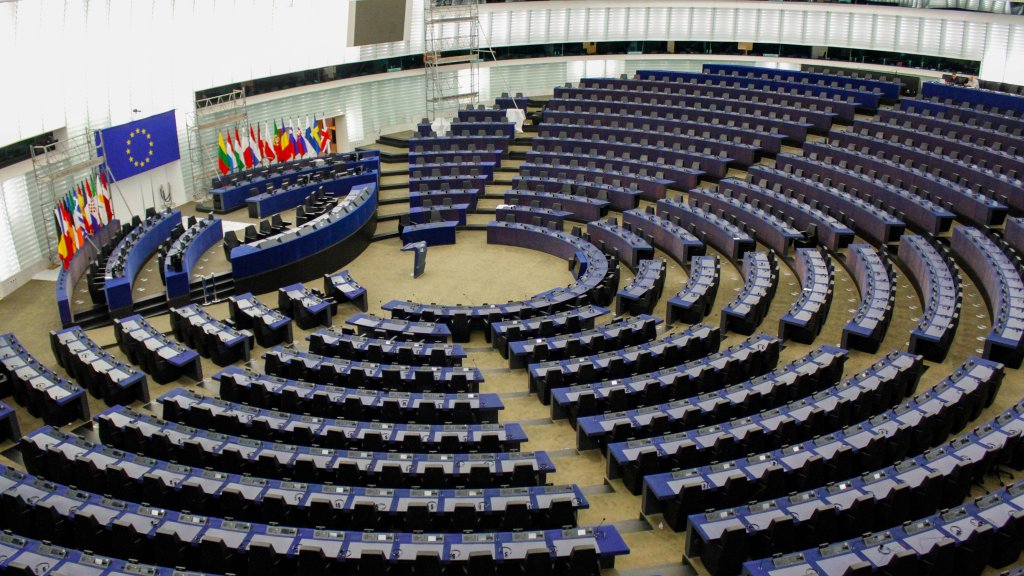
An event organised by Italy’s governing party Fratelli d’Italia at the European Parliament is causing political controversy. Tomorrow, Thursday, participants are due to discuss legal approaches to so-called conversion practices (German). The organisers are focusing on protecting freedom of expression, religion and conscience. Critics, however, accuse them of downplaying practices aimed at changing or suppressing sexual orientation and gender identity.
The key points at a glance
- Conference at the European Parliament: Italy’s governing party Fratelli d’Italia is holding a conference on 19 November on conversion practices and freedom of expression, religion and conscience.
- The invited guests include several controversial speakers who publicly advocate conversion therapies.
- Health risks: conversion practices are intended to change sexual orientation or gender identity. The United Nations condemns such practices as cruel and degrading.
- No EU-wide ban: the European Commission rejected binding legislation in May 2026. Instead, a non-binding recommendation is planned for 2027.
- Opposition criticism: MEP Carolina Morace accuses Fratelli d’Italia of justifying practices harmful to health under the guise of freedom of expression.
Misusing fundamental freedoms?
The conference was initiated by Italian MEP Paolo Inselvini, who belongs to the European Conservatives and Reformists Group. Describing a possible ban on what are colloquially known as ‘gay cures’, he speaks of the ‘imposition of an ideology that seeks to exploit individual cases of violence, which we always condemn under all circumstances, to impose a one-sided view. And we will not accept that’. The event is entitled ‘Protecting freedom of expression and conscience in the context of legislation on so-called conversion practices in Europe’. According to the organisers, it will examine how protection from abuse can be reconciled with fundamental freedoms. Specifically, the invitation states that the conference will ‘analyse the impact of legislation on so-called conversion practices and examine how people can be protected from abuse while safeguarding freedom of expression, religion and conscience – including the freedom to share personal experiences and voluntarily participate in religious or pastoral conversations’.
Speakers from several countries
The announced guests include Maltese Christian Matthew Grech. He had been charged with promoting conversion practices. In March 2026, Grech was acquitted of this charge. The organisers cite his case as an example of potential conflicts between legal bans and the freedom to speak about personal religious experiences. Also invited is Mike Davidson, president of the International Federation for Therapeutic and Counseling Choice. The London-based organisation lobbies governments and religious institutions internationally against legal bans on conversion therapies. Another announced speaker is Roger Kiska from Slovakia, who is affiliated with the Christian Legal Centre. They will be joined by Italy’s Nausica Della Valle, who previously worked for the television broadcaster Mediaset. For years, Della Valle has publicly claimed to have been ‘cured’ of her homosexuality.
Conversion practices in focus
Conversion practices refer to a range of interventions intended to change, suppress or eliminate a person’s sexual orientation or gender identity. They range from psychological and religiously influenced methods to drug-based and physical interventions, torture methods and ‘corrective’ rape. Such practices are often linked to the belief that homosexuality needs to be corrected. There is no scientific basis for the claimed effectiveness of these methods. Instead, they are associated with significant health risks. These include depression, anxiety, dissociative symptoms and suicide attempts. The United Nations has described such practices as ‘cruel, inhuman and degrading practices that amount to torture’. Numerous European countries have therefore introduced legal restrictions or bans – these include Spain, the Netherlands, Malta, Belgium, Cyprus, Germany, France, Greece and Portugal.
European Commission rejects ban
The event is taking place against the backdrop of an ongoing debate about a possible EU-wide ban on conversion practices. A European Citizens’ Initiative recently called for such practices to be prohibited in all member states. More than 1.2 million signatures were collected in support. In May 2026, the European Commission under President Ursula von der Leyen stated that it opposed binding European legislation (German). Neither a directive nor a directly applicable law or any other mandatory measure was proposed. Instead, the EU announced a legally non-binding recommendation, to be adopted in 2027. As a result, 19 of the EU’s 27 member states currently still have no corresponding legal bans. Italy is one of these countries.
Strong criticism of the conference
Tomorrow’s event has drawn sharp criticism, particularly from the Italian opposition. Carolina Morace, an MEP for the Five Star Movement, accuses Fratelli d’Italia of invoking fundamental freedoms to defend practices harmful to health. ‘This is an event to justify conversion practices – those acts of psychological and physical violence accepted by people who do not acknowledge and accept their own homosexuality. The conference confuses freedom of expression with the denial of the most important right of all: the right to live at peace with oneself. I therefore wonder what freedom is supposed to lie behind the attempt to defend this oppression, which condemns thousands of people to an unhappy life. The truth is that Fratelli d’Italia’s fight against the LGBTQ+ community has become an outright obsession,’ said Morace. Earlier this year, the Council of Europe also called for a European ban on conversion therapies (German).








