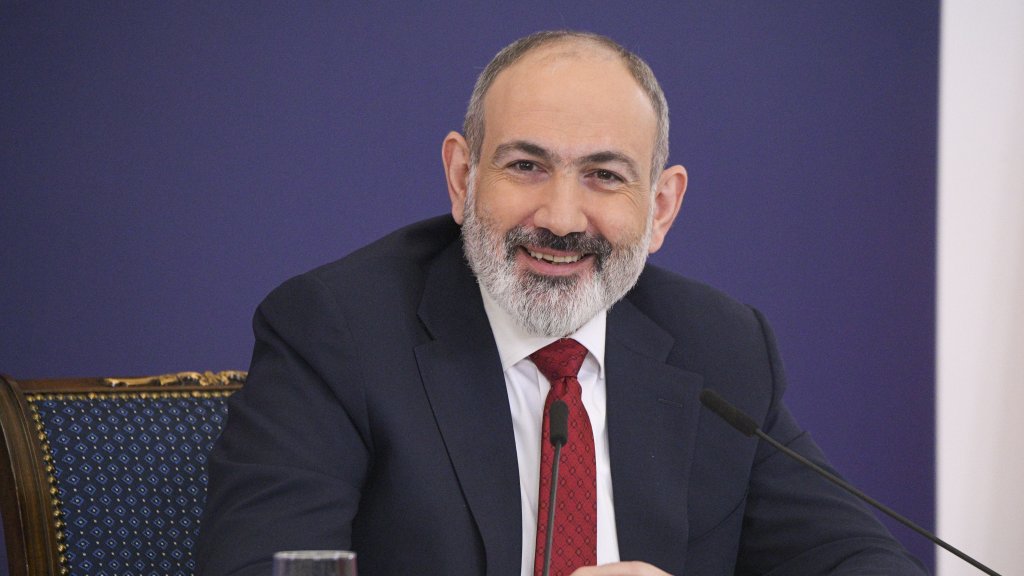
Comments by Armenian Prime Minister Nikol Paschinjan (51) about allegedly fabricated claims of persecution by gay asylum seekers have drawn criticism from human rights activists. In connection with a planned anti-discrimination law, the prime minister claimed that some people from criminal circles were posing as gay in European countries after leaving Armenia in order to obtain residence permits there.
Key points at a glance
- Controversial comments: Prime Minister Nikol Paschinjan claims that some people from criminal circles pose as gay abroad in order to obtain asylum.
- Criticism from Pink Armenia: The LGBTQ+ organisation warns that such statements risk downplaying genuine discrimination and persecution.
- Hundreds of requests for help: Pink Armenia recorded a total of 402 requests for help and 56 documented rights violations in 2025. In the first half of 2026, it had already recorded 469 requests for help and 32 rights violations.
- Gaps in the draft law: A planned anti-discrimination law explicitly covers sexual orientation, but not gender identity.
- International pressure for action: Human rights organisations and European institutions have been calling for more effective protection for LGBTQ+ people in Armenia for years.
“Faked” homosexuality?
Paschinjan, who has headed the Armenian government since 2018, made the comments during a public discussion on equality and protection against discrimination. According to his account, European states accuse Armenia of contributing to the influx of irregular migrants. He said that those leaving the country could include both people genuinely facing persecution and people from criminal circles. Some of the latter, he claimed, say they are being persecuted because of their sexual orientation. No concrete evidence of the scale of such alleged cases has been provided so far. Nor is information available on how often such attempts at deception have actually been identified. However, similar suspicions most recently arose in October in both the Spanish exclave of Ceuta and England – in these cases, people are alleged to have merely pretended to be gay to make it easier to obtain asylum. Paschinjan’s comments also come at a time when Armenia is discussing new legislation to protect against discrimination. A particularly contentious issue is the extent to which sexual orientation and gender identity should be explicitly covered.
Pink Armenia challenges the claims
The Armenian human rights organisation Pink Armenia responded with strong criticism of the prime minister’s comments. Founded in 2007 and based in Yerevan, the organisation campaigns for LGBTQ+ rights and documents discrimination and human rights violations. In its view, Paschinjan’s argument distracts from the real difficulties facing gay and other LGBTQ+ people in Armenia. The organisation warns against casting blanket doubt on reports of persecution or downplaying the experiences of those affected.
It says an anti-discrimination law must primarily serve to protect people from disadvantage and violence. It must not be viewed chiefly as a political instrument for rejecting accusations against the Armenian state. Pink Armenia also stresses that simply passing a law does not automatically bring discrimination to an end. What matters, it says, is whether state authorities actually enforce the legal provisions and offer effective protection to those affected. Whether a person is entitled to asylum must also be assessed individually. This depends in particular on whether there is a genuine risk of persecution and whether the country of origin can guarantee adequate protection.
Requests for help over discrimination
To support its criticism, Pink Armenia points to its own statistics. These show that numerous people contact the organisation each year over possible discrimination and human rights violations. In 2025, Pink Armenia recorded a total of 402 requests for help. The organisation also documented 56 cases of rights violations related to discrimination. Only eight of these cases were reported to law enforcement authorities. In the first half of 2026, the organisation had already recorded 469 requests for help and 32 documented rights violations. In only five cases did those affected contact the police.
In the organisation’s view, the figures show that many of those affected are reluctant to involve state authorities. Pink Armenia cites possible reasons including a lack of trust in the authorities, fear of ridicule and further discrimination, and concerns that personal information could be shared without consent. However, the statistics cover only those cases that came to the organisation’s attention. They do not allow definitive conclusions to be drawn about the true extent of discrimination against LGBTQ+ people in Armenia.
Gaps in the planned law
Armenia does not yet have comprehensive legal protection against discrimination on grounds of sexual orientation and gender identity. Same-sex couples can neither marry nor adopt children jointly. Gay men are also excluded from military service. Human rights organisations have therefore been campaigning for comprehensive legislation for more than ten years. The draft law currently under discussion, intended to ensure equality and protection against discrimination, aims to close existing legal gaps.
However, activists still see significant weaknesses. Although sexual orientation is explicitly listed as a protected characteristic in the draft, gender identity is absent. Human rights organisations believe this means that protection for queer and trans people in particular remains inadequately addressed. They are calling for both characteristics to be explicitly included in the law. There is also criticism of the proposed avenues for legal redress through the courts. Issues include the allocation of the burden of proof in discrimination proceedings and the conditions under which human rights organisations can take legal action. For Pink Armenia, merely prohibiting discrimination by law is not enough. Those affected must also be able to enforce their rights in practice.
Calls for better protection
The situation of LGBTQ+ people in Armenia has also concerned international human rights institutions for years. Several bodies have called on the Armenian government to close existing gaps in protection and take more effective measures against discrimination. These include the Council of Europe’s European Commission against Racism and Intolerance, the Council of Europe Commissioner for Human Rights, the Organization for Security and Co-operation in Europe (OSCE) and United Nations human rights mechanisms. The European Court of Human Rights has also dealt with cases concerning inadequate protection against discrimination and hate crime in Armenia.








