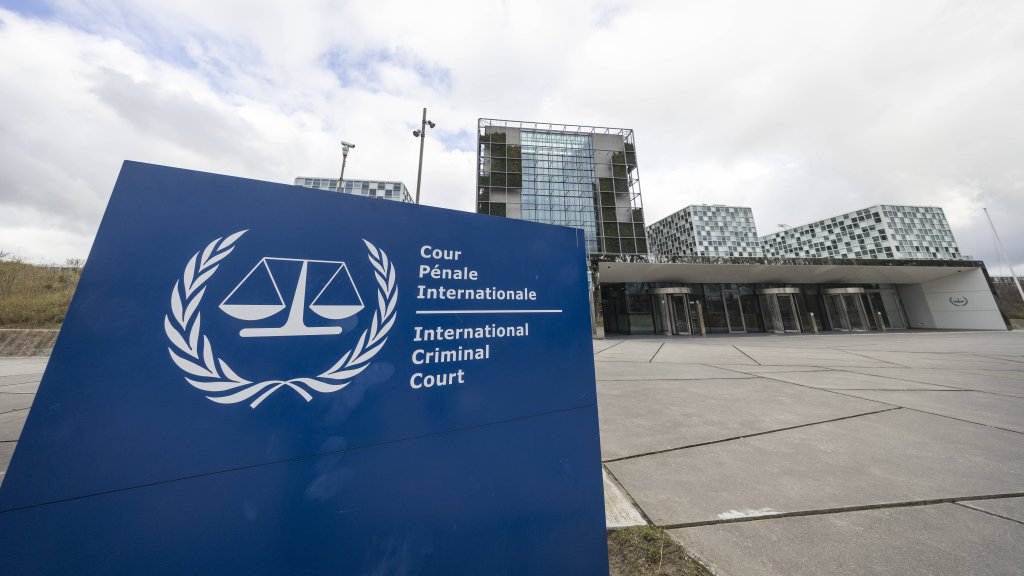
The US government's new sanctions against the court have drawn criticism. Amnesty International is calling on the European Union to defend the independence of international criminal justice and protect the court from the effects of US sanctions. The International Criminal Court (ICC) in The Hague also plays an important role in protecting LGBTQ+ people. The court can prosecute the gravest human rights violations, including the systematic persecution of people because of their sexual orientation or gender identity.
Key points at a glance
- New US sanctions: The US government has announced further sanctions against the court. Several judges and prosecutors are already affected.
- Significance for LGBTQ+ people: Under certain conditions, the International Criminal Court (ICC) can prosecute severe, systematic persecution based on sexual orientation or gender identity as a crime against humanity.
- Amnesty calls for EU response: The human rights organisation is demanding that the European Union protect the court, as well as European businesses and citizens, from the consequences of the sanctions.
- Limits of international criminal justice: The ICC cannot act everywhere. Its jurisdiction depends, among other things, on the Rome Statute and certain decisions by the UN Security Council.
Dispute with the US
According to the human rights organisation, Washington has announced further sanctions against the ICC. Several of the court's judges and prosecutors had already been subjected to US sanctions. Amnesty sees this as a threat to the international prosecution of serious human rights crimes and is demanding a decisive response from the European Union. The US is imposing sanctions on the International Criminal Court because it opposes its investigations into US and Israeli officials and regards them as a violation of national sovereignty. The investigations concern alleged war crimes and crimes against humanity in Afghanistan and the Gaza Strip.
Persecution of LGBTQ+ people
The International Criminal Court's significance for LGBTQ+ people stems from its mandate to investigate and prosecute particularly serious violations of international criminal law. Its work is based on the Rome Statute. This covers genocide, crimes against humanity, war crimes and, under certain conditions, the crime of aggression. Crimes against humanity can also include the persecution of particular population groups if it forms part of a widespread or systematic attack against the civilian population and meets further legal requirements.
Severe acts of persecution against people because of their sexual orientation or gender identity can therefore also be relevant under international criminal law. Not every instance of discrimination or disadvantage imposed by the state automatically falls within the court's jurisdiction. The decisive factors are the gravity of the acts, their systematic context and the legal requirements of the Rome Statute. International criminal justice can therefore be particularly important for LGBTQ+ people in states where severe acts of persecution occur and national authorities do not provide effective legal protection.
Afghanistan illustrates its importance
One example of the court's importance is the persecution of gay people by the Taliban in Afghanistan (German). The ICC issued arrest warrants for senior Taliban figures. However, the court does not have unrestricted worldwide jurisdiction. In principle, it can act only under certain conditions, for example if the states concerned have acceded to the Rome Statute, the relevant jurisdiction has been accepted or the UN Security Council refers a situation to the court. The principle of complementarity also applies: as a rule, the ICC only acts when national prosecuting authorities are unwilling or unable genuinely to prosecute the crimes concerned themselves.
Amnesty criticises sanctions
The new US sanctions target an institution whose mandate is to investigate and prosecute international crimes independently. Julia Duchrow, Secretary General of Amnesty International in Germany, said: “The US sanctions against the International Criminal Court are an attack on human rights and international law. By imposing them, the US government is protecting war criminals and treating judges like perpetrators. The European Union must give a clear response by shielding European businesses and citizens from the consequences of the sanctions. As a first step, the EU must activate and expand its Blocking Statute. The European Parliament must speak out clearly in favour of this today.”
A Blocking Statute applied in this way could help limit the impact of US sanctions within the European Union. This legal instrument is intended to protect European citizens and businesses from the effects of certain extraterritorial sanctions imposed by third countries. Under the conditions described by Amnesty, activating or correspondingly expanding the regulation would require a unanimous decision by EU member states. The human rights organisation is therefore calling for joint European action.








