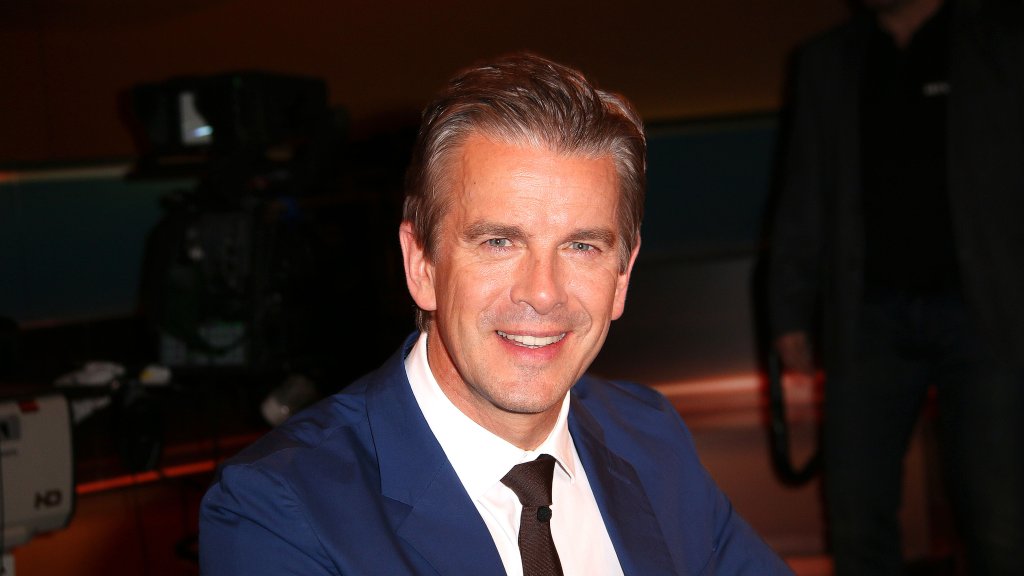
The introduction of “marriage for all” in Germany is once again prompting debate almost ten years after the Bundestag voted to approve it. In the latest episode of his podcast “Lanz + Precht”, ZDF presenter Markus Lanz critically examined the political significance attached to opening marriage to same-sex couples in 2017. In doing so, he spoke of growing alienation between politicians and the public.
Key points at a glance
- A critical look back: on the podcast “Lanz + Precht”, ZDF presenter Markus Lanz questioned the political and public attention given to the introduction of “marriage for all” in 2017.
- Claim of alienation: Lanz said he felt the debate at the time had been out of step with Germany’s economic challenges.
- Criticism of Angela Merkel: Lanz and Richard David Precht accused the former chancellor of basing political decisions heavily on opinion polls.
- Merkel voted against it: although the then CDU leader allowed a free vote in the Bundestag, she herself voted against opening marriage to same-sex couples on 30 June 2017.
- Statements at odds with the facts: polls had shown a majority in favour of opening marriage to same-sex couples years before 2017. Nor do the growth figures support the portrayal of a difficult economic situation at the time.
Governing “without a long-term view”
The conversation began with the leadership of former German chancellor Angela Merkel (CDU). Lanz and his podcast partner, the philosopher Richard David Precht, discussed the extent to which Merkel had made her political decisions dependent on majority opinion in society and polling results. Precht said that, during Merkel’s time in office, he had “always accused” her of “governing without a long-term view”. By this, he meant that the then head of government had repeatedly based her decisions “on opinion polls”. Lanz partly agreed with this assessment. “It worked for her, after all,” he said. As an example of this style of government, the presenter cited the decision to open marriage to same-sex couples in the summer of 2017. In his view, it represented “an event that is, so to speak, typical of this kind of governing”.
Lanz speaks of alienation
As the conversation continued, Lanz explained at length why he viewed the public reaction to the decision at the time critically. He did not fundamentally question the right of same-sex couples to marry, but rather, in particular, the political importance attached to the issue. The ZDF presenter said: “People thought: incredible, Angela Merkel, the CDU, how far they have moved on this – the dawn of a new era! It was celebrated as though this were suddenly the most important event ever in this country’s history. We were already deep in economic difficulties then, if you remember. And there was a kind of alienation there, too.”
Lanz then described his assessment of public perceptions at the time. In his account, there had certainly been support for legal equality for homosexual couples. At the same time, he had gained the impression that other political challenges had not received comparable consideration. “As a member of the public looking in from the outside, you had this feeling: of course, it’s important, I’m happy for everyone, all wonderful, no problem at all. That level of tolerance comes easily, after all. But you had the feeling that it didn’t fit.” The presenter went on to say that, in his view, “the importance attached to this event” had not matched “the real problems, particularly economic ones”. Lanz summed up his personal assessment of the political situation at the time by saying: “And that, for me, was where the alienation happened.”
Merkel’s approach to opinion polls
Alongside the social significance of opening marriage to same-sex couples, the two speakers discussed the then chancellor’s motives. Lanz asked whether Merkel’s approach had genuinely reflected an independent act of political leadership. “It looked as though someone had now shown courageous leadership,” he said of public perceptions of the decision at the time. In his assessment, however, Merkel had primarily aligned her position with changes in public support. The presenter referred to polling figures on acceptance of same-sex marriage.
“She did it at precisely the moment when, suddenly, for the first time, 72, 75 per cent of all Germans said in opinion polls: we have nothing against gay marriage,” Lanz said. Precht agreed with this account. “Exactly. Before that, she was against it,” the philosopher said. He then added: “Then she remained non-committal for a long time. And when the majority was there, she was in favour.” Both thus painted a picture of a chancellor who only shifted on social policy decisions once a corresponding majority was apparent among the public.
Merkel allowed the vote
The decision to introduce “marriage for all” was taken in the German Bundestag on 30 June 2017. It followed a political debate about legal equality for same-sex couples that had occupied Germany for many years. In June 2017, Angela Merkel had said she wanted the vote on opening marriage to same-sex couples to be treated as a matter of conscience. This gave CDU/CSU MPs the opportunity to decide on the bill without being bound by a parliamentary party line. The move paved the way for a parliamentary majority.
Contrary to what the statements by Lanz and Precht suggest, however, Merkel did not change her personal position to support opening marriage to same-sex couples. In the decisive Bundestag vote on 30 June 2017, the then chancellor herself voted against the bill. The distinction between her decision to allow a free vote and the way she herself voted is essential to assessing the events of the time. Through her approach, Merkel helped enable the Bundestag to decide on legal equality, but did not personally support it in the vote. Only a few days ago, the former chancellor said that she would now vote in favour of marriage for all.
Majority in favour of gay marriage
Lanz’s claim that broad public support for “marriage for all” had emerged only immediately before the political decision also does not reflect the polling trends at the time. Several years before the Bundestag vote, a majority of the German population had already expressed support for opening marriage to same-sex couples. Public support had therefore not risen above 70 per cent only in the summer of 2017. Rather, support had developed over a longer period.
The account suggesting that Merkel acted at precisely the moment when a clear majority of the population first supported opening marriage to same-sex couples disregards this timeline. Regardless, political assessments of her approach continue to differ. While Lanz and Precht emphasise the influence of opinion polls, the actual sequence of events shows that, although Merkel enabled a parliamentary decision, she herself continued to oppose opening marriage to same-sex couples.
Economic developments
Another point concerns Germany’s economic situation at the time of the decision. Lanz based his criticism of the political priorities at the time partly on economic difficulties which, as he recalled it, the country had already been facing. However, the economic data for 2017 paint a different picture. German gross domestic product grew by 2.2 per cent that year. Germany was therefore in a period of economic growth. The economic difficulties mentioned by Lanz cannot, therefore, readily be taken as a description of the general economic situation in 2017. His assessment that the public attention given to “marriage for all” was out of step with the economic challenges remains a personal political judgement. However, the growth figures cited do not support the notion that a pronounced crisis across the economy was already under way at the time.








