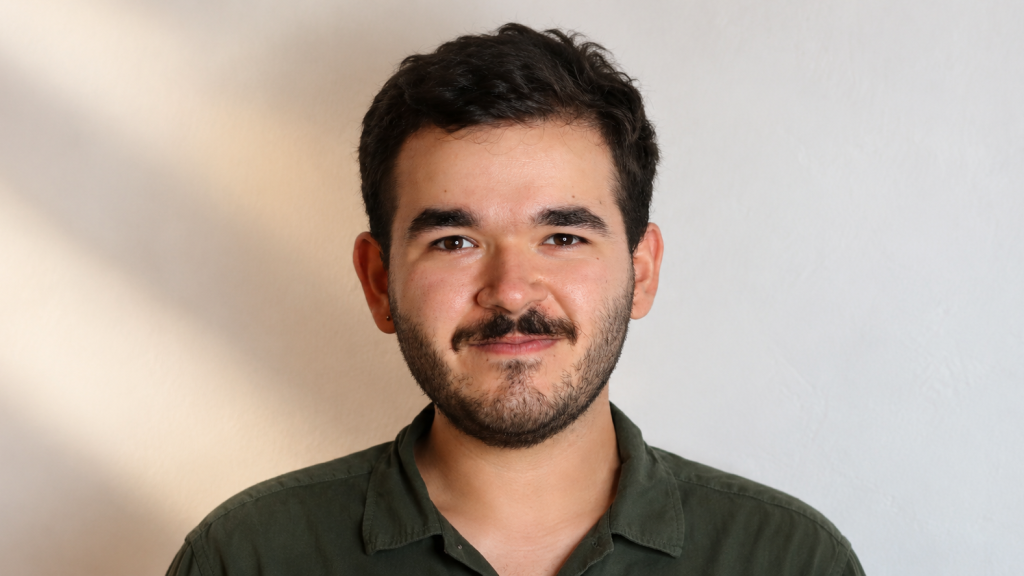
He knows religious radicalisation from personal experience and now works to promote tolerance and understanding across society: Berlin-based educator Tugay Saraç is to receive the Klaus Jensen Stiftung's 2026 Reconciliation Prize. The 29-year-old gay Muslim is particularly active in countering Islamist extremism and promoting acceptance of different sexual identities within Muslim communities.
Key points at a glance
- Recognition for his work: Tugay Saraç is to receive the Klaus Jensen Stiftung's 2026 Reconciliation Prize in Trier.
- Award ceremony in November: The prize, worth €10,000, will be presented at a ceremony on 26 November.
- Prevention work in schools: The Berlin-based educator talks to pupils and teachers about Islam, gay and queer life, antisemitism and Islamism.
- Personal history: Saraç says he became radicalised as a teenager and turned away from Salafism in 2017.
- Promoting understanding across society: At the liberal Ibn-Rushd-Goethe-Moschee, he leads the “Islam & Diversity” project and serves as LGBTQ+ officer.
Foundation honours commitment to dialogue
With this award, the foundation honours a man who has made his personal life story the starting point for his educational work. Saraç visits schools to engage in conversations with young people and teachers. Among the subjects he addresses are antisemitism, Islamism and the relationship between the Muslim faith and homosexuality. Speaking to the German Press Agency, foundation spokesperson Klaus Jensen explained the decision by citing Saraç's exemplary commitment, “which is also marked by courage”. The prize is worth €10,000 and is due to be presented at a formal ceremony in Trier on 26 November.
In the Klaus Jensen Stiftung's view, Saraç's approach to difficult social questions is a particularly distinctive feature of his work. The foundation says the Berlin-based educator seeks to reach young people not through accusations or lectures. Instead, he uses personal conversations to foster understanding of different ways of life and explain the dangers of extremist worldviews. In his educational and prevention work, Saraç relies “not on confrontation or moralising, but on personal encounters, dialogue and the credible sharing of his own experiences”, the foundation explained. His programmes are aimed both at young people and at teachers who face religious and social conflicts in everyday school life.
“Love is halal”
Saraç works at the liberal Ibn-Rushd-Goethe-Moschee in Berlin (German). There, he heads the “Islam & Diversity” support service and also serves as LGBTQ+ officer. One focus of his work is the question of how religious faith and sexual identity can be reconciled. Saraç says he works intensively to “help young Muslims understand that Islamic faith and a queer identity need not be contradictory”. He sums up his position in a message: “Love is halal” – meaning “love is permitted”. Through this, the 29-year-old particularly hopes to reach people whose sexual orientation or identity puts them at odds with their religious environment.
His own life story shapes his work
Saraç's work today raising awareness of Islamist radicalisation is also linked to his past. By his own account, he became radicalised as a teenager and was a follower of Salafism for a time. He cites his rejection of his own homosexuality at the time as one reason for this development. In 2017, however, he managed to turn away from Salafism. He now uses his experiences to raise other people's awareness of how extremist ideologies operate. As a former Salafist, he knows “the mechanisms of Islamist radicalisation first-hand”, Saraç said. Today, he speaks openly about this part of his life story. In doing so, he connects his examination of religious extremism with questions of personal identity and belonging in society.
Protecting young people from extremism
For the Klaus Jensen Stiftung, the preventive nature of Saraç's work is the decisive factor. According to foundation spokesperson Jensen, the prizewinner aims to build young people's resilience against radicalisation as early as possible. At the same time, he seeks to create connections between social groups whose relationships are often shaped by mutual prejudice. Jensen believes peacebuilding begins “not only after a conflict, but wherever prejudice, perceptions of others as enemies and a willingness to use violence are prevented”. The foundation therefore sees awareness-raising work in schools as an important way to counter social tensions. Saraç's work brings together several areas: preventing Islamist radicalisation, addressing antisemitism and promoting acceptance of gay and queer people.
The award is presented by the Klaus Jensen Stiftung, which supports projects for violence prevention, mediation and reconciliation in Germany and abroad. The foundation was established in 2003 by Klaus Jensen. The SPD politician served as Mayor of Trier from 2007 to 2015. Through the Reconciliation Prize, the foundation honours people who work to promote peaceful understanding and reduce social conflict.








