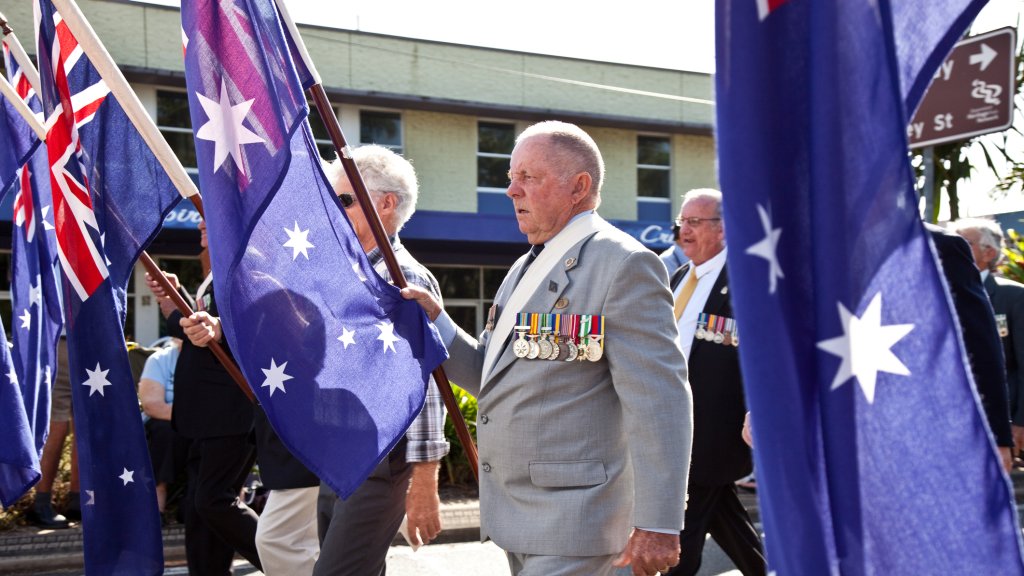
For decades, gay, lesbian and bisexual people in Australia's armed forces could be persecuted, put under pressure or removed from service because of their sexual orientation. Now the Australian government intends to officially acknowledge this historical injustice and apologise to those affected.
Key points at a glance
- The Australian government intends to formally apologise to gay and lesbian service personnel and veterans for historical discrimination.
- Gay, lesbian and bisexual military personnel faced investigations, dismissals and other measures over several decades.
- Many of those affected were not convicted of criminal offences but were forced out of the armed forces through administrative, medical or disciplinary proceedings.
- It should be possible to add corresponding annotations to military records where past measures were based on regulations that would not constitute a breach under today's rules.
- The Senate committee is also calling for recognition of their service and a formal government apology.
- Veterans' representative David Gibson stresses that the apology should come from the highest political level.
- No financial compensation has yet been promised to those affected.
- Campaigners point to the financial and health consequences of the discrimination at the time and are calling for compensation payments.
- Australia lifted its ban on gay men and lesbians serving openly in the armed forces in 1992.
Investigations over homosexuality
Australia is thus following similar steps in the United Kingdom (German) and Canada. The pledge came in connection with parliamentary deliberations on military justice reforms. These stem from the Royal Commission into Defence and Veteran Suicide. The focus is not solely on the criminal prosecution of gay and lesbian military personnel. Many of those affected were never convicted of a criminal offence. Instead, their military careers ended as a result of administrative, medical or disciplinary decisions.
For decades, gay, lesbian and bisexual members of the Australian Defence Force (ADF) faced investigations, forced discharges and other service-related consequences. Some were pressured into resigning. Others were subjected to disciplinary or administrative proceedings. The government now acknowledges that these people's experiences must also be part of the reckoning with the past. Affected veterans are to be allowed to have corresponding annotations added to their military records if their discharge or treatment at the time was based on regulations that would now constitute neither a criminal offence nor a breach of current ADF policies. This is intended to ensure recognition also extends to veterans who were never convicted of a criminal offence.
Many of those affected were discharged
Earlier discussions of this historical injustice had focused particularly on overturning convictions for homosexual acts in connection with military service. However, this covered only some of those affected. Many gay and lesbian military personnel had been removed from the armed forces through administrative proceedings. David Gibson, chair of “GLBTI Rights in Ageing” and a former army officer, is himself among this group. He was discharged from the military because of his sexual orientation.
Speaking before the Senate inquiry committee, Gibson warned against focusing solely on criminal convictions when addressing the past. “If we had only acknowledged criminal convictions and overlooked those dealt with through administrative proceedings, we would have risked creating another group of forgotten veterans.” Gibson stressed that the different ways in which gay men and lesbians were forced out of the military had to be taken into account. “This distinction matters. Some were convicted. Others were discharged. Others still were pressured to leave.” For those affected, he said, the underlying message was ultimately the same, regardless of the procedure used. “Regardless of how it happened, the message they received was the same: because of who they were, there was no place for them in the armed forces.”
Calls for an apology
The relevant Australian Senate committee ultimately recommended several measures to address the past. It should be possible to add corresponding annotations to historical Department of Defence records. The service of the military personnel affected should also be officially recognised. At the same time, the Australian government should issue a formal apology. The committee also explicitly called for a “certificate of honourable service” for those affected by the discriminatory regulations. The Australian Department of Defence noted that such certificates of service were already available on request. Military records could also be amended to show that a veteran had been discharged through no fault of their own.
Gibson welcomed the government's willingness to apologise. However, he said, who delivered that apology was also crucial. In his view, it should come from the highest level of government – particularly Prime Minister Anthony Albanese. “The message must be clear: you served Australia, what was done to you was wrong, and for that we apologise.” For Gibson and other representatives of those affected, such a statement would be an important step towards acknowledging the historical injustice.
No financial compensation yet
On another central issue, however, there has so far been no corresponding pledge. Alongside an official apology, gay and lesbian veterans are also calling for financial compensation. Neither the Senate committee nor the Australian government has yet committed to such a scheme. Rodney Croome, spokesperson for Just.Equal Australia, described the announced apology as an important acknowledgement. In his view, however, financial compensation should take account of the material consequences that the discrimination at the time had for those affected.
“Gay and lesbian veterans who suffered discrimination, including dishonourable discharges, lost their jobs, their income and sometimes their homes, alongside a loss of self-esteem and, in some cases, serious effects on their mental health.” The call for compensation therefore goes beyond symbolic redress. It is also intended to take account of the economic losses resulting from the loss of a military career.
Looking to Canada and the United Kingdom
Greens Senator Nick McKim is also calling for more extensive efforts to address the past. In his view, there should be an examination of what form financial compensation for those affected could take. “Financial compensation cannot undo this harm, but it would represent a tangible acknowledgement of the injustice suffered.” McKim pointed to Canada and the United Kingdom. Both countries have established compensation schemes for former gay and lesbian members of their armed forces. Whether Australia will follow this example remains unresolved.
Ban lifted in 1992
The announced apology concerns a period spanning decades of Australian military history. It was not until 1992 that the country lifted the formal ban that had previously prevented gay men and lesbians from serving openly in the armed forces. Before its abolition, members of the armed forces could become the targets of investigations because of their private lives. Military personnel were sometimes also questioned about colleagues suspected of being gay or lesbian. Such investigations could have serious consequences for those affected. They risked losing their security clearance or having to end their military careers.








