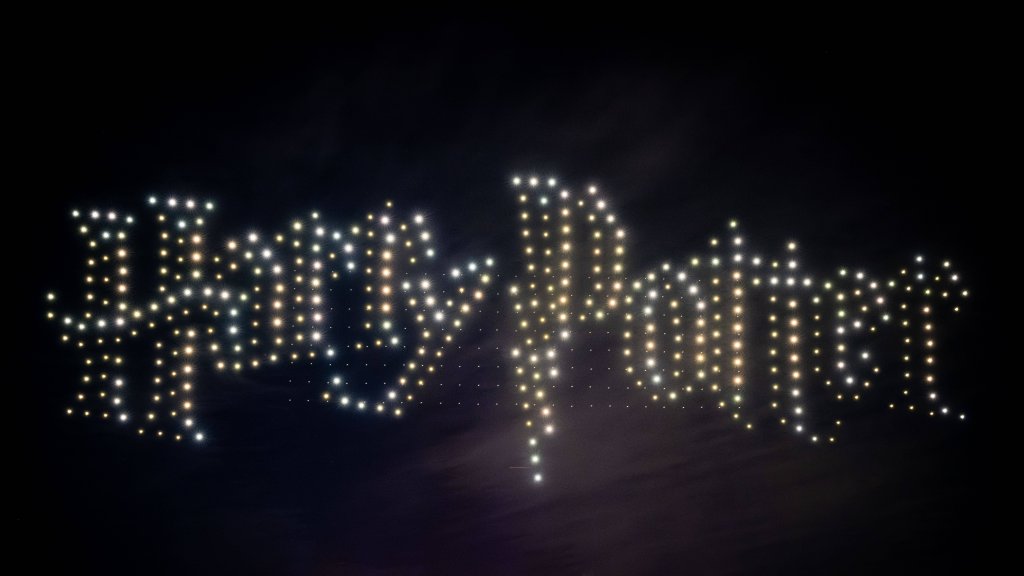
Planned Harry Potter-themed Christmas lights are prompting protests in the British capital. More than 3,500 people have signed a petition within a single day calling on London's mayor, Sadiq Khan, to prevent the installation on the well-known shopping street Oxford Street. The backdrop is the continuing criticism of British author J. K. Rowling and her campaigning against certain rights of trans people.
Key points at a glance
- Petition against Christmas lights: more than 3,500 people have signed an appeal against the planned Harry Potter light display on London's Oxford Street within 24 hours.
- Criticism of J. K. Rowling: activists fear that advertising for the new HBO series will generate additional income for the author, which she could use to support organisations opposed to trans rights.
- The Good Law Project is calling on Sadiq Khan to back up his public support for trans people with concrete action.
- According to the mayor's office, decisions on the Christmas lights rest solely with the New West End Company and local businesses.
Activists' demands
The Christmas lights are intended to promote the forthcoming Harry Potter television series from US broadcaster HBO. Critics fear that the public display celebrating the successful book and film series could generate additional income for the author. Rowling has announced that she will use her wealth to support initiatives campaigning against certain trans rights. The petition is supported by the British organisation Good Law Project, which uses legal action to pursue social and political causes. The organisers are demanding that Khan prevent the planned lights. Alongside the potential financial impact, the signatories also criticise the social message conveyed by the planned installation.
A large-scale Christmas light display celebrating Rowling's work could contribute to trans people feeling unwelcome on one of London's best-known shopping streets, the organisers argue. Particularly during the Christmas season, the British capital must be a place where people can feel safe and accepted regardless of their gender identity. The petition explicitly refers to earlier statements by Mayor Khan. He has repeatedly emphasised that trans rights are human rights. He has also pledged to make London a safe and welcoming city for trans people. A spokesperson for the organisation strongly criticised the planned Christmas lights. “How can Mayor Khan tell trans Londoners that ‘this city belongs to you too’ while at the same time allowing Christmas lights that will help fund organisations opposed to trans rights? The mayor must match his words with action.”
Response from the mayor's office
The demand to prevent the planned Christmas lights is directed at London's mayor. His administration stresses, however, that the decision on the installation does not fall directly within his remit. A spokesperson for Khan said: “The Christmas lights on Oxford Street are not organised by either the mayor or the Oxford Street Development Corporation. This is the responsibility of the New West End Company and local businesses.” The New West End Company represents the commercial interests of businesses in London's West End, which includes Oxford Street. The mayor's office also reaffirmed that Khan remained committed to his fundamental support for transgender and non-binary people. The statement contained no pledge to work towards cancelling the Christmas lights.
New Harry Potter series
The dispute over the Christmas lights is part of a broader debate about HBO's planned new Harry Potter adaptation. Queer activists have been calling online for a boycott of the production for months. Despite the controversies surrounding Rowling, however, the new Harry Potter series is already attracting considerable interest ahead of its release in December. According to Warner Bros. Discovery, the first trailer received more than 277 million views within 48 hours, making it the most-watched trailer in the history of HBO and HBO Max. It more than doubled the previous record. There is also considerable interest on social media in the new adaptation of the story of the famous wizard.
Criticism of Rowling continues
British writer J. K. Rowling, known as the author of the Harry Potter series, has publicly advocated for women's sex-based rights for several years. She takes the view that biological sex must continue to play a decisive role, particularly in women-only spaces, sport and legislation. Rowling criticises certain concepts of gender identity and opposes legislation that, in her view, removes the distinction between biological sex and gender identity. She also provides financial and public support to organisations and legal initiatives that hold such positions. Critics from the LGBTQ+ movement accuse her of using her campaigning to restrict trans people's rights and social acceptance. Rowling herself justifies her stance primarily in terms of protecting women and girls and safeguarding sex-based rights. The launch of the new series is likely to bring another sharp rise in criticism of the British author and spark further debate.








