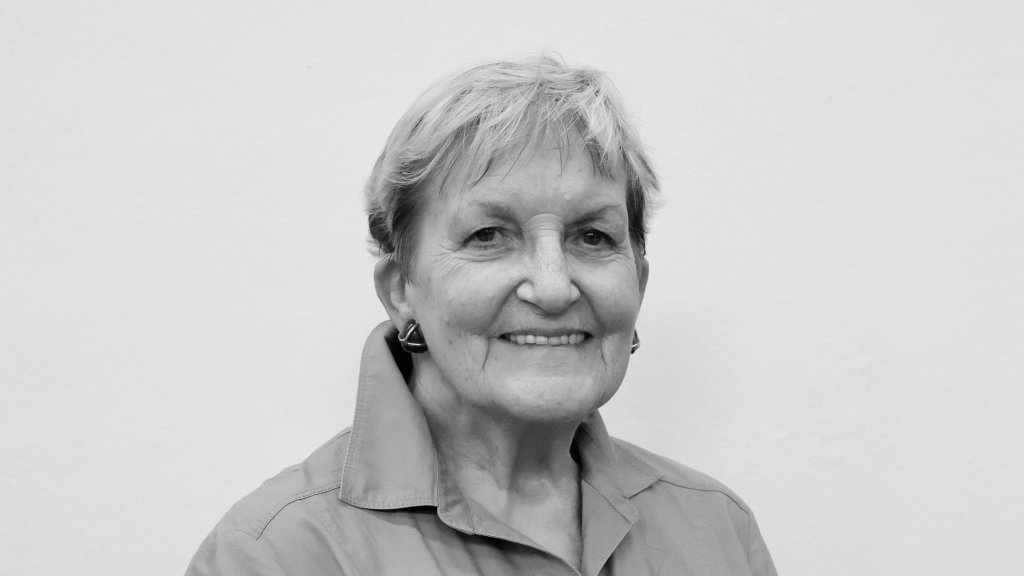
Carola von Braun belonged to a generation of liberals for whom freedom did not end with economic self-determination. For her, liberalism also entailed a commitment to social policy: people should be able to determine their own lives – regardless of gender, background or sexual orientation. Von Braun was ahead of her time, particularly on the rights of gay men and lesbians. As leader of the Free Democratic Party (FDP) in Berlin, she advocated same-sex marriage as early as the beginning of the 1990s – at a time when such a demand was by no means taken for granted even within the FDP. Now the trailblazer and ally of the community has died at the age of 83.
The key points at a glance
- FDP politician Carola von Braun has died at the age of 83.
- Von Braun led the Berlin FDP from 1990 to 1994 and had previously been the Berlin Senate's first Commissioner for Women's Affairs.
- She served in the German Bundestag from 1980 to 1983 and later in the Berlin House of Representatives.
- She was a member of the FDP's federal executive committee from 1986 to 1994 and also of its federal presidium from 1991 to 1994.
- Equal rights were particularly important to her – including for gay men and lesbians.
- As early as 1992, she publicly advocated allowing same-sex couples to marry.
- She also called for explicit protection against discrimination on the grounds of sexual orientation in Germany's Basic Law.
- FDP federal leader Wolfgang Kubicki paid tribute to von Braun as an “influential voice for freedom and equal rights”.
A voice for those waiting for equality
In an interview with taz in September 1992, she was asked whether the ban on same-sex marriage at the time was justified. Von Braun disagreed. The definition of marriage needed to move beyond the outdated notion that marriage was primarily about conceiving children, she said. If that was no longer the main reason for getting married, she asked: “Then why shouldn't same-sex couples be able to marry too!?” Von Braun did not stop at sympathy in principle. Asked whether she would support a motion to introduce gay marriage at the FDP's federal party conference, she replied: “I support the fundamental demand to open the doors of the register office to gay and lesbian couples too!” That was in 1992. Twenty-five years later, in 2017, marriage equality became law in Germany.
Protection against discrimination
Von Braun linked the demand for marriage for same-sex couples to a fundamental understanding of civil rights. In the same interview, she called for protection against discrimination on the grounds of sexual orientation to be enshrined in the Basic Law. “No one may be discriminated against because of their sexual orientation. This must also be included in the Basic Law, with all conceivable implications for international law,” she said at the time. Her position was not confined to the situation in Germany. Von Braun also spoke about people who were persecuted because of their sexual orientation. Anyone persecuted on those grounds in their home country must be able to find refuge in Germany, she demanded. In doing so, she brought together two aspects that shaped her political work as a whole: individual freedom and the state's responsibility to ensure that freedom in practice.
A pioneer of women's policy
Von Braun initially became known primarily for her work on women's policy. From 1984 to 1990, she was the Berlin Senate's first Commissioner for Women's Affairs. In this role, she championed equal rights and a modern approach to women's policy. The Berlin House of Representatives later paid particular tribute to her commitment to developing Berlin's state equal opportunities legislation. After her time as Commissioner for Women's Affairs, she took over the leadership of the Berlin FDP. She was her party's lead candidate in the 1990 election to the House of Representatives. The FDP returned to the Berlin House of Representatives in that election; von Braun became a member and subsequently leader of its parliamentary group. She led the liberals' Berlin state branch from 1990 to 1994. She also wanted to bring women together beyond party politics. In 1992, she launched the Überparteiliche Fraueninitiative Berlin – Stadt der Frauen. Its aim was cooperation across parliamentary group and party boundaries to advance women's policy concerns more effectively.
A liberal by conviction
Von Braun represented the FDP's left-liberal wing. She belonged to the Freiburger Kreis, which drew on the tradition of the Freiburg Theses. From 1980 to 1983, she sat in the German Bundestag, where she was the FDP parliamentary group's spokesperson on education and cultural policy. She later served again in Berlin's parliament. She was a member of the FDP's federal executive committee from 1986 to 1994 and of its federal presidium from 1991 to 1994. Her political career was not without conflict, however. In 1994, she gave up the leadership of the Berlin party and its parliamentary group and withdrew from parliamentary work. This followed the so-called “Figaro affair”.
A criminal investigation was discontinued for lack of factual and legal grounds; Berlin's Court of Audit also found nothing objectionable in her conduct. Von Braun later remained active on social policy issues. For her work, she received honours including the Cross of the Order of Merit of the Federal Republic of Germany in 2010, the Louise Schroeder Medal in 2015 and the honorary title of City Elder of Berlin in 2021. Her legacy, however, cannot be reduced to any single office.
“Influential voice for freedom and equal rights”
Following her death, FDP federal leader Wolfgang Kubicki paid tribute to von Braun as an important representative of the liberals. “With Carola von Braun, we lose a committed liberal, a dedicated politician and an influential voice for freedom and equal rights. As leader of the Berlin FDP and a long-standing member of the federal executive committee, she played a significant role in shaping our party. As the Berlin Senate's first Commissioner for Women's Affairs, she was a pioneer.”
He continued: “With great political passion, she championed a liberal and modern approach to women's policy, leaving a lasting mark far beyond Berlin. Her commitment, her clarity and her tireless efforts for a free and open society will stay with us and serve as an example. We will honour Carola von Braun's memory with gratitude. My thoughts are with her family and all those who mourn her.”
Carola von Braun will therefore be remembered not only as Berlin's first Commissioner for Women's Affairs and as leader of the Berlin FDP. Her name also stands for an early liberal commitment to legal equality for gay men and lesbians. When she publicly advocated opening the doors of the register office to gay and lesbian couples in 1992, “marriage for all” was still a long way off. But her conviction was already clear: equal freedom must also mean equal rights.








