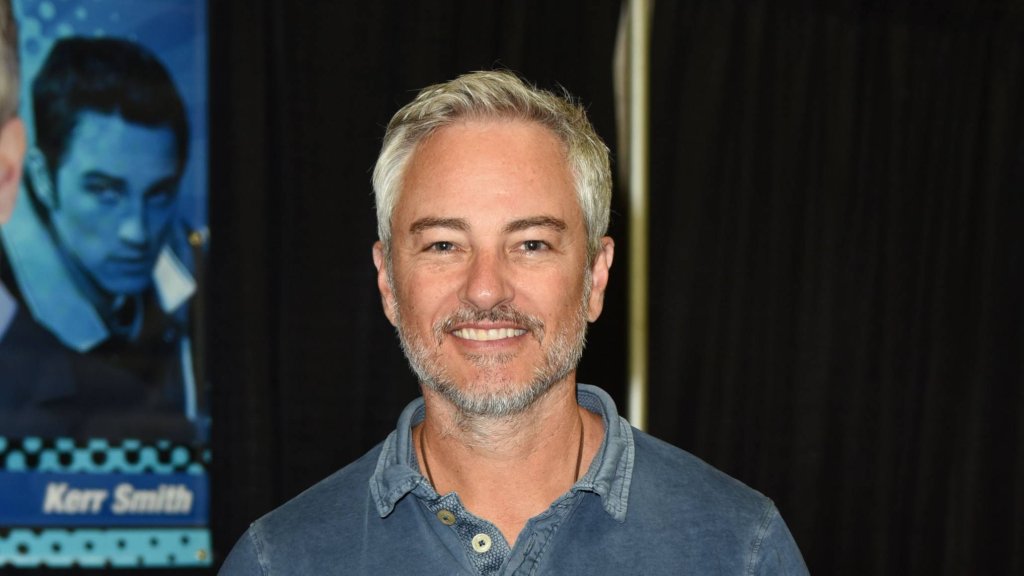
One kiss, ten takes and a piece of television history that became a personal turning point for many gay viewers: more than 25 years after his appearance in “Dawson’s Creek”, actor Kerr Smith has (German) spoken about filming one of the best-known scenes in American television history. In his new memoir, the now 53-year-old also recounts homophobic hostility, protests against the series and the significance of his role as Jack McPhee.
The key points at a glance
- A historic television moment: Kerr Smith played gay character Jack McPhee in “Dawson’s Creek”. His kiss with Ethan is regarded as the first kiss between two men in prime time on a major free-to-air US television network.
- Ten takes for one scene: Smith and fellow actor Adam Kaufman say they were extremely nervous when filming the kiss.
- Homophobic protests: the coming-out storyline prompted demonstrations outside the studios. Later, Smith’s car was daubed with homophobic insults.
- A new memoir: in “I Don’t Want to Wait: My Life on Dawson’s Creek”, the 53-year-old looks back on his career and experiences he had previously kept to himself.
- Remembering James Van Der Beek: following his former colleague’s death in February 2026, Smith added personal recollections from those involved in the series to his book.
- A lasting impact: viewers still tell the actor how profoundly his character’s story has influenced their lives.
A gay athlete
“I’ve spent the past 25 years of my career trying to repeat that experience,” Smith said in an interview with British newspaper The Guardian. “Throughout my entire career, I’ve tried to get back to that time.” Starting in 1998, Smith played sensitive athlete Jack McPhee for five seasons of the hit teen series. What was initially conceived as a supporting role developed into a groundbreaking coming-out story. When Smith joined the cast of “Dawson’s Creek” in 1998, he had made only a few minor television appearances, including a role in “Baywatch”. In the second season, his character Jack was initially intended to create tension between Dawson Leery, played by James Van Der Beek, and Joey Potter, portrayed by Katie Holmes.
Expanding the role
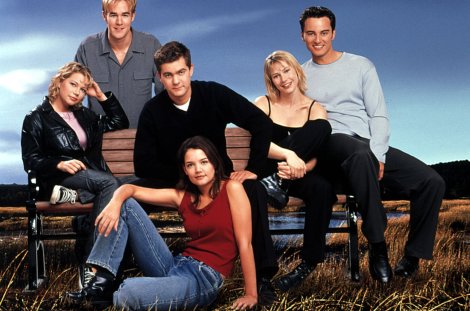
After about eight episodes, however, series creator Kevin Williamson asked to speak to the actor. “I’d only been working on the production for two months at that point,” Smith recalled. “I thought, ‘Oh shit. Am I getting fired?’” Instead of being dismissed, he was faced with a fundamental change to his role. Smith had already suspected that Williamson was exploring different sides of his own personality through the main characters. To him, Joey, played by Joshua Jackson, embodied Williamson’s humorous personality, Dawson his intellectual side and Jen, portrayed by Michelle Williams, his wild side. What had been missing so far was Williamson’s homosexuality. The series creator had not yet publicly come out at that point.
At the meeting, Williamson finally confirmed Smith’s suspicion. “His exact words were: ‘Kerr, we want to take Jack in a different direction.’” Smith was surprised. “Holy shit,” he recalled thinking at that moment. He asked for a day or two to think it over and consult people he trusted. In the late 1990s, portraying a gay lead character in a successful American teen series still involved considerable career uncertainty for an actor.
Ten takes for one kiss
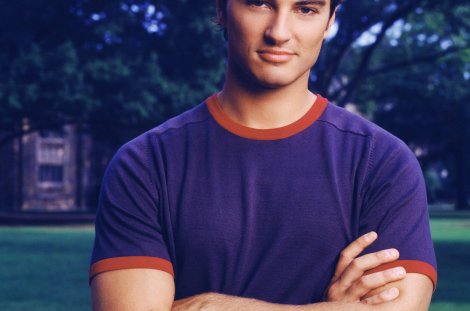
The decision changed the series for good. Jack McPhee became one of the first prominent gay characters on American teen television. In the third-season finale, Jack kissed student Ethan, played by Adam Kaufman, outside Ethan’s university hall of residence. The scene is regarded as the first kiss between two men in prime time on a major free-to-air American television network. Filming it was a particular challenge for the actors. “I was incredibly nervous about that kiss,” Smith said. “We filmed it ten times. Ethan was nervous too, whatever he says today.” The director tried to ease the tension for both of them. What mattered was not whether two men, two women or a man and a woman were kissing. If the characters loved each other and were attracted to one another, the actors should play the scene accordingly. “He was right,” Smith explained. “I thought about it and told myself, ‘Yes, actually, it really is that simple.’”
A turning point for viewers
The storyline’s significance extended far beyond the series. For many young gay people, Jack McPhee was one of the first television characters in whom they recognised their own experiences. The showrunner at the time, Greg Berlanti, said back in 2020 that the story had helped an entire generation. “For a whole generation, it was a pivotal story connected to their own experiences of coming out,” Berlanti said. “It was lovely to imagine that, in some way, we’d thrown young people a lifeline that perhaps hadn’t been there for us. It’s easy to forget how valuable that is.” At a time when gay relationships were still rarely portrayed openly on American television, the series thus conveyed an important message about love and self-acceptance.
Protests outside the studio
The gay storyline also met with considerable opposition, however. Opponents of the series demonstrated outside the production studios in Wilmington in the US state of North Carolina. Smith recalled having to drive through the crowds on his way to work. The protests frightened him. He found some relief in the fact that the demonstrators appeared to be targeting his character’s storyline rather than him personally. “I disagreed with the protests, but I respected the fact that they weren’t really directed at Kerr Smith personally. That was something, at least.” The actor tried not to let the hostility affect him. “I put blinkers on,” he said, looking back. But the hostility was not confined to the protests outside the studios.
A homophobic attack
While filming the horror film “The Forsaken” in Yuma, Arizona, in the United States, Smith became the victim of a homophobic attack around 2001. When he returned to his parked car, he discovered red graffiti on the vehicle. It included several homophobic insults. Smith never managed to find out who was responsible or how the perpetrators had recognised his car. He did not speak about the incident for years. Only when writing his memoir did he decide to make the experience public. “I’d never mentioned it to anyone until I decided to write it down,” he explained. Working on an autobiographical book demanded a different kind of personal openness from acting, he said. “As an actor, I like being very vulnerable. But as a writer, it’s different when you’re writing about your own experiences. Because then it’s about you. Really about you.”
Deliberately choosing different roles
To avoid being permanently typecast as Jack McPhee, Smith deliberately sought out characters as different as possible during breaks in filming. This was particularly evident in the horror film “Final Destination”. In it, he played aggressive student Carter Horton, who had little in common with the sensitive Jack. Looking back, Smith described the character as “a complete arsehole”. He continued acting in the years that followed, including a brief appearance in “Riverdale”. There, he played the headmaster of a school called Stonewall Prep. Nevertheless, his time on “Dawson’s Creek” remained the defining period of his career. For his memoir, “I Don’t Want to Wait: My Life on Dawson’s Creek”, he spoke to numerous former colleagues and crew members, including Katie Holmes. In doing so, he discovered just how different personal recollections can be. “One of the things I learnt is that no two people ever remember an event in the same way.”
The death of James Van Der Beek
While Smith was finishing his memoir, his former co-star James Van Der Beek died in February 2026 (German) as a result of bowel cancer. Van Der Beek had played the title role in “Dawson’s Creek” and had been one of the series’ best-known faces for years. Some of the cast had already gathered at the Richard Rodgers Theatre in New York in September 2025 for a benefit event supporting the cancer organisation F Cancer. Smith had already described this reunion in his book. Following his colleague’s death, he decided to include an additional closing chapter. In it, former co-stars, production staff and friends remember Van Der Beek. “I didn’t speak to the other actors again after his death,” Smith explained. He hoped Van Der Beek would have approved of the addition.
Viewers thank Smith
More than a quarter of a century after it aired, Jack McPhee’s coming-out story has lost none of its significance for many viewers. Since “Dawson’s Creek” became available on Netflix in 2020, a new generation has also discovered the series. Smith is still regularly approached about his role at the time. Many people tell him that the story helped them accept their own homosexuality or navigate coming out. The positive responses far outweigh the negative experiences. “The ratio of people who come up to me with stories like that to the negative things that happen is, without exaggeration, a million to one,” Smith said.
Encounters with people for whom Jack McPhee was far more than a television character are particularly moving, he said. “People come up to me and say, ‘Hey, Jack, that story changed my life.’” Some have even confided in him that the series helped them through a severe personal crisis. “I’ve even had people say to me, ‘I don’t know if I’d still be here today if it hadn’t been for Dawson’s Creek.’” For Smith, such encounters are proof that the decision he made back then had an impact far beyond that of an ordinary acting role.








