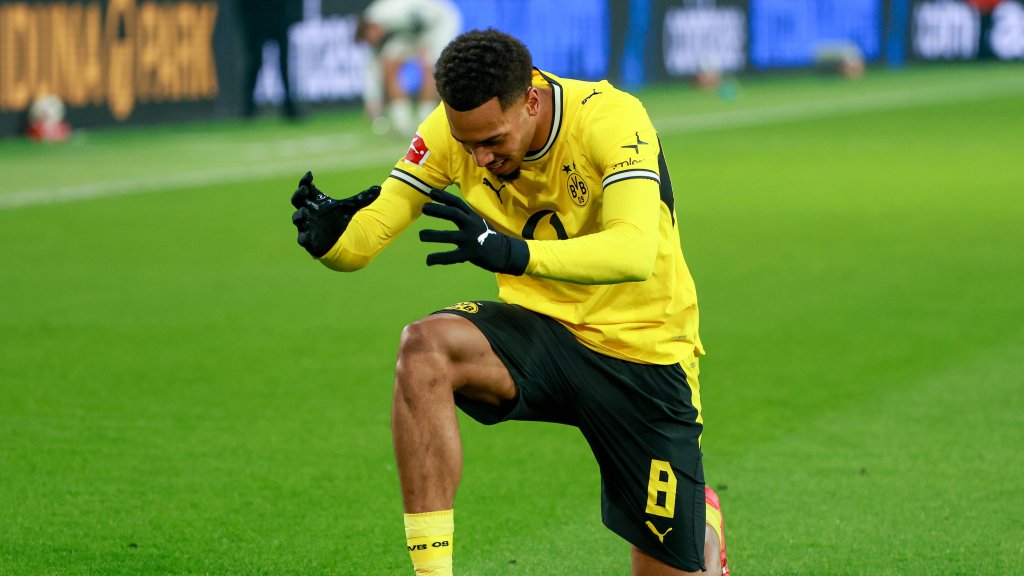
Borussia Dortmund are enjoying a successful spell on the pitch, but off it, a debate surrounding Germany international Felix Nmecha (German) is once again causing considerable unrest. BVB are level on points with league leaders Bayern München in the title race. At the same time, criticism is growing within the club of a religious message that the 26-year-old midfielder associates with his goal celebration.
The key points at a glance
- Dispute over Nmecha: The 26-year-old international's goal celebration is causing growing tensions at Borussia Dortmund.
- Religious network under fire: The organisation “Ballers in God”, which is associated with the celebration, faces criticism over homophobic and discriminatory positions.
- Supporters' department demands action: The Fan and Supporters' Department is calling for a clear rejection of discriminatory views.
- BVB announce talks: The club intend to speak to Nmecha, but also point to freedom of religion and belief.
- Members' meeting approaches: Ahead of the meeting on 22 November, pressure is growing on Dortmund's leadership to resolve the conflict.
Nmecha remains defiant
The trigger is a recurring gesture in which Nmecha symbolically removes a crown from his head and places it on the pitch. He most recently performed this ceremony after scoring twice in the 2–1 win against Elversberg, his brace helping Dortmund to victory. The international has scored four goals in total this season. The gesture, known as “The King’s Return”, has a religious context that is prompting increasing debate at BVB. The celebration is regarded as the official campaign symbol of the evangelical network “Ballers in God” (BiG). The organisation shares footage of Nmecha's goal celebrations through its own channels. According to reports to date, Borussia Dortmund have been discussing the issue internally for months. Talks with Nmecha are said to have been aimed at persuading the player to stop using the controversial gesture and not to share it on social media as well. However, there has been no discernible change in his behaviour.
Homophobic hatred
At the heart of the dispute is the connection between Nmecha's personal profession of faith and the “Ballers in God” network. Founded in 2015 by former Tottenham player John Bostock (34), the religious community reaches around 785,000 followers on Instagram. According to investigations by outlets including ARD's current affairs programme “Monitor”, homophobic and anti-LGBTQ+ positions are expressed within parts of the network. Abortion is also described there as “Satan's plan”. LGBTQ+ organisations classify the organisation as “Christian fundamentalists”.
A particular concern is that Nmecha's goal celebrations take place in front of a large audience. At Dortmund's stadium, around 25,000 fans watch matches from the South Stand. Footage of the crown gesture is subsequently also shared by “Ballers in God”. In critics' view, this creates a publicly visible link between the player and the network. Beyond the religious significance of his goal celebrations, this therefore raises the question of whether Nmecha's repeated use of the campaign symbol also helps raise the controversial organisation's public profile. This connection had already been reported during the World Cup.
Supporters' department demands a clear stance
The dispute has now also reached the club's governing bodies. Borussia Dortmund's Fan and Supporters' Department (German) addressed those in charge in a public statement, criticising their handling of the conflict so far. Central to its demands is an unequivocal rejection of discriminatory positions. In the supporters' representatives' view, freedom of religion must not be understood as a “free pass for discrimination”. Dortmund's leadership responded on Sunday by announcing that it would “seek talks with the player”. At the same time, the club maintained its existing position of principle.
Borussia Dortmund again referred to “every individual's freedom of religion and belief”. The club also stressed its expectation that all employees respect both the law and Borussia Dortmund's core values. However, this leaves unanswered the crucial question of what specific consequences the club intend to draw from their international's behaviour. In particular, the repeated display of a symbol closely associated with a controversial religious community presents those in charge with a difficult balancing act between individual religious practice and the club's own values.
Nmecha's explanation so far
The player himself has so far commented only briefly on the allegations. Speaking about his religious convictions and his relationship with other people, Nmecha said: “I'm a Christian, of course. I love everyone. Of course I don't discriminate or anything.” He has yet to issue a more detailed public statement on the positions of “Ballers in God” and his connection to the organisation. According to the newspaper BILD, interview requests on the subject have either been declined or gone unanswered.
It is precisely this reticence that is helping to keep the debate alive. While Nmecha continues to use a gesture in his goal celebrations that the network publicly promotes, he has not explicitly distanced himself from the positions for which it has been criticised. This gives the conflict added significance for Borussia Dortmund. Nmecha is one of the club's important players on the pitch and, with a stated market value of €65 million, also carries considerable financial weight. Those in charge must therefore consider the club's sporting and financial interests alongside the public debate.
Members' meeting increases pressure
The proximity of the members' meeting on 22 November makes the situation particularly delicate for Dortmund's leadership. Last year's members' meeting had already seen heated debate over sponsorship by the arms company Rheinmetall. Now another dispute over the club's principles and its understanding of its own identity is looming. Unlike a sponsorship agreement, this time the focus is on the public behaviour of an individual professional player.
One possible measure would be to ban Nmecha from performing the controversial crown celebration, at least until he has explained his own stance and the religious network's positions in detail. Such a step would concern the public use of the symbol while wearing a Borussia Dortmund shirt, not the player's personal religious convictions. Indications of other possible sympathisers of the network within the squad add further sensitivity to the matter. The conflict surrounding Nmecha now extends beyond the question of how a footballer celebrates his goals. For Borussia Dortmund, it is increasingly about where the club draw the line on public religious messages and how they deal with links to organisations accused of holding discriminatory and homophobic positions. Nor is this the first time the international has been linked to homophobia and anti-LGBTQ+ hatred (German).








