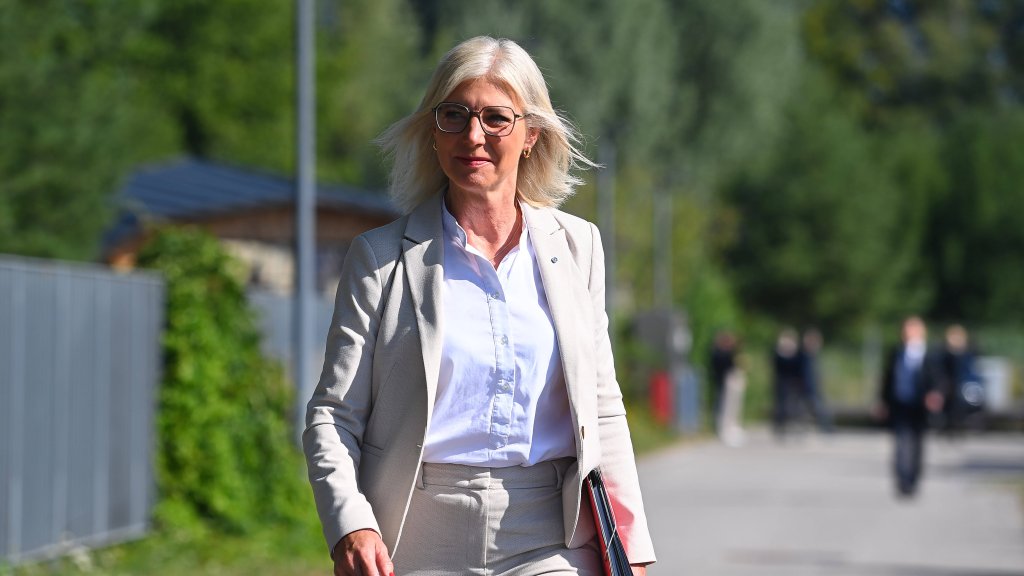
Penalise sex buyers, but not sex workers or people in prostitution: Bavaria’s Social Affairs Minister Ulrike Scharf (CSU) is calling for a fundamental change in Germany’s approach to sex work. She wants Germany to follow the so-called Nordic model in future. However, the debate itself is not new (German).
Key points at a glance
- Bavaria’s Social Affairs Minister Ulrike Scharf (CSU) is calling for a new model to protect sex workers and people in prostitution, and wants to penalise the purchase of sexual services in future.
- Scharf supports the so-called Nordic model. Under this approach, sex buyers are penalised, while selling sexual services remains legal.
- Supporters see it as a tool against human trafficking, sexual exploitation and forced prostitution.
- Opponents, however, fear that sex work could be driven further underground and into unsafe locations.
- Numerous specialist organisations and advice centres also oppose a ban on buying sex. LSVD+ explicitly warns against further criminalisation.
- At the end of 2025, a total of 4,826 people in prostitution were officially registered in Bavaria.
A new protection model
“We need a new protection model for Germany. The current rules to protect women from sexual exploitation are far too weak,” Scharf told the Augsburger Allgemeine. “Taking advantage of and exploiting women must not go without consequences.” Scharf made no reference at all to male sex workers, however. The CSU politician is among the supporters of the Nordic model. This approach would make buying sexual services a criminal offence. Those offering sexual services, by contrast, would not be penalised. At the same time, people in prostitution would receive support if they wanted to leave sex work and build an alternative livelihood. The model also includes closing brothels. Supporters expect this to enable more effective action against human trafficking and forced prostitution. The model originated in Sweden, where a system making the purchase, rather than the sale, of sexual services illegal was first introduced. Most recently, Iceland announced plans to introduce similar rules.
Driving sex work underground
The concept is highly controversial, however. Opponents of a ban on buying sex doubt that it would actually eliminate prostitution or effectively prevent sexual exploitation. Instead, they fear that sex work could increasingly shift into settings that are harder to monitor and more dangerous for those involved. The central concern is that, if clients fear criminal penalties, sexual services could increasingly be offered in secret. Advice centres warn, for example, of a shift from workplaces that can be monitored to private homes, cars or other locations where safety measures and rapid assistance may be lacking. The Sozialdienst katholischer Frauen (SkF) also opposes a ban on buying sex. Citing experience from its advisory work and scientific findings, the association argues that bans could make sex work less visible, exposing those involved to greater risks of violence and exploitation. Instead of further criminalisation, the SkF calls for rights, easily accessible assistance and safe access to support services.
LGBTQ+ organisations oppose a ban
Numerous specialist organisations, advice centres and advocacy groups also oppose a ban on buying sex. These explicitly include LSVD+ – Verband Queere Vielfalt. The LGBTQ+ civil rights organisation rejects further criminalisation of sex work, distinguishing between consensual sex work among adults and sexual exploitation, which it says must be tackled resolutely. In LSVD+’s view, a ban could even worsen sex workers’ situation: criminalisation could make their work more precarious and dangerous, and make it harder to access medical care, advice and protection from violence. The association also points out that queer and homosexual people among sex workers may face additional stigma, and warns that greater criminalisation could also bring LGBTQ+ spaces and meeting places under closer scrutiny from the authorities. The Berufsverband erotische und sexuelle Dienstleistungen also notes that numerous organisations, associations, research groups, foundations and other institutions with expertise in sex work have spoken out against introducing the Nordic model.
In Bavaria, the number of officially registered people in prostitution has recently risen slightly. According to the Bayerisches Landesamt für Statistik, a total of 4,826 people working in prostitution were registered at the end of December 2025. There were also 368 registered businesses. The number of registered people in prostitution thus rose by 1.4 per cent compared with the previous year. A large proportion of those registered do not hold German citizenship. According to the figures, their share was 86.4 per cent.








