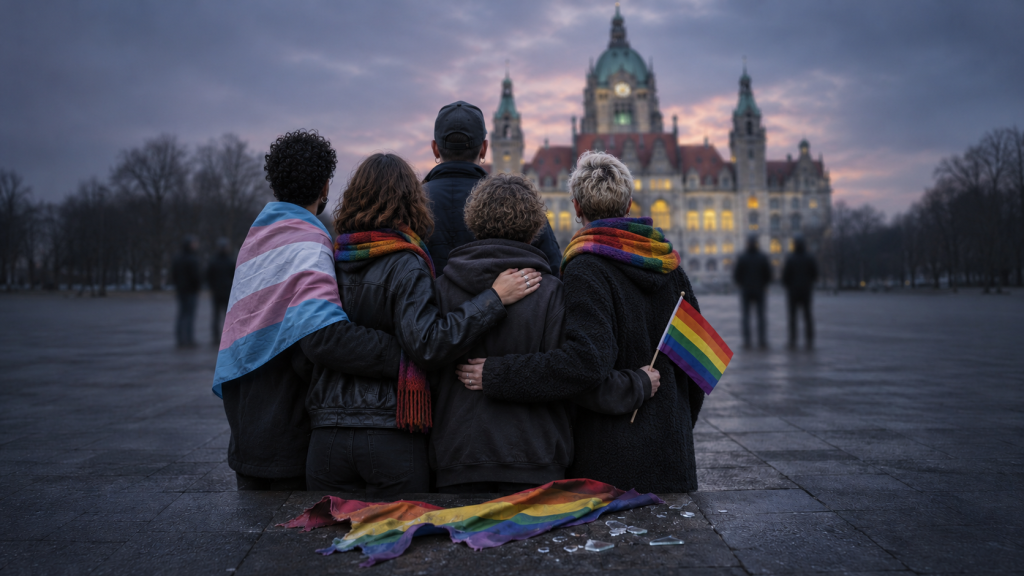
The number of documented acts of right-wing violence in Lower Saxony has risen. According to the latest annual report from victim support service Betroffenenberatung Niedersachsen, a total of 81 attacks with right-wing, racist, antisemitic or other hate-based motives were recorded in 2025. The previous year saw 68 cases. This represents an increase of around 19 per cent.
Key points at a glance
- More right-wing violence: Betroffenenberatung Niedersachsen recorded a total of 81 attacks with right-wing, racist, antisemitic or other hate-based motives in 2025. The previous year saw 68.
- At least 107 victims: Those affected included ten minors. The statistics also include two homicides and one attempted homicide.
- Eight attacks on LGBTQ+ people: Three were linked to Pride events. Other attacks took place in residential settings and everyday situations.
- The support service documented 31 racially motivated attacks.
- Serious physical violence: The figures include 32 cases of bodily harm, ten cases of aggravated bodily harm and 22 cases of coercion and threats.
- The figures are based on the support service’s records and should not be equated with comprehensive police statistics covering all criminal offences.
- Maik Brückner, spokesperson on queer policy for Die Linke, speaks of “unleashed violence” and stresses: “Where I come from, it is not safe for queer people.”
Hatred of LGBTQ+ people
At least 107 people were affected by the recorded offences, including ten children and young people. The support service points out that its figures do not reflect the full extent of right-wing violence in the state. Many incidents, it says, never come to its attention and therefore cannot be included in its records. Staff are particularly concerned about violence against people targeted because of their sexual orientation or gender identity. Eight such attacks were documented for 2025. Attacks also took place around Christopher Street Day Pride events.
Two homicides
The annual report makes clear that right-wing and hate-motivated attacks can have extremely serious consequences. According to the support service’s classification, the documented cases include two homicides and one attempted homicide. Physical attacks accounted for the largest share of recorded incidents. In total, the service registered 32 cases of bodily harm and ten cases of aggravated bodily harm. These two categories therefore accounted for 42 of the 81 documented offences, or more than half of all cases. There were also 22 cases of coercion and threats. The violence is thus not confined to direct physical attacks. Intimidation and threats can also severely affect the lives of those targeted. Racism was the most common motive, with 31 documented cases. Attacks on politically active people were another major category. The support service recorded 25 cases in this category, significantly more than before.
Violence against LGBTQ+ people
The annual report pays particular attention to attacks on members of the LGBTQ+ community. Eight such offences were documented for 2025. This made anti-LGBTQ+ hostility the fourth most common motive in the statistics. Three of the eight attacks were linked to Christopher Street Day Pride events. According to the support service, however, the threat was not confined to such public events. People were also attacked or threatened because of their sexual orientation or gender identity in their own residential surroundings and in ordinary everyday situations. This particularly affects people who live openly as LGBTQ+ and are therefore identifiable to potential perpetrators.
As an example, the support service cites an attack following Christopher Street Day in Emden. A participant in the event was punched in the face by a young person. The injuries were so severe that the victim required hospital treatment. Another particularly serious case from Osnabrück is also included in the records. There, a person was stabbed to death by their flatmate. According to the available information, the victim had already been threatened and subjected to homophobic abuse before the attack.
“Anti-queer hostility” unites
The support service sees a connection between this trend and political mobilisation against sexual and gender diversity. Press spokesperson Anna Eschbaum said: “For some years now, anti-queer hostility has become a unifying element of the far right.” In the service’s assessment, increasing agitation against LGBTQ+ people is contributing to more frequent hostility and acts of violence. Events such as Christopher Street Day and other publicly visible expressions of social diversity, in particular, are increasingly being targeted by right-wing actors. The documented cases illustrate different forms of threat. While some people are attacked at public events, others experience intimidation or violence in their immediate personal surroundings.
According to the support service, the consequences of hate-motivated violence often do not end with the attack itself. Physical injuries may heal, while psychological distress and feelings of insecurity can persist for a long time. Those affected reported fear and a lasting loss of their sense of safety, among other things. This could lead them to avoid certain places, take different routes to work or home, or change their behaviour in public. For LGBTQ+ people, this can also mean being less open about their sexual orientation or gender identity.
Around 300 support sessions
Alongside recording attacks, Betroffenenberatung Niedersachsen supports people who have experienced hate-motivated violence. In 2025, the service held more than 300 support sessions. The service was available not only to those directly affected, but also to relatives and witnesses. Project coordinator Kara Evers is calling for people to be informed as quickly as possible after an attack about the support available to them. It must be ensured, she says, that those affected can also receive advice if they decide not to report the incident to the police or are still unsure whether they want to take legal action. The published figures are based on Betroffenenberatung Niedersachsen’s own records. They should therefore not be equated with comprehensive police statistics covering all criminal offences.
Brückner highlights “unleashed violence”
Commenting on the latest figures, Maik Brückner, spokesperson on queer policy for Die Linke’s parliamentary group in the Bundestag, whose constituency is Hildesheim in Lower Saxony, said: “It really must be clear to everyone now: anti-queer violence is not a marginal phenomenon involving isolated perpetrators. The attack on Berlin Pride in July and the attack on the queer community centre in Hanover a few weeks ago are just sad examples. The statistics from Betroffenenberatung Niedersachsen show a bigger picture: where I come from, it is not safe for queer people. This unleashed violence is a direct consequence of right-wing mobilisation against gender and sexual diversity. We must not let this intimidate us. I call on the federal government not to cut funding for support services in the budget negotiations.”








