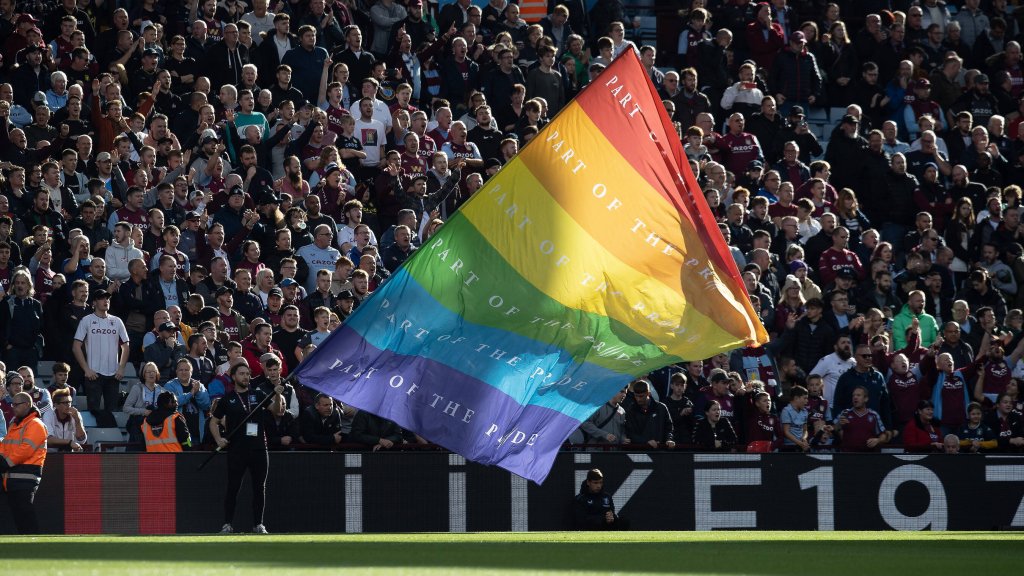
The English Premier League is facing fierce criticism over a lack of transparency in its commitment to LGBTQ+ people. Although clubs regularly speak out publicly in favour of diversity and against discrimination, none of the twenty clubs was willing to disclose how much money actually goes towards such measures. This was the finding of a BBC Sport investigation reported by journalist Emma Smith on 16 November.
Key points at a glance
- No disclosure of inclusion budgets: None of the 20 Premier League clubs was willing to give the BBC specific figures for its spending on LGBTQ+ inclusion.
- Homophobia on the rise: Anti-discrimination organisation Kick It Out recorded a total of 203 reports of homophobic incidents in the 2025/26 season – 46 per cent more than in the previous year.
- Record discrimination figures: A total of 1,744 cases were reported. The number of homophobic incidents rose particularly sharply in amateur football.
- Little diversity in leadership roles: According to a study, just 0.3 per cent of the senior staff surveyed openly identify as LGBTQ+.
- New Pride campaign: The Premier League plans to extend its “Premier League With Pride” initiative to two rounds of fixtures in the 2026/27 season.
Silence on the pitch
The BBC had asked every club in the world's wealthiest football league about its financial spending on LGBTQ+ inclusion. However, its journalists received no specific figures. It therefore remains unclear what financial priorities the clubs are setting and how their investments compare. Nottingham Forest came closest to giving a specific answer. A club spokesperson said the club allocated “significant financial resources to this important area”. Nottingham Forest also employs an equality, diversity and inclusion officer. However, this club did not provide an exact figure either.
Homophobic incidents at a record high
The lack of transparency comes at a time when discrimination in English football is increasing significantly, according to Kick It Out. The charity, which campaigns against racism and other forms of exclusion in sport, recorded a total of 203 reports of homophobic incidents in the 2025/26 season. This represents a 46 per cent increase on the previous season. It is the highest figure since Kick It Out expanded its reporting system five years ago.
However, the figures do not capture every incident that actually occurred. Only cases reported to the organisation are recorded. An increase may therefore reflect both a rise in discrimination and a greater willingness to report such incidents. The statistics cover professional and amateur football as well as online abuse. Kick It Out received a total of 1,744 reports of discrimination. According to Sky Sports, this represents a new record and an increase of 25 per cent. With 792 reports, racism remained the most frequently recorded form of discrimination.
Sharp rise in amateur football
The trend in grassroots football is particularly striking. The number of reported homophobic incidents there rose by 140 per cent. Around three quarters of these reports concerned matches involving adult footballers. But professional football is also affected. In its report, Kick It Out highlights a notable development: “For the first time, the most frequently reported individual incident of discrimination against a professional footballer involved homophobia.” Homophobic chanting was also recorded more frequently again. A total of 24 reports concerned the abusive chant “Rent Boy” or other homophobic chants. This was the highest number in three years. The derogatory expression “Rent Boy” refers to a male sex worker and is used in English football particularly in abuse associated with the London club Chelsea. Samuel Okafor, chief executive of Kick It Out, sees a fundamental problem in the findings. “These figures show that discrimination remains deeply rooted in all areas of football,” he said.
Gay senior staff
Alongside the reports of discrimination, Kick It Out also examined staff diversity within Premier League clubs. It gathered information on the senior management of 17 of the 20 clubs. According to the BBC, just 0.3 per cent of the senior staff covered openly identify as LGBTQ+. Visibility is also low in coaching roles. Of eleven clubs that provided information about their coaching staff, none reported having an openly LGBTQ+ coach in a senior position. However, the findings do not allow comprehensive conclusions to be drawn about the actual number of gay or other LGBTQ+ people within the clubs. They record only what people have disclosed about themselves.
All clubs have LGBTQ+ fan groups
Despite the troubling trend, there are also positive examples. According to the BBC, every Premier League club now has its own LGBTQ+ fan group. Several clubs also publicly support Pride events and other initiatives. Leeds United has supported its city's Pride since 2018. Brighton also supports its local event. Manchester City displays the Progress Pride flag every year. Manchester United staff have taken part in their city's Pride parade. In early 2024, Tottenham Hotspur helped establish weekly football sessions for LGBTQ+ people.
Jon Holmes, founder of the Sports Media LGBT+ network, sees this as evidence of fans increasingly mobilising. “There seems to be something of a revival of the LGBTQ+ fan movement,” he told the BBC. Despite rising discrimination figures, he sees signs that the problem is being taken more seriously: “Although homophobia is increasing, those in charge finally seem to be paying attention to the issue.”
Dispute over captains' armbands
The question of how visibly English professional football should support LGBTQ+ people had already caused controversy on several occasions in previous years. The final edition of the Premier League's long-running “Rainbow Laces” campaign took place in 2024. That season, the then Crystal Palace captain Marc Guéhi wrote the words “I Love Jesus” on his rainbow captain's armband. Ipswich captain Sam Morsy refused to wear such an armband. Manchester United also made headlines after the club abandoned plans for players to wear matching rainbow-coloured jackets before a match. This followed objections from defender Noussair Mazraoui.
In August 2025, the Premier League ended its partnership with LGBTQ+ organisation Stonewall, with which it had run the campaign for years. Instead, in February 2026, the league launched its own initiative under the name “Premier League With Pride”. All matches from 6 to 12 February were dedicated to the new campaign. Premier League chief executive Richard Masters said at the time that the initiative “demonstrates our continued support for the LGBTQ+ community”. However, the league's new campaign did not involve players directly, something that had been an important part of the activities for years. This also removed some of the public visibility previously created, particularly by rainbow captains' armbands and other symbols on the pitch.
The Premier League is now planning to expand its own initiative for the 2026/27 season. As a spokesperson told the BBC, the activities will be “organised in February, coinciding with the month of LGBTQ+ history (LGBTQ+ History Month)”. According to the spokesperson, “two rounds of fixtures are planned as part of ‘Premier League With Pride’”. This is intended to give each of the 20 clubs the opportunity to dedicate a home match to the initiative. However, whether the additional activities will also involve greater financial investment remains an open question.








