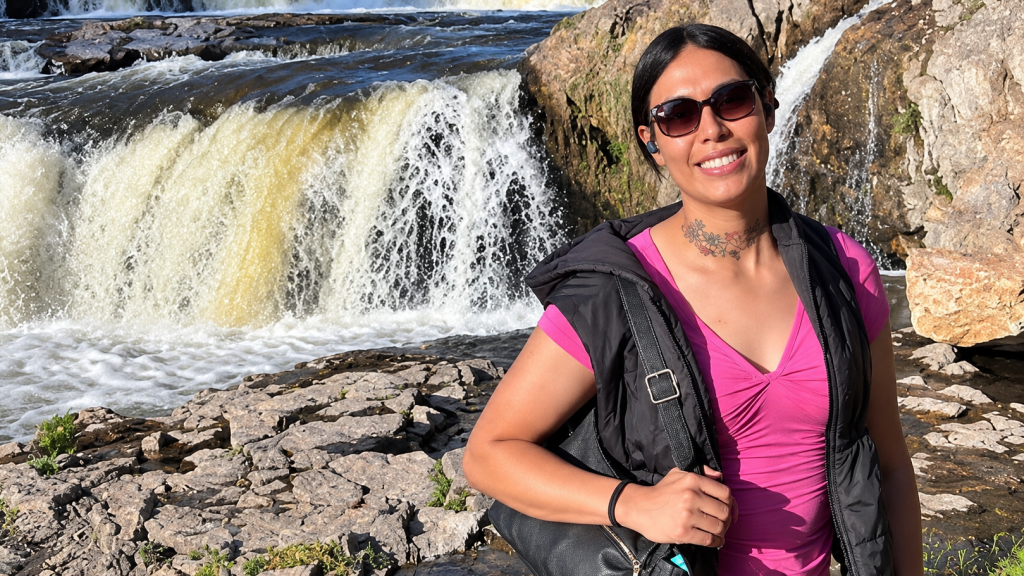
The violent death of trans woman Stella Nez Perce on a light rail train in the US state of Minnesota has prompted grief and shock. Following her fatal shooting on a public transport train in October 2026, her relatives have now spoken in greater detail about their loss for the first time. Meanwhile, representatives of the LGBTQ+ community are warning of the particular risks facing trans people in public spaces.
The key points at a glance
- Fatal shooting on light rail train: trans woman Stella Nez Perce was shot dead in October 2026 on a Metro Transit train in the US metropolitan area of the Twin Cities.
- Jaquan Edwards, 30, allegedly shot Nez Perce three times after a brief exchange of words. He remains in custody pending trial.
- Family speaks out: relatives talk publicly about their grief.
- DNA evidence: investigators link the accused to the incident through evidence including a DNA match.
- Warning about violence against trans people:* LGBTQ+ organisations highlight the particular risks facing Black and Indigenous trans people in the US.
Shots after an exchange of words
According to prosecutors, 30-year-old Jaquan Edwards is alleged to have fired the fatal shots. Investigation documents state that the incident was preceded by only a “brief encounter”. The accused and Nez Perce allegedly first exchanged words. Edwards is then alleged to have shot the woman three times. The incident took place on a train operated by Metro Transit, which runs public transport in the Twin Cities metropolitan area, encompassing Minneapolis and Saint Paul.
Stella Nez Perce's family launched an online fundraiser after her death. In it, her relatives describe her as an innocent victim of gun violence and offer an insight into their grief. Her sister Jo Nez Perce, in particular, described how difficult it was for the family to comprehend the loss. “We are still trying to process the pain of losing her,” she wrote. With the words “She was taken from us far too soon”, she also expressed how unexpectedly her sister's death had struck the family. Stella's brother Dion Nez Perce also spoke publicly. “This weighs heavily on my heart,” he said of the loss.
Investigators present evidence against suspect
Prosecutors are basing their allegations against Jaquan Edwards partly on surveillance camera footage and forensic findings. Charging documents state that Edwards was allegedly filmed at another light rail station on the evening of the incident. The footage is said to show the man spitting on the platform. Investigators subsequently examined the saliva left there. According to law enforcement authorities, the DNA obtained from it matched genetic material found on a cigar butt. Investigators had previously recovered this from the accused's rubbish. The match forms part of the evidence on which prosecutors base their allegations against the 30-year-old. Edwards remains in Hennepin County Jail. His next court appearance is scheduled for 1 December 2026. The available information does not indicate whether the victim's sexual orientation or gender identity played a role in the incident. Such a motive has therefore not been established so far.
Particular risks
Stella Nez Perce's death has also drawn concern from representatives of human rights and LGBTQ+ organisations. They point out that violence and harassment in public spaces do not affect all population groups equally. Kat Rohn, executive director of OutFront Minnesota, said that trans people in particular faced heightened safety risks in everyday life. This was especially true of people who also experienced racial discrimination. “Indigenous and Black trans people are at a significantly higher risk of experiencing violence and harassment in public spaces. They also often have fewer support services available to them, and they feel less safe in such places because people may have internalised prejudices against trans communities,” Rohn said.
The organisation is thus drawing attention to the intersection of different forms of social disadvantage. In its assessment, prejudice against trans people can contribute to those affected perceiving public places as less safe. Rohn also noted that people at particular risk often had fewer opportunities to obtain support and protection. The case comes against the backdrop of an ongoing debate about violence against trans people in the United States. In particular, trans women are disproportionately affected by fatal violence. Within this group, Black and Indigenous trans women are considered to be at particular risk. Human rights organisations have been drawing attention for years to how social prejudice, discrimination and a lack of protection can affect the safety of those concerned. The violent death of trans man Sam Nordquist had also attracted attention in the US. Nordquist was also killed in 2026.
Remembering Stella's life
The group of LGBTQ+ members of the Minnesota House of Representatives also responded to Stella Nez Perce's death. The Minnesota House Queer Legislators Caucus issued a statement in which the politicians called for her to be remembered for more than just the circumstances of her death. Instead, they said, her personality, her self-determined life and her impact on those around her should be remembered. “Together, we honour her memory by talking about how she lived an authentic life on her own terms, with self-determination and without denying who she was, the positive impact she had on our community and the kindness she radiated – rather than focusing on the horrific circumstances of her death,” the group of legislators said.








