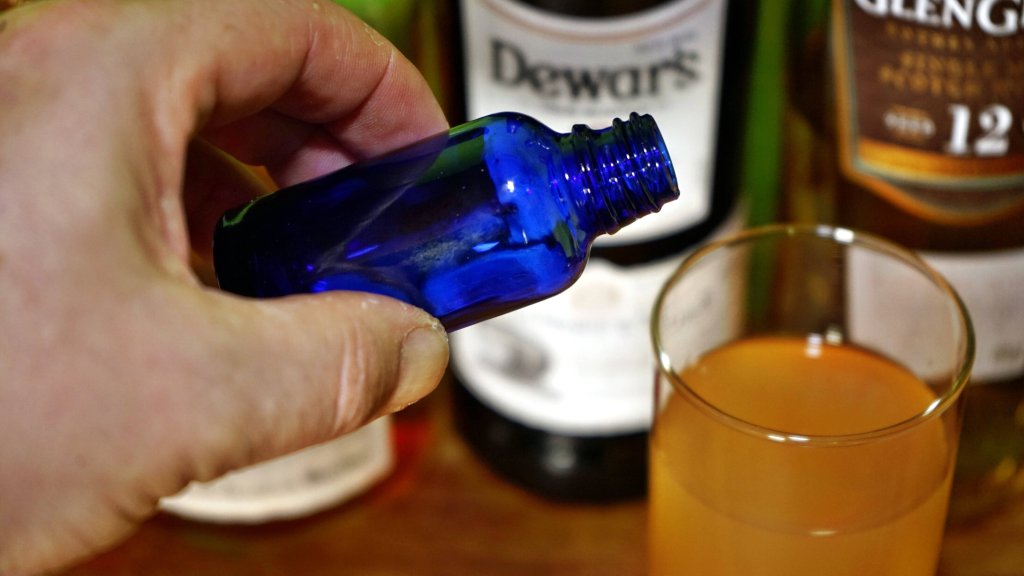
The Bundestag today toughened the criminal penalties for using incapacitating drugs in serious offences. Anyone who drugs a person with such substances in order to rape or rob them is to face a minimum prison sentence of five years in future. Until now, the corresponding minimum sentence was three years.
Key points at a glance
- Tougher penalties approved: the Bundestag today passed legislation to toughen the law. The minimum sentence for rape or robbery involving incapacitating drugs is to rise from three to five years in prison.
- Danger to gay men: perpetrators also use drugs in the gay club and party scene to render men defenceless before sexually abusing or robbing them.
- Up to 200 possible substances: GHB and GBL are particularly well known. These substances can cause dizziness, unconsciousness, memory gaps and life-threatening breathing problems.
- Evidence disappears quickly: many substances can only be detected for a few hours. Anyone who suspects they have been drugged should seek medical help as soon as possible.
- Victim support organisations welcome stronger protection but warn of difficulties in prosecuting cases. Many cases go unreported or cannot be sufficiently substantiated.
Legal loophole closed
The reform passed today is intended to close a loophole in criminal law. It follows an earlier ruling by the Federal Court of Justice that incapacitating drugs do not qualify as “dangerous instruments” under criminal law. As a result, their use in certain sexual offences and robberies has not previously been automatically treated as seriously as the use of a dangerous object. The legislative amendment is intended to eliminate this difference in treatment. According to the federal government, most victims are women. However, gay men also repeatedly fall victim to such attacks. This makes the issue particularly relevant to the gay club and party scene.
Under the reform that has been passed, the use of incapacitating substances in rape and robbery is now explicitly to carry tougher penalties. Federal Justice Minister Stefanie Hubig (SPD) hopes the reform will act as a stronger deterrent to potential perpetrators. Before the Bundestag debate, the SPD politician described the planned increase in penalties as a “strong stop sign”. At the same time, she made clear that tougher sentences alone are not enough. “We need education, we need better prevention – everything that goes with it,” Hubig explained.
The danger of incapacitating drugs
In bars, clubs and at private parties, perpetrators can secretly administer incapacitating substances to deliberately render their victims helpless. This also applies to events and meeting places within the gay community. A particular danger is that these substances are often colourless and tasteless. If they are secretly mixed into a drink, the person affected often has no way of noticing. The subsequent symptoms can also be mistaken for the effects of excessive alcohol consumption.
For gay men, this can create a situation in which they are no longer able to defend themselves against sexual assault, theft or robbery. Memory gaps can also mean that those affected only realise later that something may have happened to them. It is not possible to quantify how often gay men in Germany are specifically targeted with incapacitating drugs. There are no nationwide police statistics that separately record the use of such substances in sexual offences. Consequently, reliable nationwide figures for the gay community are also lacking. In addition, the use of certain substances such as GHB or GBL is widespread in parts of the party scene. However, a clear distinction must be made between voluntary use and a perpetrator secretly administering a substance.
Up to 200 substances
The term incapacitating drugs does not refer to a single chemical compound. According to the victim support organisation Weißer Ring, up to 200 different substances may be involved. These are by no means necessarily administered only in liquid form. In a study on unreported violence, the Federal Criminal Police Office describes incapacitating drugs as “substances/substance solutions” administered to a person without their consent to bring about “sedation or a state of having no will of their own”. Among the best-known substances are gamma-hydroxybutyrate (GHB) and gamma-butyrolactone (GBL).
In Germany, GHB falls under the Narcotics Act. GBL, by contrast, is used as an industrial solvent and cleaning agent, among other things. In the human body, GBL is converted into GHB and can therefore have a similarly dangerous effect. Both substances are also known for their voluntary use in the party scene and during chemsex. However, their effects can become life-threatening, particularly at an incorrect dose or when combined with alcohol. Those affected are often unable to determine which substance they were actually given.
Recognising the effects of drugging
Incapacitating drugs can take effect within minutes. The severity of the symptoms depends, among other things, on the substance used, the dose and the individual's physical condition. According to Weißer Ring, a feeling of euphoria may occur initially. This can be followed by dizziness, nausea and increasing drowsiness. Severe cases can involve unconsciousness and memory loss. High doses can also cause dangerous breathing problems. An overdose can be fatal.
The similarity to the effects of alcohol is particularly problematic. Someone who suddenly feels very drowsy or later notices gaps in their memory is therefore often unable to tell for certain whether alcohol or an additional substance administered to them was the cause. This is especially true in clubs and bars where alcohol is consumed. For men who go out in the gay party scene, unexpectedly severe impairment can therefore also be an important warning sign. If there is reason to suspect drugging, prompt medical assessment is important.
Safety measures in clubs
Weißer Ring recommends various precautions to reduce the risk of being secretly drugged. Drinks should not be left unattended if possible. Anyone who is unsure whether their drink has been tampered with should stop drinking it. The organisation also advises caution with open drinks or food offered by strangers. It says looking out for one another is particularly important. Anyone out with friends should watch for unusual changes in other people's behaviour and should not leave someone alone if they suddenly become drowsy. Anyone who unexpectedly feels dizzy or unwell should contact friends or staff as soon as possible. If poisoning or an immediate risk to health is suspected, the emergency number 112 should be called straight away.
Anyone who suspects they have been secretly given incapacitating drugs should go to an emergency department as quickly as possible. Doctors there can assess their condition and, if necessary, begin targeted treatment. Antidotes are available for certain types of poisoning, but their use requires an accurate diagnosis. There is no universal antidote for all incapacitating substances. The short detection window for many substances is particularly important. According to Weißer Ring, some substances can only be detected in blood for around six hours and in urine for approximately twelve hours. The actual detection windows vary depending on the substance. Alongside medical care, prompt collection of evidence can therefore also be crucial.
Support services for victims
Services offering confidential forensic evidence collection are available throughout Germany. They can document and preserve evidence following a violent offence, even if the person affected has not yet decided whether to report it to the police. This option is particularly important for people who initially need time to process what has happened following a possible sexual assault. Gay men, too, may experience shame, uncertainty or fear of reporting such an offence. Confidential counselling and a medical examination can help without requiring an immediate decision about pursuing criminal proceedings. Larger events now often have so-called awareness teams. They are responsible for supporting people after assaults and helping them access further assistance if needed.








