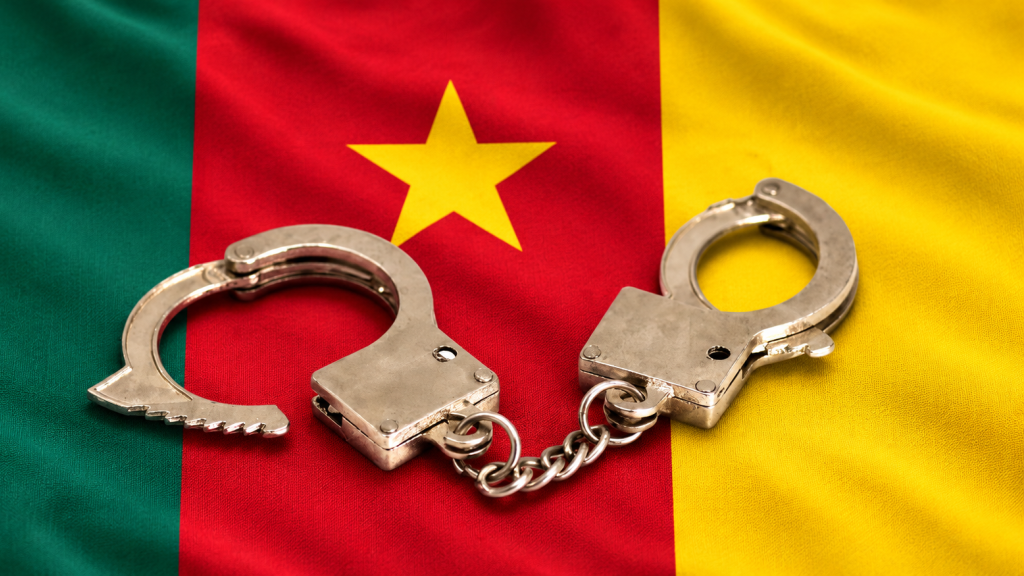
Following a large-scale police raid targeting gay men in Cameroon, the last eight detainees are now free. They were released after being held for around ten weeks. Their release is the result of joint efforts by several human rights organisations, lawyers and local supporters. A small victory for the country's oppressed community.
Key points at a glance
- Eight people released: In November, eight gay men in Cameroon were freed after around ten weeks in detention.
- Major raid in Douala: In September, police arrested at least 68 gay people.
- The authorities justified the operation by citing suspected sexual contact between gay people. Condoms, lubricant and sex toys were found during the search.
- Human rights organisations provide help: The Cameroonian organisation SORIH coordinated support for the detainees together with lawyers and partner organisations.
- SORIH sees the release as an important success for access to justice and the protection of particularly vulnerable groups.
A success for human rights
The eight men were part of a group of at least 68 people arrested in September in the economic hub of Douala. The police operation targeted people who were gay or whom the authorities believed to be gay. While most of those arrested were released shortly after the raid, eight people remained in detention. Their names are not being published for safety reasons. The Cameroonian LGBTQ+ organisation SORIH (Solidarity Rights and Health, SOS Solidarity) now describes the release as an important success for human rights and access to justice.
The raid began at around 3am. It took place in the Makepe and Bonamoussadi districts of Douala, Cameroon's largest city. At the time, the head of Ndongbong police station justified the operation by citing the presence of gay people in a local bar. The establishment allegedly had private rooms that had been used for sexual encounters. According to the police, the premises were searched. Officers reportedly found condoms, lubricant and sex toys in the rooms. The authorities made the arrests in connection with allegations of same-sex sexual activity. All but eight of those detained were released a short time later. The remaining eight, however, stayed in detention until now.
Organisations arranged support
The Cameroonian organisation SORIH, which advocates for the rights and health of LGBTQ+ people, played a crucial role in securing the release. Its legal advice service, the SORIH Legal Clinic, took on the coordination of support for the detainees. Together with the defence lawyer representing the eight detainees, local partners and several human rights organisations, it arranged legal assistance and campaigned for an end to their detention. A specially established support programme was also intended to ensure that the detainees and their families were not left to cope alone during the proceedings. This included legal advice, psychosocial care and humanitarian support. Other human rights organisations involved included JAPSSO, the Jeunesse Active pour la Promotion de la Santé, de la Solidarité et du Développement.
A dire situation for gay people
The release was thus reportedly not the result of a single initiative, but of longer-term cooperation between lawyers, human rights organisations and committed supporters. Meanwhile, the situation in the country continues to deteriorate, with increasing numbers of gay men reporting being hunted down, attempted murders and lynchings. Gay men are lured into traps through dating. The work of LGBTQ+ activists is becoming more difficult with every passing month, and more and more are leaving the country. Homosexuality remains a strong social taboo in Cameroon. Same-sex sexual acts are prohibited for both men and women (German). Those convicted face prison sentences of up to five years as well as fines.
There are also no explicit legal protections against discrimination on the grounds of sexual orientation or gender identity. Police raids and arrests occur repeatedly, sometimes following reports by family members or neighbours. Alongside the ban on same-sex sexual acts, other criminal allegations are also used, such as “public indecency”. Added to this are social exclusion, workplace discrimination, blackmail and physical violence. Those affected may also be threatened or disowned by their families and sometimes face attacks by self-appointed vigilantes. Hostility towards homosexuality is also exploited by various political and social actors. Homosexuality is frequently portrayed as a supposedly “Western” phenomenon or linked to alleged foreign interference.








