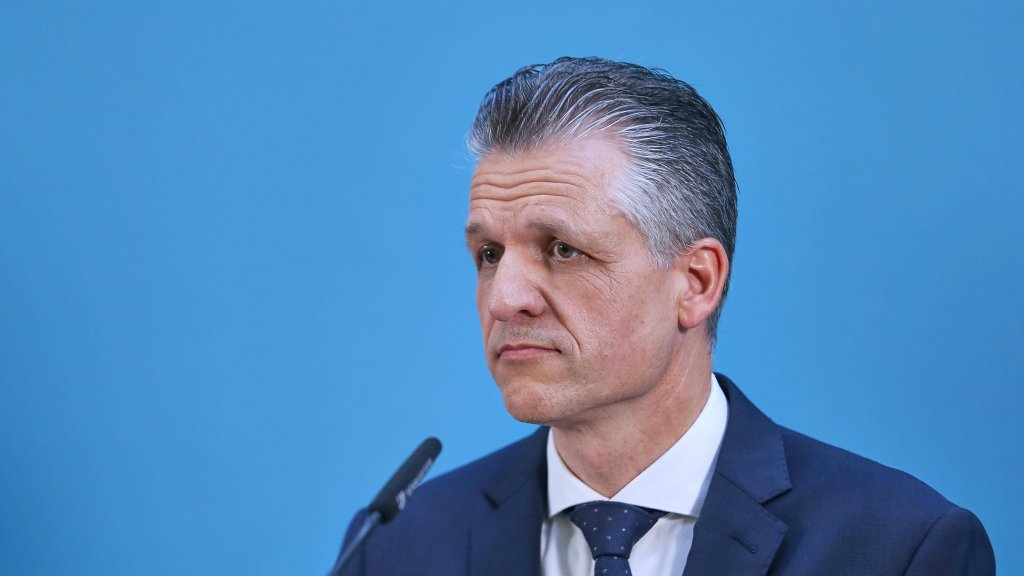
The latest comments by new CDU/CSU parliamentary group leader Thorsten Frei (German) on the planned amendment to Germany’s Basic Law (German) have drawn criticism across party lines. Not only the SPD and opposition parties, but also representatives of the queer community and members of the CDU/CSU are challenging the CDU politician’s position.
Key points at a glance
- CDU/CSU parliamentary group leader Thorsten Frei opposes explicitly including sexual identity in the Basic Law’s protection against discrimination.
- Frei considers such an amendment to Article 3 unnecessary and warns against overloading the constitution.
- Criticism has come from within the CDU/CSU’s own ranks, as well as from the SPD, the Greens, the Left Party and the queer community.
- In September 2025, a majority in the Bundesrat voted for such an extension of protection following an initiative by Berlin.
- Berlin’s Governing Mayor Kai Wegner (CDU) reiterated his support for an amendment to the Basic Law just two weeks ago.
- Following the attack on Berlin’s Christopher Street Day parade, the SPD and queer organisations reaffirmed their demand for protection to be explicitly enshrined in the Basic Law.
- An amendment would require a two-thirds majority in the Bundestag.
A dispute over a few words
On Saturday, Frei spoke out against explicitly including protection against discrimination on the grounds of sexual identity in Article 3 of the Basic Law. Speaking to the Funke Mediengruppe, he said: “I do not consider it necessary.” He said he could understand the queer community’s desire for such a step. At the same time, Frei stated: “I can understand the queer community’s desire for this symbolic step. But it would overload our constitution.” Article 3 of the Basic Law currently prohibits, among other things, disadvantaging or favouring people because of their sex, parentage, race, language, homeland and origin, faith, or religious or political views. Sexual identity is not explicitly mentioned. For around 30 years, LGBTQ+ organisations have repeatedly fought for an amendment to the Basic Law, so far without success.
Bundesrat initiative
In September 2025, a majority in the Bundesrat also voted, at Berlin’s instigation, to add the words “sexual identity” to Article 3. The initiative was subsequently introduced in the Bundestag. However, there have long been reservations within the CDU/CSU about such a constitutional amendment. Strong criticism of Frei has now come from Lesben und Schwulen in der Union (LSU). Philipp Pohlmann, the LSU’s deputy federal chair, pointed to the relatively limited scope of the planned amendment: “Our Basic Law has over 20,000 words,” Pohlmann wrote on Instagram. “Adding a few words therefore amounts to less than 0.1 per cent of its total length. Our Basic Law can handle that. And quite apart from that: the addition does no harm, it takes nothing away from anyone – but it gives so much!”
Criticism from within his own ranks
René Powilleit, chair of the LSU’s Berlin branch, also opposed the parliamentary group leader’s position. He pointed to the Bundesrat initiative, which was launched by Berlin and supported by the CDU-led state governments in North Rhine-Westphalia and Schleswig-Holstein. “Dear Thorsten Frei: the CDU-led state governments in Berlin, North Rhine-Westphalia and Schleswig-Holstein have shown how it can be done. So: just get on with it,” Powilleit said. For the organisation representing queer people within the CDU and CSU, the amendment is about more than a symbolic change. The LSU sees it, in particular, as recognition of and redress for historical injustice. “Rather, the amendment would reaffirm the Basic Law’s original intention – as a deliberate counterpoint to National Socialism. The number of words must therefore not be used as an argument against this historic duty,” the LSU stated.
Wegner stresses commitment to amendment
Frei’s stance also puts him at odds with a prominent CDU representative from Berlin. Just two weeks ago, Governing Mayor Kai Wegner called, in an interview with the Tagesspiegel, for efforts to secure a majority in the Bundestag for the extension of protection. “It was always important to me that we bring this initiative to a successful conclusion,” Wegner said. “I would like the Bundestag, especially in these times, to make a clear commitment and for us to achieve the amendment to the Basic Law.” Wegner also said he was continuing talks with the CDU/CSU parliamentary group in the Bundestag. Frei, by contrast, does not consider an amendment to the Basic Law necessary and argued further: “Article 3 of the Basic Law prohibits discrimination of any kind. The Federal Constitutional Court has confirmed this very clearly on several occasions. Although I can understand the situation of those affected, this is not how to make queer people safer.”
SPD: more than a symbolic question
The SPD’s response was particularly forceful. Following the attack at Christopher Street Day (CSD) in Berlin (German), the Social Democrats had once again called for an amendment to the Basic Law (German). Sophie Koch, the federal government’s commissioner for queer affairs, also explicitly challenged Frei. Writing on Instagram, she said: “Adding ‘sexual identity’ does not overload the Basic Law. It would finally complete it.” In her view, the existing protection is insufficient to adequately reflect the situation of queer people. “This is not a theoretical debate, and certainly not a question of a few extra words. It is about people who still experience discrimination. About queer families who still do not have full equality. About people who face hostility, threats or attacks because they love whom they love,” Koch wrote.
SPDqueer also pointed to the timing in relation to the attack in Berlin. “After the attack on Berlin’s CSD, it is nothing short of cynical to tell a community that fears for its safety and its future that an explicit commitment by the state to their equal worth is merely a ‘symbolic step’,” the party’s queer organisation stated. Oliver Strotzer, federal co-chair of SPDqueer, placed the call for a constitutional amendment in a historical context: “The question is whether our state is prepared to explicitly acknowledge its responsibility towards a group that was persecuted, criminalised and marginalised for decades. For us, the answer is clear: yes. Article 3 must be amended.”
Greens and Left Party demand an end to the blockade
Frei’s position also drew criticism from the Greens. Werner Graf, the Greens’ lead candidate for the Berlin election in September, who is himself gay, argued that extending fundamental rights protection would not disadvantage other groups. “Nothing is taken away from any conservative when queer people are protected by the Basic Law,” Graf said. “A fundamental right does not become smaller when it protects more people.”
The Greens’ federal executive called on the CDU/CSU to explicitly enshrine protection for queer people in the Basic Law. Given the two-thirds majority required in the Bundestag, the SPD also appealed to Federal Chancellor Friedrich Merz and the CDU/CSU parliamentary group. It demanded that they “allow the bill to be debated in the German Bundestag and put to a free vote”. Graf also called on the CDU’s lead candidate in Berlin, Stefan Evers (German), to clearly challenge his own party leadership. In Graf’s view, the state must make it unmistakably clear that discrimination on the grounds of sexual identity is just as unacceptable as discrimination on the grounds of sex, origin or religion.
The Left Party also joined the call. Maik Brückner, the Left Party’s spokesperson on queer policy in the Bundestag, wrote on Instagram: “The latest comments by CDU/CSU parliamentary group leader Frei show why large sections of the community reacted sceptically to the CDU’s expressions of solidarity after the attack on Berlin’s CSD. Extending the protection against discrimination in Article 3 of the Basic Law is an overdue minimum demand and must finally happen.”
Queer organisations appeal to Frei
LSVD+ and other queer associations also reiterated their calls for an amendment to the Basic Law and appealed to the CDU/CSU parliamentary group leader to reconsider his position. A post on Instagram read: “Mr Frei, take the plunge. We know that there is support within your parliamentary group, too, for amending Article 3, paragraph 3 of the Basic Law!” Frei is thus facing growing pressure over his rejection of an explicit extension of protection against discrimination. The decisive question remains whether the two-thirds majority required for an amendment to the Basic Law can be secured in the Bundestag.








