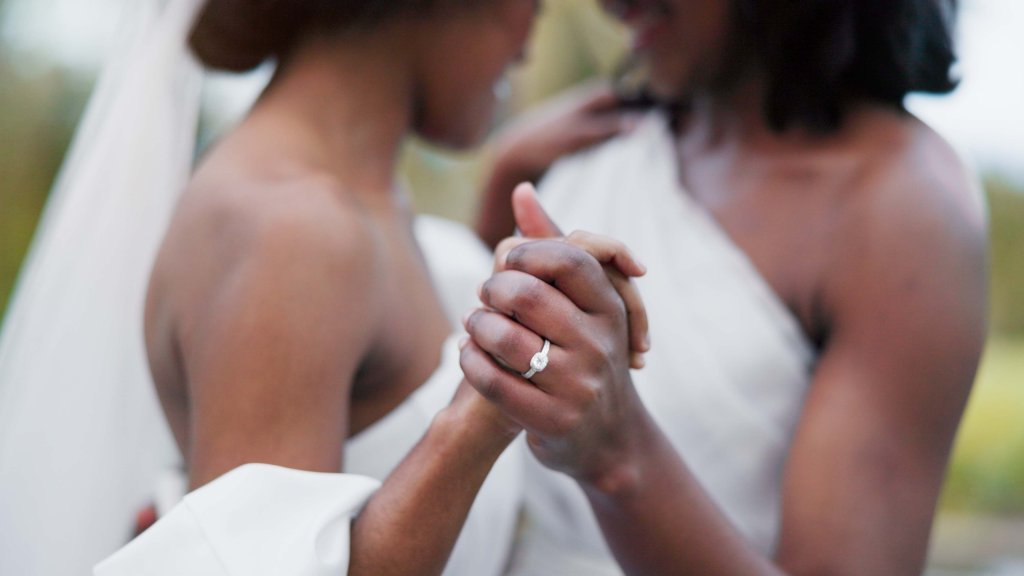
For the first time in Bolivia, a same-sex couple's civil marriage has been officially registered. Fabiana Banzer and Scarlett Rocha have now secured legal recognition of their marriage after a legal battle lasting three years and ten months.
Key points at a glance
- Fabiana Banzer and Scarlett Rocha are the first same-sex couple whose civil marriage has been registered in Bolivia.
- The legal battle over their marriage lasted three years and ten months.
- The couple submitted their application on 12 October 2022.
- The marriage was recognised through an individual court case, not a nationwide change in the law.
- Same-sex marriages therefore still do not have general legal recognition in Bolivia.
- In 2020, the partnership of David Aruquipa and Guido Montaño became the first same-sex union to be registered in the country.
- Activists see the marriage as another important step in the fight for equal rights for gay and lesbian people.
Wedding after years of struggle
The couple submitted their application to marry on 12 October 2022. With support from the LGBTQ+ organisation IGUAL Bolivia, Banzer and Rocha then challenged the authorities at several levels. The case went through a lengthy administrative process and ultimately led to two constitutional complaints. Their marriage has now finally been recognised and legally protected by the Bolivian state. “Scar and I have been together for more than four years,” Banzer wrote on her Facebook page. “It makes me very happy to be able to tell our family and friends that, after a legal battle lasting three years and ten months, we have finally been given the opportunity to marry in a civil ceremony as two women.”
No general opening of marriage
Despite the historic significance of the case, same-sex marriage has still not been legalised nationwide in Bolivia. Article 63 of the Bolivian constitution defines marriage as a union between a woman and a man. Banzer and Rocha's marriage was therefore not made possible by a change in general marriage law. Instead, the two women secured recognition through an individual court case.
Bolivia thus remains one of the South American countries where same-sex marriages generally do not have legal recognition. These also include Peru, Paraguay and Venezuela. However, the case could have implications for further proceedings. In 2020, David Aruquipa and Guido Montaño successfully brought a case against the Bolivian authorities. They became the country's first same-sex couple to have their de facto union officially registered. Bolivia's Constitutional Court subsequently upheld the couple's legal position. Dozens of same-sex partnerships have since been registered under this legal framework, but no marriages.
“Historical continuity”
Aruquipa therefore sees a direct connection between his case at the time and Banzer and Rocha's recent marriage. “Rather than speaking of a beginning, we should speak of historical continuity: from the first recognised partnership to the first civil marriage,” he wrote on Facebook. LGBTQ+ organisations also highlighted the legal and social distinction between a de facto union and a marriage. Marriage, they said, brings a different level of social recognition and legal status. Queer activists also stressed that the proceedings had been marked by discrimination and poor treatment by the authorities. The registration of the marriage thus marks another step in a years-long struggle for legal equality for same-sex couples in Bolivia.








