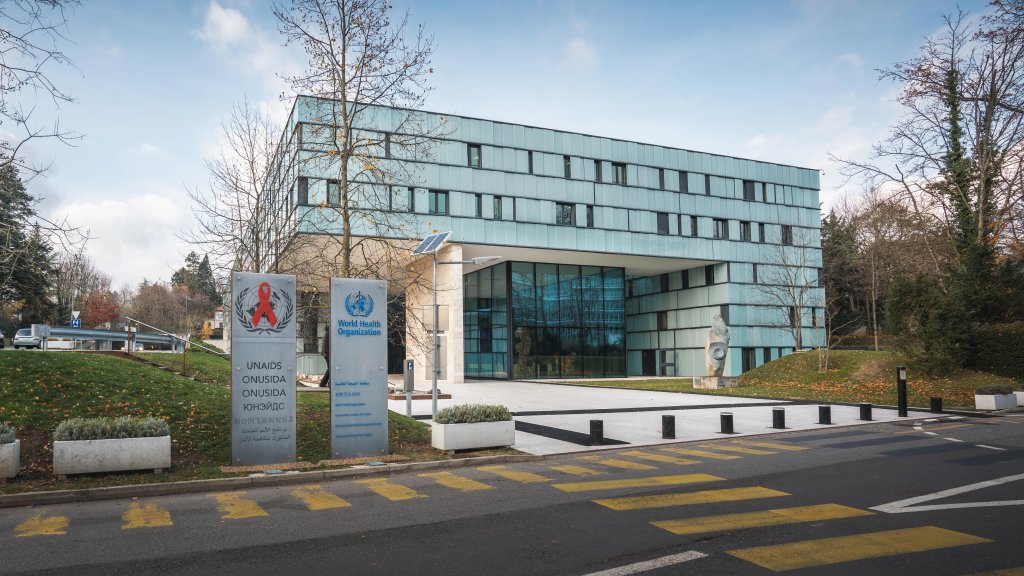
The United Nations' HIV and AIDS programme faces far-reaching restructuring. With funding drastically reduced, UNAIDS must cut staff and scale back its structures. However, the organisation's complete dissolution is off the table for now. Its governing board has now decided to continue and refocus the programme.
Key points at a glance
- UNAIDS will remain: the governing board has rejected UN Secretary-General António Guterres's proposal to dissolve the programme and transfer its responsibilities to other UN organisations.
- Major staff cuts: the number of employees has already fallen from 608 to 294. This follows international funding cuts, including substantial reductions by the US government.
- Support for LGBTQ+ people: UNAIDS works with more than 130 organisations and groups in over 50 countries to protect human rights and prevent HIV infections.
- Help in crisis areas: emergency funds support activists and organisations under threat. More than 300 requests for assistance were received across several African regions in 2026 alone.
No dissolution
With its decision, the board rejected a proposal by UN Secretary-General António Guterres. Last year, he had suggested transferring UNAIDS' existing responsibilities to other United Nations organisations. This followed substantial cuts to international aid funding for the UN and global health programmes. These include sweeping cuts by US President Donald Trump's administration. The financial crisis has already had significant consequences. According to the organisation, the number of UNAIDS employees fell from 608 to 294.
Executive Director Winnie Byanyima is now to present a plan for how the programme can continue working with its remaining staff and financial resources. As “Business Insider Africa” reported, the governing board explicitly called for the participation of affected communities, the protection of human rights and gender equality to remain central to its work. Byanyima said that member states had made a deliberate choice to restructure and strengthen UNAIDS rather than transfer all the programme's responsibilities to other UN bodies.
Several countries offer support
Several countries are now providing additional support to keep operations running despite the cuts. According to “Business Insider Africa”, Algeria has pledged a total of US$40,000 for the UNAIDS country office in 2027. The country is also providing office space and local staff. Further contributions are coming from countries including South Africa, Benin, Côte d'Ivoire, Brazil, China, Cambodia, Kazakhstan, Laos, the Philippines and Thailand.
Germany has increased its core funding for UNAIDS several times, including an additional pledge of €2.5 million in October 2025, bringing total core funding to €5.5 million. Germany has been among the ten largest donor countries since 2017. The cuts come at a time when numerous organisations are facing growing challenges. The UN programme considers HIV care for people exposed to social discrimination and state restrictions to be particularly at risk.
130 LGBTQ+ organisations
Despite the strained financial situation, UNAIDS intends to continue working with LGBTQ+ communities. According to the programme, it has partnerships with more than 130 LGBTQ+-led organisations and groups in over 50 countries. This cooperation aims to help curb the spread of HIV, secure access to medical care and counter human rights violations. According to UNAIDS, LGBTQ+ activists in numerous countries are increasingly facing harassment, violence, displacement, arbitrary arrests and online attacks. At the same time, they are trying to maintain HIV prevention services and medical treatment under increasingly difficult political conditions.
According to the organisation, restrictions on human rights often have an immediate impact on healthcare for already disadvantaged population groups. Cooperation therefore focuses on three areas: empowering trans and queer people in leadership and advocacy, providing rapid assistance in acute human rights crises, and strategic media work to counter discrimination and misinformation.
Focus on trans organisations
One focus is on supporting organisations led by trans people. Together with Global Action for Trans Equality (GATE), UNAIDS supports their organisational stability, advocacy and public outreach. The cooperation aims to enable national and local groups to document human rights violations, organise campaigns and continue working even under increasingly restrictive conditions. So far, the partnership has awarded 14 grants to strengthen civil society organisations against attacks on human rights. A further seven grants supported data collection and the preparation of country reports for UN mechanisms such as the Universal Periodic Review.
Erika Castellanos, Executive Director of GATE, emphasised the importance of this support. “When UNAIDS invests in civil society leadership, resources reach the communities most affected. Personal experiences become evidence, and that evidence leads to advocacy, protection and accountability,” Castellanos said. She added: “At a time when anti-gender movements are growing stronger and civic space is shrinking, this partnership shows that effective support for community-led organisations can turn vulnerability into collective strength – and collective strength into lasting change.”
Emergency assistance in Africa
Alongside long-term projects, UNAIDS supports regional emergency funds. These are intended to provide rapid help to organisations and individuals when their safety, rights or well-being are under immediate threat. The assistance programmes are delivered through regional and international networks. According to UNAIDS, the need for assistance is rising significantly. Partner organisations in eastern and southern Africa and in West and Central Africa alone received more than 300 requests for emergency assistance in 2026. So far this year, the funds have already supported more than 60 organisations and groups across four regions. In 2025, 42 organisations received such assistance. The measures funded vary according to the regional situation.
Micheal Ighodaro, Executive Director of Global Black Gay Men Connect, said: “At a time when LGBTQ+ communities are facing growing hostility, this support goes far beyond immediate emergency protection. It helps sustain community leadership, protect access to HIV services and ensure that those defending human rights on the front line do not have to face these threats alone.” Alongside financial and legal support, UNAIDS is placing greater emphasis on public outreach. The organisation believes that social networks and traditional media are increasingly shaping public perceptions of minorities. UNAIDS is therefore working with SHUGA Global in 2026. The aim is to use authentic stories about LGBTQ+ people in short films to reduce prejudice and counter misinformation.








