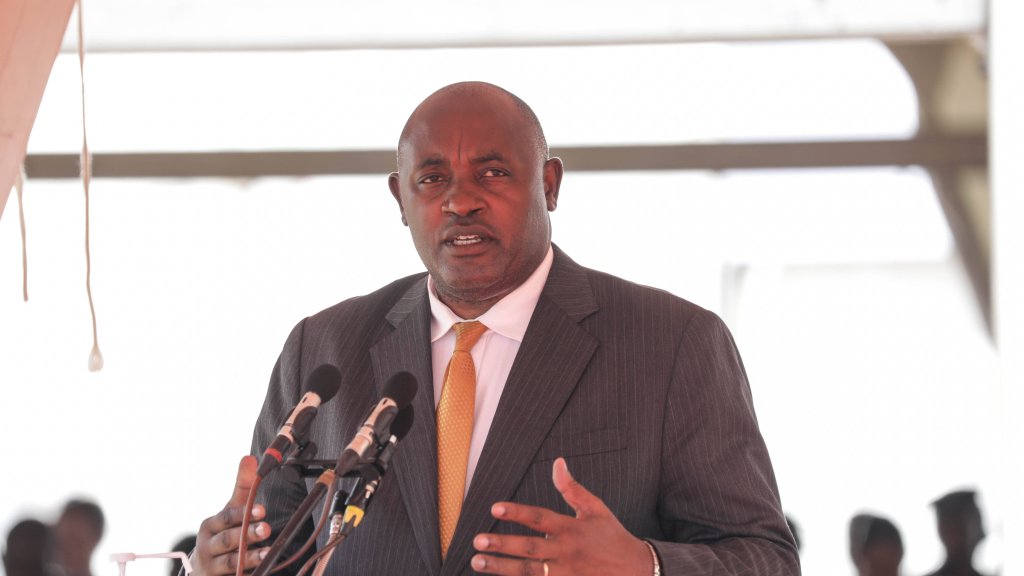
Uganda's health minister Chris Baryomunsi has drawn fierce criticism from human rights activists over his remarks about homosexuality. The politician claimed on the platform X that homosexuality was “not African” and merely learned behaviour. At the same time, he insisted that gay people in Uganda faced no discrimination in accessing healthcare.
Key points at a glance
- Uganda's health minister Chris Baryomunsi has now claimed that homosexuality is “not African”, but learned behaviour.
- LGBTQ+ activists and former MP Fox Odoi-Onywelowo accuse the minister of discriminatory rhetoric.
- Human rights organisations question Baryomunsi's assurance that gay people in Uganda can receive medical care without discrimination.
- Back in 2023, Baryomunsi described homosexuality as unnatural and learned, without providing evidence for his claims.
- The minister is said to play a leading role within the governing party in political mobilisation against LGBTQ+ rights.
Debate at UN assembly
Baryomunsi published the remarks after a panel discussion on the sidelines of the UN General Assembly in New York. There, he had been asked how Uganda could ensure healthcare free from discrimination despite its restrictive laws against homosexuality. The minister said that Ugandan laws reflected African beliefs, traditions, customs, ethical principles and cultural values. Homosexuality was behaviour “that we abhor”. Nevertheless, he said, gay people faced no discrimination in government and other services, including healthcare. To justify this, Baryomunsi cited a Christian principle: “He hated the sin but accepted the sinners,” he wrote, referring to Jesus. The remarks prompted fierce opposition from LGBTQ+ organisations, human rights defenders and other citizens.
Homosexuality is African
Former MP Fox Odoi-Onywelowo responded particularly forcefully. He is one of the few prominent politicians in Uganda's governing party to speak out publicly for LGBTQ+ rights. In 2023, Odoi-Onywelowo also voted against the Anti-Homosexuality Act, which significantly intensified the criminal prosecution of gay people (German), including the death penalty for same-sex acts. On X, he has now urged Baryomunsi to reconsider his choice of words and stop spreading hate speech against gay people: “Homosexuality is African. Homosexuality is human. I would not have expected you to defend the most oppressive and anti-human-rights legislation. May I tell you what is not African? Homophobia. I urge you to reconsider your choice of words!”
Shibolo Awali Sean of the human rights organisation The Robust Initiative for Promoting Human Rights (Triumph Uganda) also criticised the minister's remarks as illogical. “Theology, history and lived realities are not everyone's areas of expertise. That is why leaving certain opinions to people with sound knowledge in the relevant fields saves you from embarrassment!” US-based Ugandan human rights activist and political scientist Hillary Taylor described the post as “nonsense”, adding: “What an international embarrassment at the UN!” Historical evidence shows that same-sex relationships existed in numerous African societies before colonisation and were also socially accepted in many places. Later, British colonial rulers in particular introduced laws criminalising homosexual acts, whose impact continues in many African countries to this day.
Equal treatment in healthcare
Further criticism focused on Baryomunsi's claim that gay people faced no discrimination in Uganda's healthcare system. Several commentators questioned how a section of the population could have equal access to medical care when a minister responsible publicly declared that he abhorred their behaviour. Meanwhile, reports repeatedly emerge of HIV being used as a means of blackmail (German) and, in particular, of Christian organisations actively working to prevent medical care for gay people with HIV (German) and to stigmatise them. Ssebandeke Dullaart, founder and executive director of the Etunganun Impact Initiative, pointed to the potential consequences of stigmatising remarks for medical care: “If there is a group of Ugandans you ‘abhor’, how can you claim that these people are not discriminated against? Once you have stigmatised people, they carry that stigma into the doctor's surgery too.”
Homophobic remarks in 2023
Baryomunsi has made similar remarks before. At the first African Inter-Parliamentary Conference on Family Values and Sovereignty in April 2023, he described homosexuality as unnatural. He said at the time: “I am a trained doctor. Homosexuality is not natural. It is not right for someone to claim that they were born homosexual and can do nothing about it. Numerous studies have been conducted, and there is no evidence whatsoever that homosexuality is due to a genetic predisposition. Rather, the evidence suggests that it is learned behaviour that can also be unlearned.” The minister is said to have already played a leading role within the governing party in political mobilisation against LGBTQ+ rights in 2023, particularly in relation to the Anti-Homosexuality Act. To date, Baryomunsi has provided no scientific evidence for the claims he made then. The notion that homosexuality is learned behaviour that can be trained out of someone does not reflect the scientific consensus.








