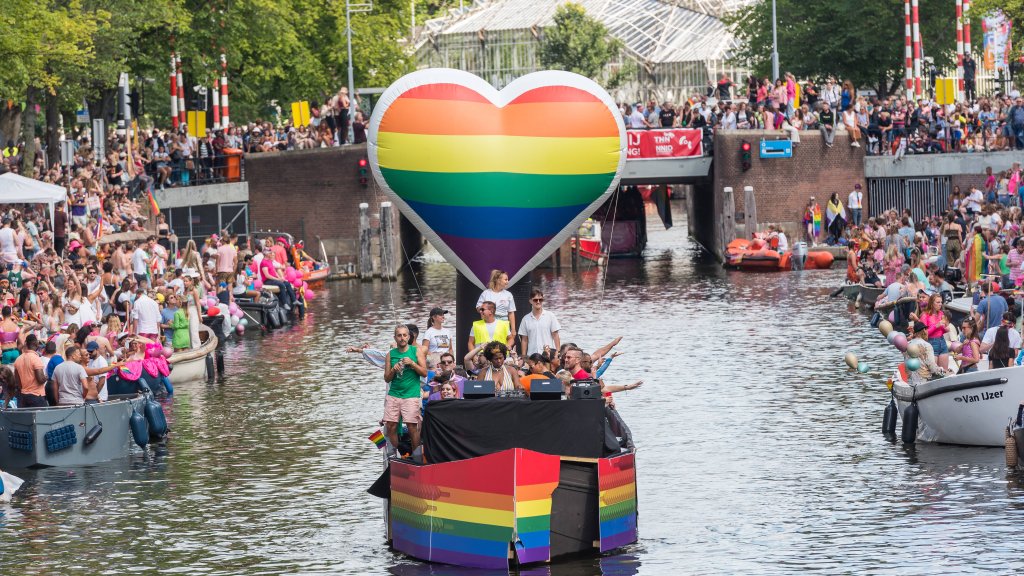
A three-day human rights conference in Amsterdam marks the start of one of the central programmes of World Pride 2026. From today, activists, politicians and civil society representatives from numerous countries are coming together to discuss current challenges facing the LGBTQ+ community and the protection of human rights.
Key points at a glance
- The World Pride Human Rights Conference takes place in Amsterdam from 5 to 7 August.
- Activists, politicians and civil society representatives from around the world are taking part.
- The focus is on LGBTQ+ rights, political developments, health and digital security.
- Sport, queer history and cultural heritage are also on the agenda.
- The conference also addresses the future of the Pride movement and activism.
Human rights and LGBTQ+
The programme includes discussions on political developments, digital security, healthcare, cultural heritage and the future of queer activism. The conference opens today with Dutch drag artist Envy Peru, UK Black Pride co-founder Lady Phyll and activist Camiel Welling. Speakers delivering welcoming remarks include gay Dutch Prime Minister Rob Jetten and Amsterdam Mayor Femke Halsema.
One focus is how to respond to growing political resistance to the rights of LGBTQ+ people. Sessions such as “Diplomacy in Action: Advancing Equal Rights in Times of Pushback” and “Political Leadership in Parliament” explore political and legislative strategies for dealing with anti-LGBTQ+ movements. Other panel discussions address current challenges. “Tech-facilitated Violence”, for example, examines the effects of artificial intelligence and digital harassment. In “Pride under Surveillance”, activists from Hungary, China and Israel share their experiences in politically restrictive states.
Health and self-determination
Health and bodily autonomy also feature prominently. The session “Care for our Veterans – LGBTQI+ Aging in Safety” addresses the realities of older LGBTQ+ people's lives. In “Bodily Autonomy: Resisting Patriarchal Gender-Monitoring”, intersex, trans and other queer activists discuss issues including forced medical interventions and access to gender-affirming healthcare. “The Playing Field as a Human Rights Frontier” examines inclusion and discrimination in international sport.
Culture and history in focus
Several sessions are devoted to the visibility and preservation of queer history and culture. “The Invisible '+': where do Asexual, Polyamorous, and Fetish Communities see themselves represented?” aims to draw greater attention to marginalised groups within the LGBTQ+ community. The consequences of colonialism and the restoration of pre-colonial queer identities are the focus of “Fighting Erasure – Restoring African Queer History”. Meanwhile, “Making Prides UNESCO World Heritage” discusses efforts to have Pride events recognised as UNESCO intangible cultural heritage.
The future of the Pride movement
The conference also addresses the further development of the Pride movement. “Negotiating Pinkwashing” explores approaches to corporate sponsorship and so-called “pink hushing”, in which companies scale back their support for LGBTQ+ causes out of concern about public criticism. Other sessions, such as “LGBTQI+ Entrepreneurship: building queer economic power” and “Intergenerational Grace and Care in LGBTQIA+ Movements”, examine ways to make queer activism financially independent, sustainable and intergenerational in the long term. The Human Rights Conference is one of the central events of World Pride Amsterdam 2026.








