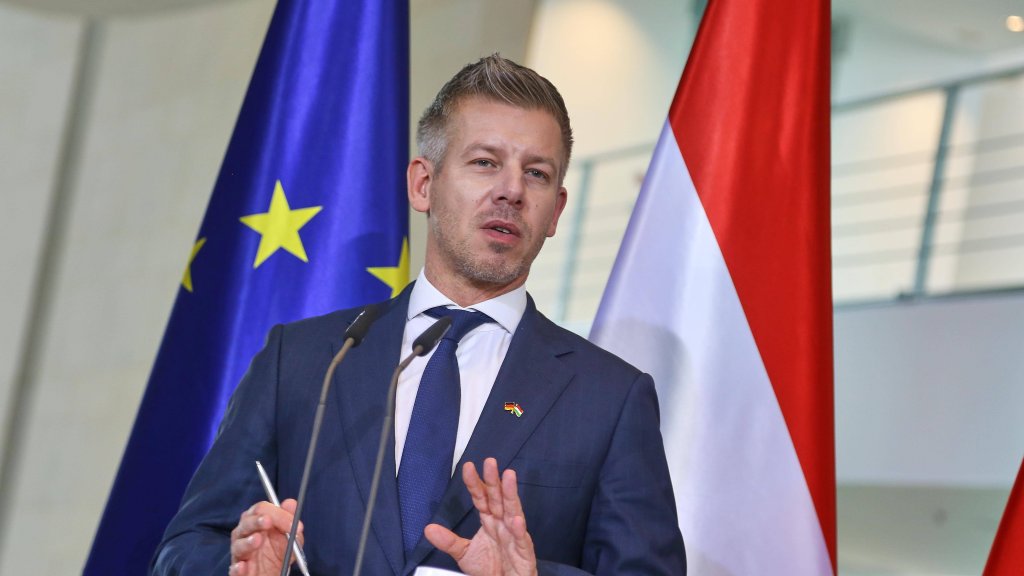
Hungarian Prime Minister Péter Magyar wants his country to make a stronger commitment to protecting women from violence. To this end, Hungary is to ratify the Council of Europe's Istanbul Convention. Magyar announced this in a video on Facebook. It was necessary to “end the era of inaction” that had characterised his predecessor Viktor Orbán's time in office, he said. The issue is also relevant to the LGBTQ+ community.
Key points at a glance
- Hungarian Prime Minister Péter Magyar has announced his intention to ratify the Istanbul Convention on protecting women.
- His predecessor Viktor Orbán had signed up to the convention but rejected ratification, citing an alleged “gender ideology”.
- Magyar plans further changes: the requirement to listen to the foetal heartbeat before an abortion is to be abolished. The morning-after pill is also to become available without a doctor's certificate.
- According to a 2024 EU survey, 54 per cent of Hungarian women reported physical, psychological or sexual violence by a partner.
- The Istanbul Convention provides protection against discrimination and explicitly takes sexual orientation and gender identity into account.
- Under Orbán, Hungary passed numerous laws targeting LGBTQ+ people. The new government wants to repeal some of these provisions.
Government U-turn
The European agreement obliges signatory states to recognise violence against women as a human rights violation and take consistent action against it. It creates a common framework for preventive measures, the protection of those affected and the prosecution of perpetrators. The agreement also contains provisions to protect migrant women. The convention was drawn up by the Council of Europe in 2011. Although Hungary had signed the document, it had so far refused legally binding ratification. Under Orbán's government, one of the reasons given was that it allegedly promoted a “gender ideology”.
Violence against women
Alongside protection for women, Magyar has also announced reforms to reproductive rights. Women who want to terminate a pregnancy are to face fewer restrictions in future. Specifically, the prime minister wants to abolish a rule introduced in 2022. It requires women to listen to the foetal heartbeat before an abortion. Magyar also announced that the so-called morning-after pill is to become available without a doctor's certificate.
Figures from a 2024 EU survey illustrate how urgently improvements are needed in protecting women. According to the survey, 54 per cent of women in Hungary reported having experienced physical, psychological or sexual violence by a partner. This put the country at the top of the European comparison. Confidence in state support also presented a troubling picture: fewer than 16 per cent of the women surveyed expected to receive help from the authorities. This was the lowest figure in the EU.
Protection for LGBTQ+ people
The Istanbul Convention is not limited exclusively to protecting women. It is also relevant to LGBTQ+ people. Article 4 stipulates that the protection measures it provides for must be implemented without discrimination. This explicitly includes discrimination on the grounds of sexual orientation and gender identity. The explanatory notes to the agreement list LGBTQ+ people among groups that may be at particular risk of violence. The convention also allows states parties to extend protection provisions in asylum procedures to sexual and gender minorities. These provisions are a major reason why the agreement faces opposition from conservative and nationalist political forces.
Turkey was the first country to withdraw
The controversy surrounding the agreement was particularly evident in Turkey. In 2021, the country became the first member of the Council of Europe to withdraw from the Istanbul Convention. President Recep Tayyip Erdoğan's government justified the move by saying that the agreement had been “hijacked” by people who wanted to normalise homosexuality. This was “incompatible with Turkey's social and family values”. In Hungary, too, opposition to the convention was part of a broader political development. Under Orbán, numerous laws were passed restricting the rights of LGBTQ+ people. Particularly controversial was the so-called anti-gay law, which severely restricted the depiction of homosexuality and gender diversity to minors. Under the new government, key parts of these provisions are now to be repealed. Magyar's announced change of course on protecting women and reproductive rights could therefore also mark a fundamental realignment of Hungary's equality policy.








