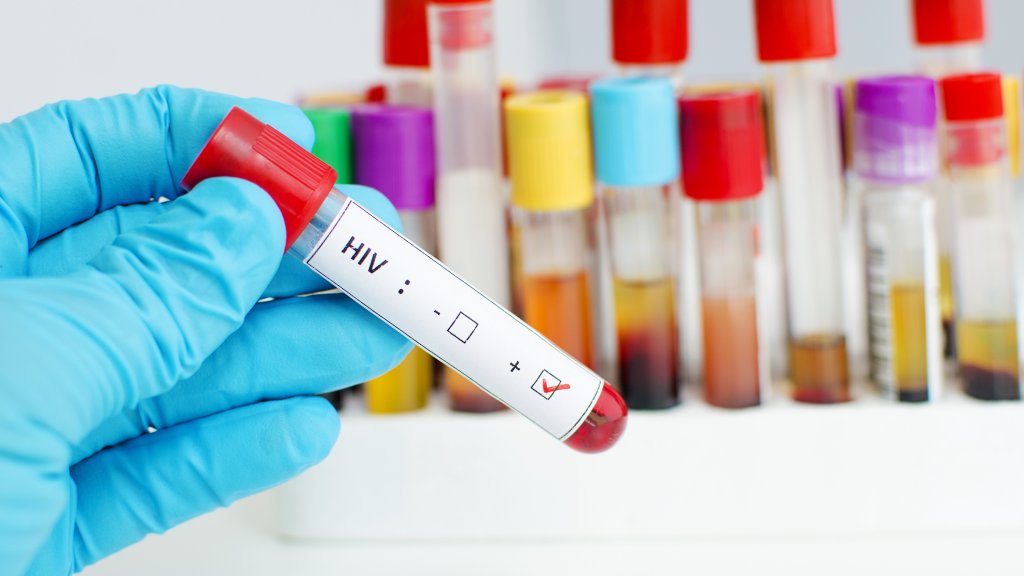
The high number of late HIV diagnoses is currently causing serious concern at Italy’s health institute, the Istituto Superiore di Sanità (ISS). More than half of those who learned of their HIV infection in 2025 already had a compromised immune system. This is according to the newly published annual report from the ISS’s AIDS centre. The institute identifies “low risk awareness” and “low uptake of testing” as key problems.
Key points at a glance
- A total of 2,220 new HIV diagnoses were reported in Italy in 2025.
- At the time of diagnosis, 59.1 per cent of those affected already had a compromised immune system.
- An average of 5.1 years passes between HIV infection and diagnosis.
- Around 40 per cent of those affected only get tested once symptoms appear.
- A total of 432 new cases of AIDS were recorded.
- The Italian health institute ISS is calling for a joint reporting system for HIV and AIDS.
- Around 150,000 people in Italy are living with HIV.
Late diagnoses
Last year, 2,220 new HIV diagnoses were reported in Italy. This equates to 3.8 cases per 100,000 people. The country therefore remains below the western European average of 5.4 cases. The proportion of late diagnoses, however, has risen since 2015 and has remained at around 60 per cent for three years. Early diagnosis of the infection is crucial to prevent health consequences and start treatment with medication. Left untreated, HIV infection can lead to life-threatening illness. In addition, people who do not know they have HIV can unknowingly pass on the virus. According to ISS calculations, an average of 5.1 years passes between infection and diagnosis.
An HIV diagnosis is considered late if the CD4 lymphocyte count is below 350 cells per microlitre of blood. These cells perform important functions in the immune system and are attacked by the virus. Among those diagnosed in 2025, 59.1 per cent were already below this threshold. In 38.7 per cent, the CD4 cell count was even below 200 per microlitre, indicating severe impairment of the immune system. Almost one in four of those affected (23.1 per cent) received an AIDS diagnosis at the same time as their HIV diagnosis. A total of 432 new cases of AIDS were recorded in Italy in 2025.
Gay and heterosexual people
There are marked differences between the various transmission groups. While the proportion of late diagnoses among men who have sex with men (MSM) is 50.8 per cent, it reaches 68.3 per cent among heterosexual men. Among heterosexual women, it is 61.9 per cent. Almost one in three heterosexual men (30.6 per cent) only learns of his HIV infection at the AIDS stage. Among gay and bisexual men, this proportion is 16.7 per cent, compared with 19.8 per cent among heterosexual women. The average time between infection and diagnosis also varies considerably. The ISS estimates that it is 6.5 years for heterosexual men, compared with 4.2 years for men who have sex with men. Among people who acquired HIV through intravenous drug use, the proportion of late diagnoses is 47.9 per cent. For other or unspecified transmission routes, it is 70.7 per cent.
Sexual contact
Overall, sexual transmission accounts for 87.6 per cent of new HIV diagnoses. With 931 cases, gay and bisexual men account for 41.9 per cent of all diagnoses. Heterosexual men account for 627 cases (28.2 per cent), and heterosexual women for 388 cases (17.5 per cent). Intravenous drug use was reported as the transmission route for 100 people (4.5 per cent). In a further 174 cases (7.9 per cent), transmission occurred through another or an unspecified route. Overall, men account for 80.3 per cent of new HIV diagnoses. The median age of all those diagnosed is 42. Among men who have sex with men, it is 38, compared with 47 among heterosexual men and 43 among heterosexual women. People who acquired HIV through intravenous drug use have a median age of 39 at diagnosis.
Testing after symptoms appear
According to the ISS, a key reason for late HIV diagnoses is the point at which people decide to get tested. In 40.2 per cent of cases, symptoms had already appeared or an HIV-related illness was suspected. This proportion is particularly high among heterosexual men, at 48.4 per cent. Among men who have sex with men, it is 36.1 per cent, compared with 34.4 per cent among heterosexual women and 31.9 per cent among people who inject drugs. Only 17.3 per cent of all those affected were tested following sexual contact that posed a risk of infection. Routine examinations, screening campaigns and self-testing together account for just 12.4 per cent of diagnoses. Other reasons for an HIV test included a diagnosis or suspicion of another sexually transmitted infection (8.1 per cent), or a partner’s HIV infection (7.4 per cent).
Men who have sex with men are comparatively likely to get tested following possible exposure to risk. For 24.2 per cent, sexual contact that posed a risk of infection was the reason for testing. A further 13.7 per cent were tested following a diagnosis or suspicion of another sexually transmitted infection. Among heterosexual men, by contrast, only 14 per cent of tests followed sexual contact that posed a risk of infection, while 9.4 per cent were routine examinations, screening or self-tests.
Lack of awareness among older people
Alongside the transmission route, age plays an important role. While 32.6 per cent of HIV infections among 20- to 24-year-olds are diagnosed late, the proportion among 50- to 59-year-olds is 72.4 per cent. Among people aged 60 and over, it is 70.2 per cent. Around one in three people over 50 only receives an HIV diagnosis at the AIDS stage. Among people under 25, by contrast, it is around one in twenty. Age at HIV diagnosis has also risen in recent years. While half of those newly diagnosed in 2012 were younger than 37, the median age is now 42.
However, the highest incidence continues to be recorded among 30- to 39-year-olds. They account for 581 diagnoses, or 26.2 per cent of all cases. The ISS attributes the high number of late diagnoses among older people partly to low awareness of their own risk of infection. The statistics also show that foreign nationals account for 32.8 per cent of new HIV diagnoses in Italy. This proportion has remained at around 30 per cent for more than ten years. Within Italy, Milan, Rome and Florence record the most newly diagnosed cases.








