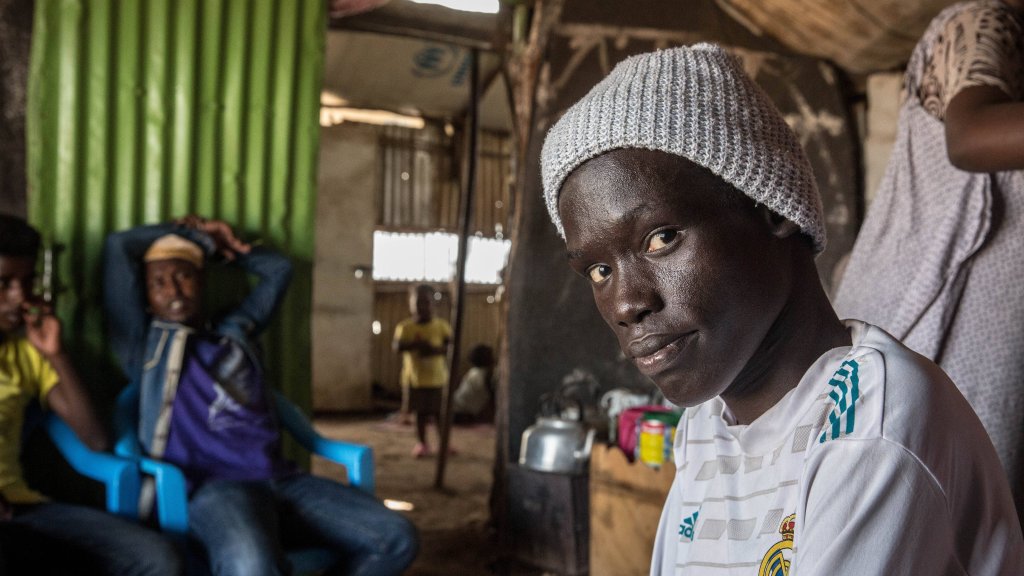
For thousands of LGBTQ+ people in East Africa, finding safety is becoming increasingly difficult. Renewed armed clashes in Ethiopia have triggered another wave of displacement. Yet many of those fleeing war and persecution to neighbouring Kenya and South Sudan face violence, discrimination and exclusion once again. Even refugee camps intended to provide protection are often not safe havens for them (German).
Key points at a glance
- Situation worsens further: Renewed fighting in Ethiopia has forced almost 50,000 people to flee to Kenya, including an estimated more than 2,400 LGBTQ+ people.
- Violence in refugee camps: In Kenya’s Kakuma camp, LGBTQ+ refugees report almost weekly attacks, discrimination and degrading treatment.
- Several hundred of those affected have left Kenya. Yet they also face intimidation and targeted violence in Gorom refugee camp.
- Protection largely inaccessible: According to the human rights organisation International PRIDE Centre, registration of LGBTQ+ asylum seekers in Kenya has effectively been suspended since 2019.
- Alarming experiences of violence: In surveys by the PRIDE Centre, 92 per cent of forcibly displaced LGBTQ+ people said they had experienced targeted sexual or gender-based violence.
- Urgent appeal for help: The organisation is calling on the United Nations, aid organisations and donors to provide specific protection measures and access to humanitarian aid without discrimination.
Displacement and homophobia
According to current figures, nearly 50,000 people have fled the latest fighting in Ethiopia to Kenya. They include an estimated more than 2,400 LGBTQ+ people. This renewed displacement affects a population whose situation was already marked by substantial security risks. The human rights organisation International PRIDE Centre is therefore warning of a further deterioration in the humanitarian situation. It says many LGBTQ+ refugees now have to cross several national borders to find somewhere they can live safely, at least temporarily. Of particular concern, it says, is that the dangers they face while fleeing are not limited to armed conflict. They also face targeted attacks because of their sexual orientation, with gay men particularly affected. This leaves them having to flee both war and discrimination and violence.
No protection in Kakuma
A large proportion of those arriving in Kenya from Ethiopia are taken to Kakuma refugee camp (German). More than 225,000 people already live there. The camp has long faced substantial humanitarian and security problems. According to the International PRIDE Centre, conditions are particularly dangerous for gay and lesbian refugees (German). The organisation reports almost weekly violent attacks on people housed in an area specifically designated for LGBTQ+ asylum seekers.
Alongside physical violence, discrimination, verbal abuse and degrading treatment are part of everyday life for many of those affected. According to the organisation, such incidents do not involve only other camp residents. Individual staff members of state institutions, UN agencies and non-governmental organisations are also alleged to be involved. The consequences are severe: numerous LGBTQ+ refugees leave the camp again, even though it is supposed to provide them with protection and humanitarian support. A report by the International PRIDE Centre states: “Most flee the camp to find at least relative safety and protection in urban and peri-urban areas. Several hundred have fled to South Sudan in the hope of being registered there as refugees and receiving better protection and more support.”
Threat of attacks in South Sudan
Several hundred LGBTQ+ people continue their flight to South Sudan. Many reach Gorom refugee settlement, supported by the UN refugee agency UNHCR, near the capital, Juba. Around 16,000 refugees live in Gorom, probably including about 600 LGBTQ+ people. Yet for many of them, hopes of better protection remain unfulfilled here too. As “Geographical”, a magazine published by Britain’s Royal Geographical Society, reports, LGBTQ+ refugees there continue to face substantial dangers. “Life remains a daily struggle against discrimination, hate speech, verbal harassment, intimidation and targeted attacks based on their sexual orientations and gender identities,” the report states. For people who have already passed through several places of refuge, this adds a further burden. Their search for safety can therefore take them across several countries without reaching a place where they can remain safely in the long term.
Increasing violence
In light of the renewed displacement from Ethiopia, the International PRIDE Centre has issued an urgent appeal to international aid organisations. In it, the organisation calls on the United Nations, non-governmental organisations, donors and the Red Cross to give greater consideration to the specific protection needs of LGBTQ+ refugees. It says people fleeing fighting in Ethiopia’s Oromia and Somali regions are particularly affected. During displacement, the social structures that previously offered at least some protection often collapse. “Coping strategies based on safety, mutual support and anonymity break down. In the chaos of displacement, the risk of being identified as an LGBTQ+ person increases significantly. This often leads to targeted violence, including sexual violence.”
Almost everyone experiences violence
According to the International PRIDE Centre, surveys in the countries where the organisation works reveal the scale of the threat. They found that 92 per cent of the forcibly displaced LGBTQ+ people surveyed had experienced targeted sexual or gender-based violence. The organisation therefore sees an urgent need for action. It says conventional aid provision is often insufficient to protect LGBTQ+ refugees from targeted attacks. Another problem compounds the situation in Kenya. Although the country recognises asylum on the grounds of sexual orientation on paper, LGBTQ+ asylum seekers face substantial difficulties in having their protection status officially registered, according to the PRIDE Centre.
There is a further issue: in the organisation’s assessment, international humanitarian aid also frequently fails to give adequate consideration to the specific needs of LGBTQ+ refugees. It says many aid organisations have neither suitable procedures nor the necessary experience to identify the risks involved. In addition, those affected often do not disclose their sexual orientation or gender identity for fear of violence.








