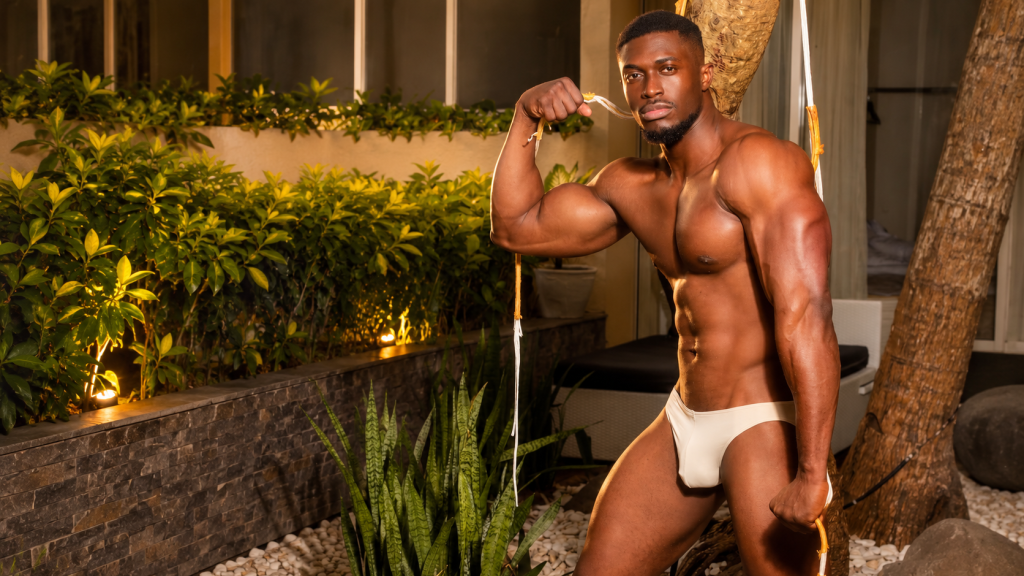
With his success at the international beauty pageant “Man of the Year 2026” and eye-catching photos, Nigerian model Bolaji Oyetunde is currently generating plenty of excitement on social media. His admirers are growing rapidly in number, particularly among gay men. At this week’s final on the Indonesian island of Bali, the model secured the title “Man of the Year Africa” and several other awards.
The key points at a glance
- Nigerian actor and model Bolaji Oyetunde was crowned “Man of the Year Africa 2026” in Bali.
- He finished third in the international beauty pageant and received several special awards.
- Photos of him in tight-fitting white briefs are generating excitement on social media, particularly among gay men.
- While Oyetunde is celebrated internationally, gay people face long prison sentences in his home country, Nigeria.
Gay fans celebrate Oyetunde
Oyetunde finished third overall (“2nd Runner-Up”). The international title “Man of the Year 2026” went to Rafael Pagan Negron from Puerto Rico. Alongside his African title, Oyetunde also received the “Best Physique” prize for his build and the “Lifestyle Award”. Even before the final, the Nigerian had attracted considerable attention with photos in tight-fitting white briefs. These images are currently drawing a particularly strong response from gay men. Numerous enthusiastic comments testify to the model’s growing popularity. One admirer wrote: “He looks as if he was designed by a superior artificial intelligence! What a beautiful man!” Another commented: “This guy is so hot. Luckily he won — I was keeping my fingers crossed for him so hard.” Nothing is publicly known about Oyetunde’s sexual orientation. His growing popularity with gay audiences, however, is beyond dispute.
Beauty king, then titleholder
The model’s full name is Oyetunde Bolaji Michael. He comes from the Nigerian metropolis of Lagos and graduated from the university there. Alongside his work as a model and actor, he works in hospitality as a Guest Experience Manager, looking after guests. Before taking part in the international competition in Bali, Oyetunde had already made a name for himself at several national beauty pageants. He initially represented the Nigerian state of Ogun at “Mr. Universe Nigeria”. He subsequently won the national title “Man of the Year Nigeria 2026”, qualifying for the international final in Indonesia. In his official introductions, Oyetunde stresses the importance of leadership, supporting young people and the desire to leave a lasting legacy. He cites physical training, discipline, perseverance and mental strength as essential to his personal development.
International competition
The “Man of the Year” beauty pageant was founded in 2016 by Raymond Djambek and took place for the ninth time this year. Although 20 contestants were originally expected, 16 men ultimately took part in the ten-day event in Bali. Participants included Brazil’s Joao Vitor Brum, South Korea’s Kim Jaeyoon, Spain’s Eugenio Jose Blanco Guerra and Japan’s Taku Morodome. Male beauty pageants also have a long tradition in Africa. For example, the Wodaabe ethnic group in Niger holds an annual competition in which men apply make-up and present themselves. Women judge their beauty.
Gay admirers in Nigeria
Oyetunde’s growing popularity among gay men stands in stark contrast to the human rights situation in his home country. Consensual same-sex sexual acts are illegal in Nigeria (German). The criminal law applicable in the south of the country provides for prison sentences of up to 14 years for such acts. The “Same Sex Marriage Prohibition Act”, which came into force in 2014, also criminalises same-sex marriages and partnerships, among other things. In northern states where Sharia law applies, same-sex sexual acts can even carry the death penalty by stoning.
This contradiction is prompting debate in some online spaces: while Nigeria celebrates one of its most successful male beauty kings, gay men in the country must continue to fear state persecution and social exclusion. Public displays of same-sex affection can also have criminal consequences. While gay men around the world openly celebrate Oyetunde’s photos, similar expressions of admiration can carry significant risks for gay men in Nigeria.








