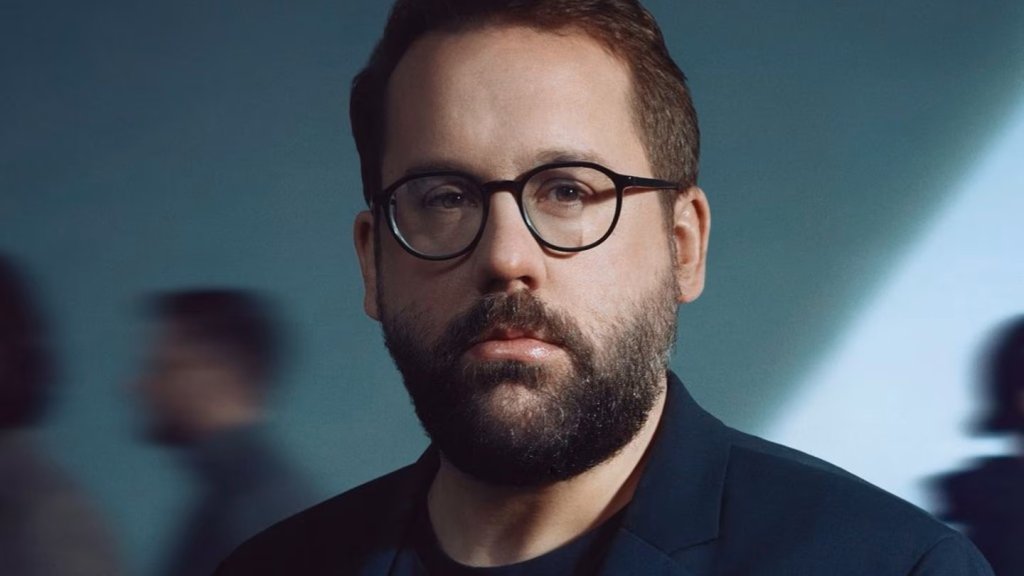
Television broadcaster Sat.1 is expanding its political programming, once again turning to gay journalist Paul Ronzheimer (41) (German). In spring 2027, the 41-year-old is set to launch his own talk show, which will not centre on the usual political discussions between party representatives. Instead, members of the public will have the chance to speak directly to political decision-makers.
The key points at a glance
- New show on Sat.1: journalist Paul Ronzheimer is getting his own political discussion programme, “Ronzheimer – Der Bürger-Talk”.
- Launching in spring 2027: the broadcaster is initially planning ten episodes, to be broadcast weekly.
- Direct dialogue: people from different occupations will sit opposite politicians and raise their personal concerns.
- Politicians should listen: Ronzheimer wants not only to elicit answers from his political guests, but also to challenge them with practical ideas drawn from everyday life.
- The 41-year-old has already presented several political programmes and documentary series for Sat.1 and ProSieben.
The public's perspective
The new programme is called “Ronzheimer – Der Bürger-Talk”. According to the broadcaster, ten editions are initially planned, each to be broadcast a week apart. RedSeven Entertainment GmbH will handle production. At the heart of the show are encounters between people from different walks of life and fields of work and political representatives. Guests will have the opportunity to raise their experiences, problems and expectations directly. Through this concept, Sat.1 aims to examine political decisions more closely from the perspective of the people affected by them in everyday life.
Elderly care worker meets party leader
The broadcaster illustrates how these exchanges might work with several examples of possible pairings. A carpenter might sit opposite a minister, while an elderly care worker debates with a party leader. A conversation between a flight attendant and a state secretary is also among the possibilities mentioned. The choice of such encounters is intended to highlight different experiences within society.
People who are not normally at the centre of televised political debates will be able to put their questions directly to those who hold political responsibility. According to the announcement, the aim is not simply to criticise political decisions. Rather, the conversations should also provide space for practical suggestions for improvement. There was no initial announcement of which politicians would take part in individual editions or which topics each would focus on.
Addressing frustration with politics
Paul Ronzheimer says the idea for the new show stems from his experiences as a journalist. In his encounters with people in Germany, he repeatedly finds considerable dissatisfaction with politics. “Time and again, I see just how angry and disappointed many people are with politics,” Ronzheimer said. He has observed that many members of the public feel those with political responsibility do not pay enough attention to their concerns. At the same time, they often have very specific ideas about what needs to change.
With the new programme, the presenter wants to give precisely these people an opportunity to put their questions and demands directly to politicians. The conversations should therefore not be shaped solely by the positions and arguments of the political guests. Instead, Ronzheimer wants the public's experiences to shape the course of the discussion.
Politicians should listen
One of the presenter's central expectations concerns the invited politicians' willingness to engage with the perspectives of the people they are speaking to. Asked what he hoped for from his political guests, Ronzheimer replied: “That politicians don't just talk, but actually listen for a change.” The journalist hopes these encounters could produce more than a routine exchange of arguments in front of the cameras. “Ideally, they will take away ideas they hadn't thought of themselves,” Ronzheimer said.
The new programme is thus intended to go beyond simply presenting different political positions. Members of the public's concerns should not only be discussed, but potentially also give the invited decision-makers inspiration for their future work. Whether this ambition can actually be realised in individual episodes will become clear after the launch next spring.
Social responsibility
Those in charge at media group ProSiebenSat.1 also see the new programme as having a wider social and political purpose. Henrik Pabst, the company's Chief Content Officer, pointed to the public's current strong interest in political issues. He also stressed that the group takes people's concerns and expectations seriously. He said ProSiebenSat.1 had a responsibility to help people form informed political opinions. With the new citizens' talk show, the aim was to give people a voice and conduct political discussions in a way that was accessible to a broad television audience. Pabst described the intended character of the show as “approachable and human, in a way that suits us and our viewers”.
Ronzheimer as host
For Marc Rasmus, whose responsibilities at ProSiebenSat.1 include factual programming, the presenter himself is also central to the new concept. Rasmus described Ronzheimer as “one of Germany's most popular journalists”. The programming executive said he particularly valued Ronzheimer's ability to engage in conversation with people from different parts of society. He said few could match Ronzheimer's ability to engage constructively and on equal terms with both members of the public and political decision-makers.
This is not Paul Ronzheimer's first collaboration with Sat.1. The journalist has already worked on political programmes for the media group on several occasions. Ronzheimer began his journalistic career at the “Emder Zeitung” and later became known as a political journalist for “Bild”, a war reporter and a podcaster. The openly gay journalist now also speaks publicly about his difficult experience of coming out in East Frisia: he says that, as a teenager, he tried to suppress his homosexuality and found an important source of support in journalism.








