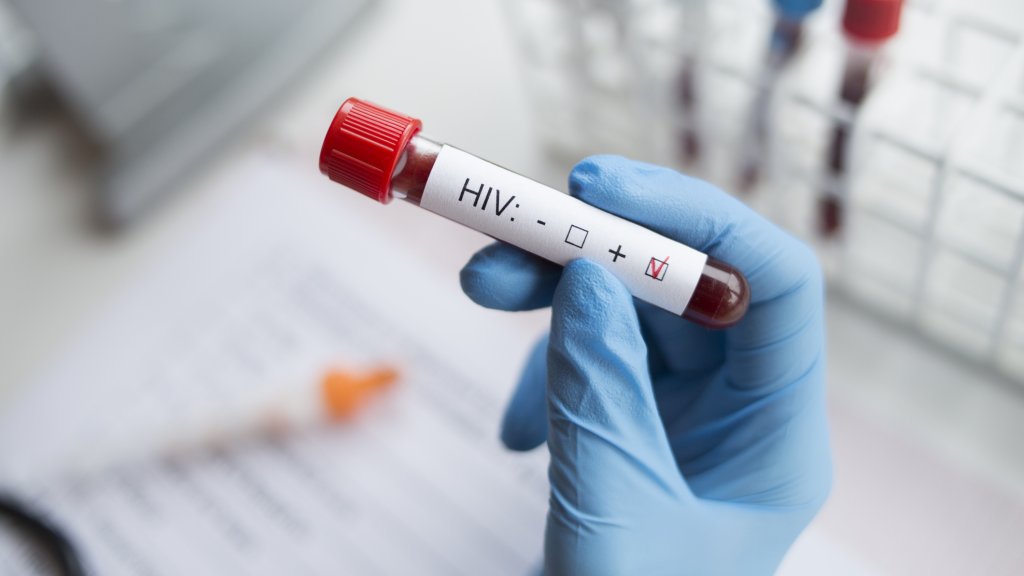
France has reached a new high in early HIV detection. Around nine million laboratory HIV tests were carried out nationwide in 2025, seven per cent more than in 2024. At the same time, the number of infections diagnosed fell. According to estimates by the national health agency Santé Publique France, 4,983 people learnt that they had HIV.
Key points at a glance
- Record HIV testing: Around nine million laboratory HIV tests were carried out in France in 2025, seven per cent more than in the previous year. Around 2.3 million tests were performed without a doctor's prescription.
- Fewer HIV diagnoses: According to the health agency Santé Publique France, 4,983 people received an HIV diagnosis. This represents a fall of around six per cent compared with 2023.
- New infections plateau: The agency estimates the number of actual new infections at 3,464. There has been no discernible further decline since 2023.
- Gay men particularly affected: Sexual contact between men accounted for 42 per cent of diagnoses. The number of new diagnoses in this group has plateaued since 2022.
- Many infections detected late: 39 per cent of HIV diagnoses were made at a late stage. An estimated 8,463 people were living with HIV without knowing it at the end of 2025.
- Almost 60,000 people in France use HIV pre-exposure prophylaxis (PrEP).
Success in prevention
The agency has now published the figures in its annual HIV report. Director-General Etienne Pot described the trend as a success for France's prevention strategy. “The year 2025 shows tangible progress: nine million HIV tests carried out and an 18 per cent fall in HIV diagnoses – things are moving in the right direction,” Pot said. According to the full report, the 18 per cent decline refers to the period from 2012 to 2025. Compared with 2023, when 5,318 people received an HIV diagnosis, the number fell by around six per cent. The current figure is also lower than in 2018, the last full year before the coronavirus pandemic. An estimated 5,309 HIV diagnoses were recorded then. The health agency describes the decline as statistically significant.
Actual new infections
Despite the decline in diagnoses, the picture of the HIV epidemic is not entirely positive. The number of newly diagnosed infections is not the same as the number of actual new infections. While diagnoses also include infections acquired some time ago, HIV incidence describes the estimated number of new infections acquired within a given period. For 2025, Santé Publique France estimates 3,464 new infections. This equates to 50 cases per million people. People who acquired HIV before immigrating to France are not included in this calculation.
“HIV incidence in France has been stable since 2023,” the agency states. The previously observed decline in new infections has therefore come to a halt for now. Significant regional differences remain. Nationwide, 72 HIV diagnoses per million people were recorded. The rate was particularly high in the French overseas territories. “French Guiana had a significantly higher rate than all other French regions,” the report says. It was followed by Mayotte, Guadeloupe, Martinique and the capital region, Île-de-France.
HIV tests without a prescription
Easier access to HIV testing is an important part of French prevention policy. For several years, people have been able to have certain tests carried out directly at medical laboratories without first having to see a doctor. Around 2.3 million HIV tests were carried out this way last year. Services requiring neither a doctor's prescription nor upfront payment thus accounted for around a quarter of all tests. According to the health agency, use of these services increased between September 2024 and September 2025, particularly among people under 50. From September 2025, the agency recorded an increase across all age groups. Easier access is intended to help detect infections earlier and start medical treatment as quickly as possible.
Many diagnoses come too late
Although France is making progress in early detection, many people still only learn that they have HIV at an advanced stage. “The number of early diagnoses has risen by 26 per cent since 2020,” Santé Publique France reported. At the same time, it said a downward trend in late diagnoses had been observed since 2023. Nevertheless, 39 per cent of all HIV infections diagnosed in 2025 were still detected late. An estimated 613 people received an AIDS diagnosis. A late diagnosis can have serious health consequences. Another problem is that some people are unaware of their infection. The agency estimates that 8,463 people in France were living with HIV without knowing it at the end of 2025. Around 40 per cent of this group were men who have sex with men. “Public institutions, healthcare professionals, associations and citizens – our shared goal is clear: to eradicate HIV,” agency chief Pot said.
HIV diagnoses among gay men
Particular attention is being paid to trends among men who have sex with men. This transmission group accounted for around 42 per cent of all HIV diagnoses in 2025, equivalent to around 2,106 people. Heterosexual contact accounted for 53 per cent of diagnoses. The health agency notes that the number of HIV diagnoses among gay men has not fallen significantly for several years. The figures therefore show that, while prevention measures to date have enabled important progress, further reducing HIV infections among men who have sexual contact with other men remains a challenge.
Place of birth also plays a role in trends in HIV diagnoses. Among people born outside France, the number of diagnoses fell by 11 per cent compared with 2023. It had previously risen by 37 per cent between 2020 and 2023. According to estimates by Santé Publique France, around half of people born abroad who received an HIV diagnosis in 2025 acquired the infection only after arriving in France. Among men who have sex with men, this proportion was as high as 61 per cent. There are also marked differences in early detection. Among men born in France who have sexual contact with other men, 54 per cent of HIV infections were diagnosed early. Among men in the same group who were born abroad, the proportion was just 34 per cent.
60,000 people use PrEP
Alongside regular testing, preventive medication is one of the most important measures against HIV. Pre-exposure prophylaxis, or PrEP, can effectively prevent HIV infection when used correctly. According to the French research agency ANRS, almost 60,000 people in France now use this medication. However, long-term use remains a challenge. “Almost 20 per cent of users stop taking PrEP within six months of starting,” ANRS reported. The information cited does not explain the reasons for stopping in greater detail. For prevention to be effective, however, it is crucial that the medication is used according to the relevant dosing schedule. Longer-acting injections are now available alongside tablets.
Knowledge gaps in Europe
Santé Publique France is now planning a new information campaign for World AIDS Day on 1 December. It is due to run throughout December and has a French title meaning “Living with HIV means living, above all.” The health agency emphasises: “A person with HIV who is receiving effective treatment and whose viral load is undetectable does not transmit the virus.” According to the agency, significant gaps in public knowledge about this remain.
France is not alone in facing these challenges. In many European countries, people still only learn that they have HIV at a late stage. In Germany, according to the Robert Koch Institute, around 1,200 people a year already have a serious illness, advanced immunodeficiency or AIDS when diagnosed. According to the European Centre for Disease Prevention and Control (ECDC) and the World Health Organization's Regional Office for Europe, as recently as 2024, 48 per cent of all HIV diagnoses in the European Union and the European Economic Area were made at a late stage.








