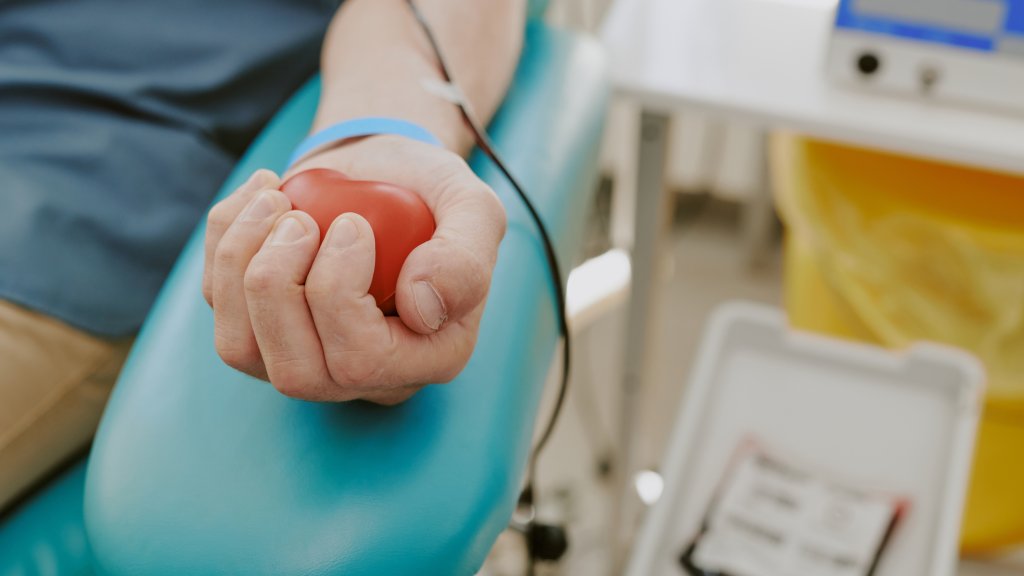
Stricter blood donation rules will come into force in Russia at the start of 2027, also affecting people in the LGBTQ+ community. The Russian Ministry of Health has expanded the list of medical exclusion criteria. According to the independent Russian news outlet “Verstka”, people diagnosed with “disorders of adult personality and behaviour”, among others, will no longer be allowed to donate blood.
Key points at a glance
- Russia is expanding its medical exclusion criteria for blood donations from 1 January 2027.
- Because the ICD-10 classification of diseases remains in use, trans people are also affected by the new rules.
- Under certain circumstances, the restrictions could also affect gay and bisexual people.
- Medical staff are required to check a donor’s electronic medical record before a blood donation.
- The LGBTQ+ organisation “Vykhod” criticises the rules as discriminatory.
Bans affecting LGBTQ+ people
Under the International Classification of Diseases (ICD-10), which remains in use in Russia, this diagnostic group also includes so-called “transsexualism”. Russia has deliberately not adopted the newer ICD-11, in which a trans identity is no longer classified as a mental disorder. The new exclusion criteria also go beyond the diagnosis of “transsexualism”. According to “Verstka”, the Ministry of Health also added “disorders of sexual development and orientation”, with the diagnostic code F66, to the list. ICD-10 explicitly states that a person’s sexual orientation is not, in itself, a disorder.
Such a diagnosis may be made, for example, when a person experiences considerable distress over their sexual orientation and wants to change it. According to findings by the legal department of the Russian LGBTQ+ organisation “Vykhod” (“Coming Out”), this diagnosis is sometimes given to gay and bisexual people in Russia. Some medical records reportedly contain the entry “disorder of sexual development and orientation (homosexual type)”. Depending on the specific medical diagnoses, the new blood donation rules could therefore also affect other parts of the LGBTQ+ community.
A further tightening of the rules affects people who have had certain organs removed. The regulation lists the removal of a breast, the uterus or the testicles, among other procedures, as grounds for exclusion from blood donation. In the past, such operations were often performed as part of gender-affirming treatment for trans people. Previously, under Russian regulations, the removal of an organ only resulted in exclusion from blood donation if the procedure led to a Group I or Group II disability. The new rules no longer contain this qualification.
Diagnoses in medical records
The medical records of trans people who had already changed their legal gender marker or undergone relevant surgery before the ban on gender-affirming treatment are particularly significant. In July 2023, Russia’s State Duma passed a law banning “gender reassignment” (German). Since then, trans people have been unable either to change their legal gender marker or to access gender-affirming medical treatment. Medical staff are prohibited from performing the relevant operations or prescribing hormones for a transition.
Before the law came into force, a medical assessment was required to change official documents. A new passport could then be issued on the basis of a certificate confirming a diagnosis of “transsexualism”. These diagnoses therefore remain in the medical records of Russian citizens who changed their gender marker or underwent gender-affirming surgery before the ban. According to lawyers from “Vykhod”, the diagnosis is now only very rarely made in Russian state healthcare facilities.
Data in electronic patient records
According to the legal experts, anyone wishing to donate blood in Russia is required neither to submit a certificate from a psychiatric facility nor to provide details of previous operations. Instead, donors confirm with their signature that they have no medical conditions that would exclude them. The procedure is intended to prevent harm to the health of blood recipients or complications for donors during blood collection. However, the Russian Ministry of Health’s requirements oblige medical staff to check a donor’s medical record before a blood donation. A nationwide standardised system of electronic medical records allows doctors and other medical staff to view both previous diagnoses and past surgical procedures.
The LGBTQ+ organisation “Vykhod” stresses that information stored in patient records can have a significant impact on the behaviour of trans people. “Their very existence provides another reason why trans* people might want to hide their identity. In this sense, they are discriminatory.” However, the legal experts do not believe that the new rules were introduced solely to exclude trans people or other members of the LGBTQ+ community from donating blood. In 2025, Russia recorded its highest number of blood-borne infections linked to medical treatment in 15 years. The majority of those affected contracted hepatitis C.








