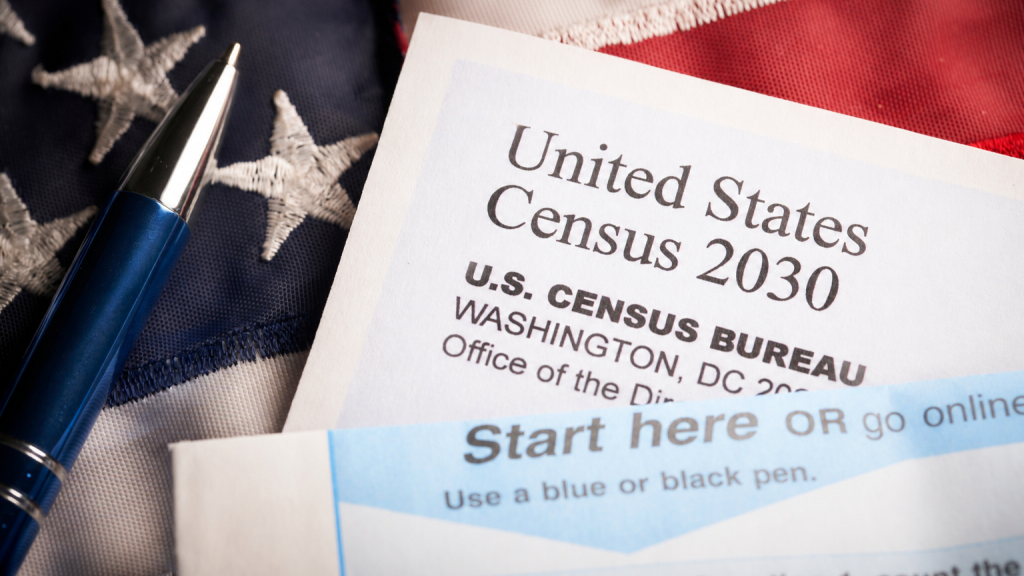
The US government wants to impose legal restrictions on the collection of certain personal details in the 2030 census. A draft regulation from the Department of Commerce now proposes explicitly excluding questions about sexual orientation, ethnic origin and membership of population groups from the questionnaires. The plans face opposition from human rights organisations, researchers, foundations and numerous states.
Key points at a glance
- New census rules: The US Department of Commerce wants to explicitly prohibit questions about sexual orientation, ethnicity and ancestry in the 2030 census.
- LGBTQ+ people affected: Although previous censuses have not asked direct questions about sexual orientation, the proposed rules have drawn criticism against a backdrop of data collection already being cut.
- Extensive data cuts: Since January 2025, questions about sexual orientation or gender identity have been removed from around 360 federal data collections, according to the Williams Institute.
- Broad opposition: 39 foundations and the attorneys general of 23 states and Washington, D.C., have raised objections to the plans.
Public comment period ends
The proposal is particularly controversial against the backdrop of cuts already made to government data collection on LGBTQ+ people. Critics fear that important information about social disadvantage could be unavailable in future. The public comment period on the draft ended this week. According to the news website “Inside Higher Ed”, more than 143,000 comments were submitted. The proposal does not yet have legal force. No decision has yet been made on its final implementation.
“Irrelevant characteristics”
US Secretary of Commerce Howard Lutnick has already signed the draft. It states: “No questions about ancestry, ethnicity or sexual orientation may appear on the short-form questionnaire for the decennial census or on any other questionnaire used to count the population.” However, previous US censuses did not include direct questions about sexual orientation either. The proposed ban would therefore initially make an existing practice explicit. Critics nevertheless see it as a troubling signal, particularly in light of changes to other government statistics.
To justify the proposal, the Department of Commerce points to the “potentially sensitive nature of questions about ancestry, ethnicity and sexual orientation”. Excluding such details is intended to reduce the burden on citizens and the risk of personal information being disclosed. In its summary, the department also argues that census data must not be “distorted in any way by questions about irrelevant personal characteristics”.
Counting same-sex couples
The draft does not explicitly mention either gender identity or same-sex partnerships. Certain basic demographic details, however, are to remain permissible. “Questions about biological sex, date of birth and relationships between household members may be included,” the proposed regulation states. In the 2020 census, the US Census Bureau introduced separate response options for same-sex and opposite-sex married couples and unmarried partners for the first time. This allowed same-sex couples to be counted statistically for the first time without respondents having to state their sexual orientation directly. The current draft regulation does not make clear whether these response options will be retained in the 2030 census.
Developments cause concern
Back in 2020, Meghan Maury, then policy director at the National LGBTQ Task Force, highlighted the importance of adequate representation in statistics. “Even if the census does not ask questions about sexual orientation or gender identity, it is still crucial that we are counted,” Maury explained. The debate about the census comes at a time when several federal agencies have already restricted the collection of data on sexual orientation and gender identity.
Caroline Medina, senior adviser for data policy at the Movement Advancement Project, reported on corresponding changes at the US Census Bureau in March 2026. The agency had “halted its research examining the feasibility of including questions about gender identity in the American Community Survey”, Medina wrote. Such information had also been removed from another important survey. These data were used, among other things, to examine disparities in access to housing, employment and healthcare.
LGBTQ+ people in the US
A study published this year by the Human Rights Campaign Foundation illustrates how important such surveys are for research. The organisation analysed responses to the Household Pulse Survey from 2021 to 2024. On this basis, it estimated that around 26.5 million LGBTQ+ adults live in the United States. At the time of publication, HRC President Kelley Robinson highlighted the social significance of this population group. “We are not a small group on the margins of society, and no political campaign, brand or employer can afford to treat us as such,” Robinson said. Tari Hanneman, senior director of research and education at the HRC Foundation, stressed the importance of reliable statistics. “Reliable data are essential to understanding who lives in this country and what our communities need to thrive,” Hanneman said.
Insufficient data collection
The changes to government data collection extend beyond population questions. According to Caroline Medina, corresponding information has also been removed from the Census Bureau’s annual survey of businesses, the Annual Business Survey. This removes an important basis for research into LGBTQ+-owned businesses. The removal “eliminates the only nationally representative federal data source on LGBTQ+-owned businesses with employees”, Medina wrote.
The consequences could particularly affect researchers, business associations and policymakers who rely on reliable information about different groups of businesses. The Williams Institute also documented a significant decline in such data collection. In a report dated February 2026, the institute examined developments since the start of US President Donald Trump’s second term. Its finding: “Since 20 January 2025, a question about sexual orientation or gender identity has been removed from approximately 360 federal data collections.” According to the report, however, questions about whether people were in same-sex partnerships were not affected.
Widespread protests
Numerous non-profit organisations have now spoken out against the Department of Commerce’s current draft regulation. A total of 39 foundations and funding organisations signed a joint statement. The organisations fear that social disparities could become harder to trace in future. Alongside the foundations, numerous US states have also taken a stand against the plans. Early this week, the attorneys general of 23 states and Washington, D.C., submitted a joint statement.
They received support from the governors of Kentucky and Pennsylvania. The state representatives pointed in particular to the benefits of previous data collection on sexual orientation and gender identity. Previous surveys that included gay and queer people had made it possible to “make inequalities visible” that LGBTQ+ people face in housing, the labour market and healthcare. Chioma Chukwu, executive director of the non-profit organisation American Oversight, said in a statement quoted by “Inside Higher Ed”: “The census is supposed to count everyone.”








