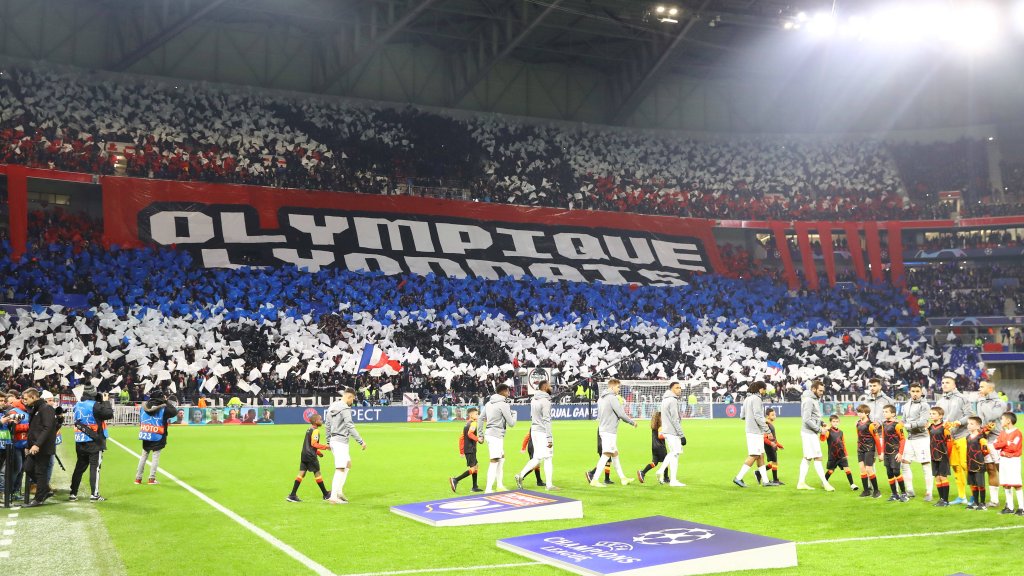
Homophobic abuse from the stands has now brought financial consequences for French football club Olympique Lyon. European football's governing body UEFA has fined the club €20,000. The club also faces a partial stadium closure if similar incidents occur again within the next two years.
Key points at a glance
- Penalty for homophobia: UEFA has fined Olympique Lyon €20,000 for homophobic chants by fans during a Europa League match against Crystal Palace.
- Arch-rivals targeted: The discriminatory chants were directed not at their English opponents, but at French rivals AS Saint-Étienne.
- Suspended stadium closure: UEFA ordered a partial closure of the north stand. The measure was suspended for two years.
- Other clubs affected: Real Madrid and Cardiff City have also been punished for homophobic chants by their supporters.
- Criticism of FIFA: World football's governing body is accused of failing to take firm action over similar incidents during the World Cup in Mexico.
Homophobic chants
The sanctions were prompted by discriminatory chants by fans during the Europa League match against English club Crystal Palace on 15 October 2026. The match at the Groupama Stadium ended in a 3–2 victory for Lyon. However, the chants were not directed at the English visitors. Instead, some Lyon supporters targeted French arch-rivals AS Saint-Étienne, who now play in the second division. The incident took place in the stadium's north stand, known as the Virage Nord. The timing was particularly striking: the homophobic chants rang out in the 42nd minute. The number 42 represents the French department of Loire, where the city of Saint-Étienne is located. The choice of timing was therefore a deliberate reference to their long-standing rivals.
Will the north stand be closed?
UEFA has now announced its decision. European football's governing body deemed the Lyon supporters' conduct to be “discriminatory behaviour” and explicitly referred to the “homophobic chants”. In addition to the fine, its disciplinary committee therefore imposed a further sanction: sections of the north stand are to remain closed for a future Europa League home match. The affected sections are blocks 002, 003 and 004 of the Virage Nord. The measure was ordered for the next European home match against Lilleström on 26 November.
However, Lyon does not have to close these sections for the time being. UEFA suspended the sanction. “This partial stadium closure is suspended for a probationary period of two years from the date of this decision,” the governing body explained. If supporters engage in similar homophobic chanting again during this period, the suspended closure could be enforced. The decision therefore means more than an immediate financial burden for the club. It also puts pressure on the club's management to prevent further discriminatory incidents in the stands.
Incidents at other clubs
The case once again raises the question of how football associations and clubs deal with discriminatory behaviour by spectators, and what consequences such incidents should carry. Olympique Lyon is not the only European football club whose supporters have attracted attention for homophobic chanting. Only recently, UEFA fined Real Madrid €30,000 (German). This followed homophobic chants by fans of the Spanish club directed at manager Pep Guardiola. Real Madrid initially refused to accept the decision and took its case to the Court of Arbitration for Sport (CAS). However, the appeal was unsuccessful, and the fine remained in place.
Similar incidents have also been punished in Britain. The Football Association, English football's governing body, imposed a sanction on Cardiff City (German) over homophobic chanting by supporters. Welsh club Wrexham also took a particularly clear stance. Club officials explicitly warned their fans against discriminatory and hateful chants. Anyone taking part in such chanting would face consequences. These could include stadium bans, criminal complaints and even arrests.
FIFA under fire
While UEFA has imposed sanctions on several European clubs, world football's governing body FIFA faces criticism over its handling of similar incidents. The most recent World Cup, which Spain won, also sparked debate about discriminatory behaviour. According to FIFA, the French national team was a particularly frequent target of abuse on social media during the tournament. Homophobic chants by fans were also recorded at matches in host country Mexico. The world governing body, led by president Gianni Infantino, is accused of failing to respond to these incidents with appropriate sanctions. Critics say the Mexican hosts escaped punishment despite the discriminatory chants.








