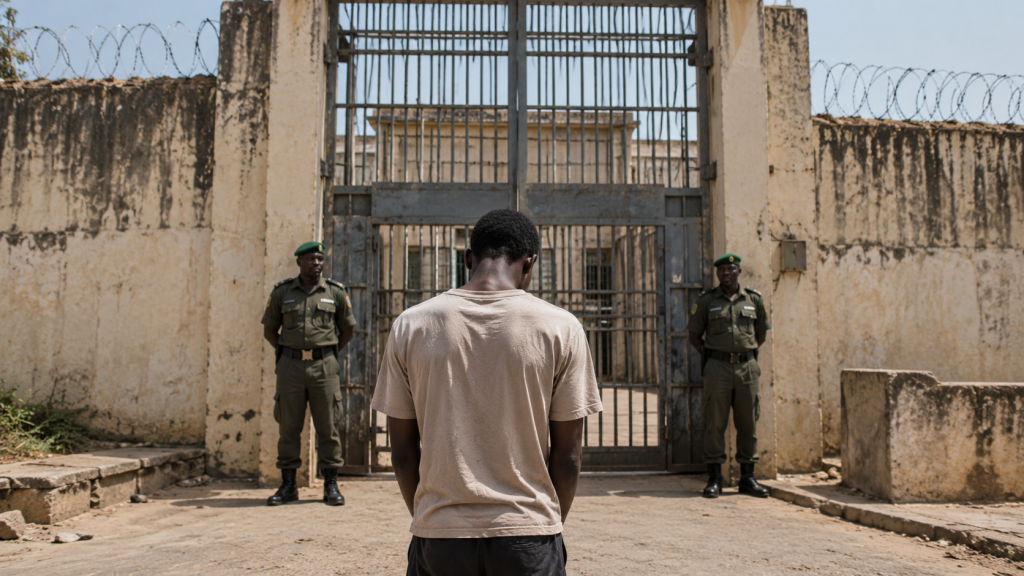
Just days before the start of the Youth Olympic Games in Senegal, a court ruling against a secondary school pupil has prompted renewed serious concern among human rights organisations. A court in Tambacounda sentenced the gay teenager to seven years in prison. The charges were “unnatural acts” and intentional HIV transmission. Meanwhile, the West African country is preparing to welcome thousands of athletes under the age of 18 from around the world – including gay and queer young people.
Key points at a glance
- Seven years in prison: A court in Senegal has sentenced a gay secondary school pupil to seven years in prison for “unnatural acts” and intentional HIV transmission. Other pupils, a teacher and two university students also received prison sentences.
- Persecution of gay people intensifies: Since March, same-sex sexual acts have carried prison sentences of up to ten years. More than 355 people have reportedly been arrested so far amid the intensified crackdown.
- Youth Olympic Games set to begin: Around 2,700 athletes under the age of 18 from 206 delegations are expected in Dakar and two other locations from 31 October to 13 November.
- Safety of LGBTQ+ athletes uncertain: Human rights organisations are demanding binding guarantees against discrimination and arbitrary arrests. So far, no specific protection measures are publicly known.
- IOC trusts hosts: The International Olympic Committee points to assurances from the Senegalese authorities and says it cannot change the laws of a sovereign state.
Prison sentences for young people
According to Senegalese news website Senego, other pupils received prison sentences of five and two years respectively. A teacher and two university students were each sentenced to three years in prison. The rulings are linked to a wider wave of arrests. A total of 35 people were arrested in Tambacounda in mid-October, including four pupils as well as teachers and healthcare workers. A court decision concerning five further defendants is expected on 4 November. The proceedings highlight the growing legal risks for gay people in Senegal. They also raise questions about the protection of international athletes due to arrive for the Youth Olympic Games in a few days.
Up to ten years in prison
The legal situation for gay people in Senegal has become considerably harsher in recent months. In March 2026, parliament doubled the maximum sentence for same-sex sexual acts to ten years in prison (German). At the same time, the so-called promotion of homosexuality was also criminalised. Since then, the authorities have significantly stepped up prosecutions (German). According to human rights sources, more than 355 people have now reportedly been arrested.
In mid-October, Human Rights Watch documented further alleged human rights violations linked to the investigations. These include HIV tests allegedly carried out without the consent of those affected, intimidation of lawyers and the disclosure of confidential investigation documents to the media. The organisation is particularly critical of what it says is inadequate protection for defendants against public exposure and discrimination. It says the tougher legislation fosters a climate of fear in which gay people increasingly face the prospect of prosecution.
Young athletes at risk?
An anonymous source also described to Italian media how tense the situation has become. The insider is currently in Dakar on behalf of an international organisation. Speaking to the press, he described the situation as “much worse than is being shown publicly”. The source also spoke of “thousands of Senegalese people who have managed to leave the country, never to return”. No independently verifiable figures supporting this statement are available. However, the account illustrates the fears surrounding the intensified persecution of gay people. The source expressed particular concern about the forthcoming Youth Olympic Games. “The most important question that nobody is talking about concerns the Games: athletes under the age of 18 will be arriving from all over the world, and nobody is talking about the risks for young LGBTQ+ athletes.”
The Youth Olympic Games will take place in Senegal from 31 October to 13 November. The host locations are the capital Dakar, as well as Diamniadio and Saly. It is the first Olympic event on the African continent. Around 2,700 athletes from 206 delegations are expected. All participants are aged 17 or younger. They will be joined by thousands of coaches, support staff, volunteers, officials and journalists. The event is intended to be an international celebration of sport while also strengthening Africa’s importance within the Olympic movement. However, Senegal’s tougher criminal laws will remain in force during the Games. For gay participants and members of support teams, this raises the question of what legal risks they face in the host country. In particular, it remains unclear what would happen if a foreign athlete under the age of 18 were targeted by police because of their sexual orientation or detained over an alleged breach of the laws in force. So far, no binding protection arrangements for such cases are publicly known.
IOC speaks of “full confidence”
The International Olympic Committee (IOC) has so far addressed the concerns only in general terms. Responding to an enquiry from sports website Outsports, the organisation said it had “full confidence” in the Senegalese authorities. They had given assurances that they would comply with the provisions of the Olympic Host Contract. At the same time, the IOC pointed to the limits of its remit. It had “neither the mandate nor the ability to change the laws of a sovereign state”. Foreign athletes may be covered by special protection provisions relating to the Olympic Games. However, this does not amount to a general exemption from Senegalese criminal law. The rules continue to apply in full to the host country’s population in any case.
Charter prohibits discrimination
The situation also poses a fundamental question for the IOC. The Olympic Charter prohibits discrimination on grounds including sexual orientation. How this principle is to be enforced in a host country that punishes same-sex sexual acts with lengthy prison sentences remains highly contentious. Brahim Naït-Balk, long-serving coach of the French club Paris Foot Gay, told sports website Inside the Games that the provisions of the Olympic Charter would remain ineffective without “real guarantees”. In his view, simply committing to Olympic values was not enough if no binding measures were in place to protect participants at risk.
Human Rights Watch addressed a demand to Senegalese President Bassirou Diomaye Faye. It called on the government to make a public commitment before the Youth Games begin to protect “participants, visitors and residents” from discrimination and arbitrary arrests. No public response from the president to this demand is known so far. Since August, the international umbrella organisation ILGA World has also repeatedly called for written, publicly accessible safety guarantees for LGBTQ+ people during the event.








