
One of the best-known meeting places for the gay community on the American East Coast is now receiving official historical recognition. The US state of Delaware will tomorrow unveil a commemorative plaque for the stretch of sand known as Poodle Beach in Rehoboth Beach.
Key points at a glance
- Historical recognition: The US state of Delaware is honouring Poodle Beach in Rehoboth Beach with an official historical marker.
- Important gay meeting place: Since the late 1970s, Poodle Beach has been one of the best-known gay beaches on the American East Coast.
- A history of exclusion: Gay men were meeting on nearby stretches of beach as early as the mid-20th century because there were few safe places to meet elsewhere.
- A community initiative: The application for the plaque was submitted in 2020. The unveiling, originally planned for June, had to be postponed for safety reasons.
A destination for LGBTQ+ people
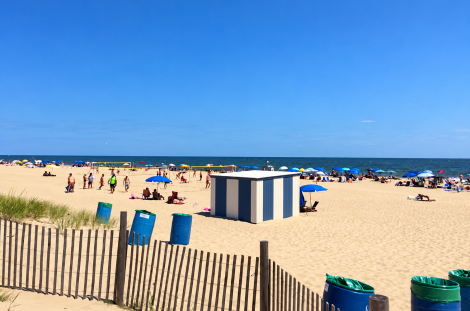
The stretch of beach at the southern end of the boardwalk has been a popular meeting place for decades, particularly for gay men. The recognition is intended to commemorate its significance in the state's gay history. The ceremony will take place tomorrow morning near the junction of Prospect Street and South Boardwalk. Rehoboth Beach has long been a popular summer holiday destination for people from the Washington, D.C., and Philadelphia metropolitan areas. The coastal town became an important holiday resort for the LGBTQ+ community in particular. The new plaque is intended to serve as a reminder that, for gay people, places like this were far more than ordinary holiday destinations for many decades.
Delayed unveiling
The unveiling was originally scheduled for late June, during LGBTQ+ Pride Month. However, it had to be postponed because the planned installation directly on the beach raised particular safety concerns. Maegan Peterman, director and state archivist of the Delaware Public Archives, described the project as an “unusual installation” and explained: “Normally, a marker is installed by the roadside and on concrete, not on the beach,” she told US magazine Metro Weekly. The plan to anchor it in the sand caused concern among the specialists responsible. “When the sign shop was told exactly where the marker was to be installed, there were significant concerns about liability and the possibility that the marker could accidentally fall over and injure someone,” Peterman said. It was therefore first necessary to establish how the sign could be secured safely and permanently. With the new date, the unveiling now falls during LGBTQ+ History Month, which is observed every October.
Community applied for recognition
The initiative for the recognition came not from the authorities themselves, but from members of the public. Delaware's historical marker programme is administered by the Delaware Public Archives. Residents and community organisations can nominate places or events of significance to the state's history. The application for Poodle Beach was submitted back in 2020. “Members of the community identified Poodle Beach as a place of historical significance and submitted an application for a marker,” Peterman explained.
She said the subsequent review and historical research had confirmed the significance of the stretch of beach. “Through the application process and the research we carried out to develop the text for the marker, it was clearly established that Poodle Beach has been a really important meeting place for Delaware's gay community, as well as for other visitors to the state.” The beach had served an important purpose, particularly during periods of social exclusion. “It was a place where people could come together openly and safely to have fun and relax – at times when that wasn't necessarily possible elsewhere,” Peterman said. The plaque is classified as a “Social History Marker”. This category honours places and social groups that have shaped Delaware's cultural history.
A lesbian millionaire's beach
The history of gay and lesbian beach life in the region reaches back even further, to the mid-20th century. At that time, gay and lesbian holidaymakers initially gathered further south of today's Rehoboth Beach boardwalk, near a property called Carpenter Mansion. The property is known as Shell House, a mansion around 100 years old in Dewey Beach. It was built by a member of the wealthy du Pont business family and stands a few minutes' walk south of the Rehoboth Beach town boundary. Louisa du Pont Carpenter regularly spent her summers there. Carpenter was a pilot, divorced and a lesbian. The property belonged to her family. Her regular guests included her long-time friend Tallulah Bankhead, who had become known as an actress on Broadway and in Hollywood. “Special” male friends were also part of the social circle. Over the years, the beach near the property became an increasingly popular meeting place for gay men.
Eventually, hundreds of gay men travelled to the beach year after year to sunbathe, strike up conversations and spend time together. They kept their distance from the heterosexual couples and families, who mainly gathered along the Rehoboth Beach boardwalk. At that time, there were no gay bars in the town. For many gay men, it was also dangerous to reveal their sexual orientation publicly. Being outed could lead to the loss of a job or serious social repercussions. The stretch of sand was informally called “Carpenter Beach” and offered a relatively secluded place to meet during the day. Gay men could make connections there without exposing themselves to public attention. In the evenings, socialising often moved to private house parties. In the 1970s, gay beach life then shifted closer to the Rehoboth Beach boardwalk, making this stretch of beach known throughout the community nationwide. Today, gay life is enthusiastically celebrated on the beach; long-standing traditions included the annual “Labor Day Drag Volleyball Game” – only the coronavirus pandemic brought the festivities to an end.
Gay cousins and their poodles
However, the origins of the unusual name Poodle Beach remain unclear to this day. One local story tells of two gay cousins who wanted to spend a day at the beach with their poodles. They were supposedly originally heading for Carpenter Beach, which was further away. But after carrying their beach chairs and cool boxes some distance beyond the boardwalk, they are said to have tired of the remaining walk. Instead of continuing, they spread their blankets on the sand immediately south of the boardwalk. Other beachgoers who also did not want to walk all the way to Carpenter Beach are said to have followed their example. According to the story, a new meeting place gradually emerged, taking its name from the poodles they had brought along.








