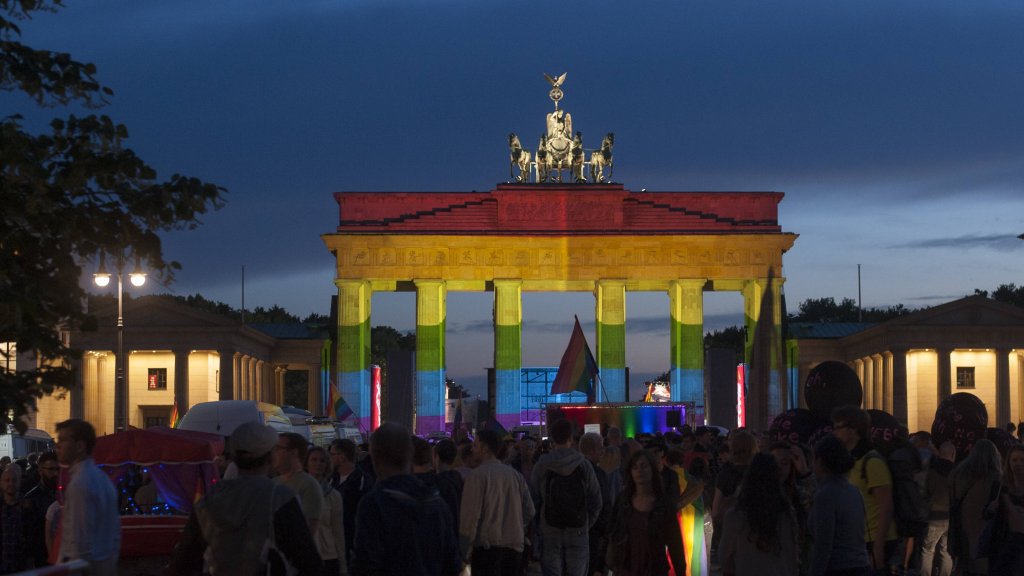
LGBT History Month in October commemorates the persecution, resistance and achievements of gay and queer people – and reminds us that equal rights cannot be taken for granted, then or now. For the queer community, October is more than a month on the calendar. It is an invitation to look back: at people persecuted for their love, at activists who stood up to discrimination, at tragedies long shrouded in silence – and at political changes that many now take for granted. LGBT History Month brings into view what might otherwise easily disappear from collective memory.
LGBT History Month originated in the USA. In 1994, history teacher Rodney Wilson from Missouri developed the idea of dedicating a month to lesbian and gay history. October was chosen partly because National Coming Out Day is observed on 11 October. The marches on Washington for lesbian and gay rights in 1979 and 1987 also took place in October. Today, LGBT History Month internationally is about more than celebrating famous names. It is about a history made up of many individual life stories. Some are known around the world, others barely at all, because LGBTQ+ history was long told only from the perspective of its opponents.
More than Stonewall and AIDS
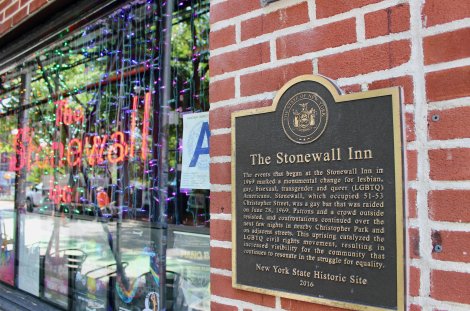
Few events symbolise the beginning of the modern LGBTQ+ movement as strongly as the Stonewall uprising in New York in June 1969. Stonewall was not, however, the beginning of gay resistance. People had already organised against police violence, discrimination and state repression. Rather, Stonewall's significance lies in the way the events became a highly visible symbol. An uprising grew into the annual Pride tradition – and eventually a worldwide movement. But LGBTQ+ history is not only a story of successes.
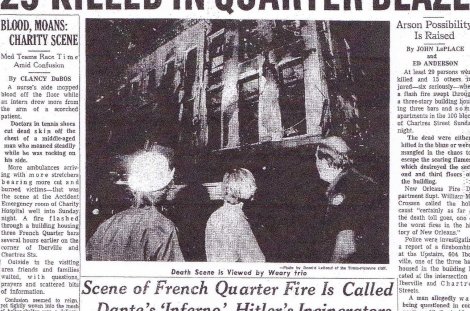
One particularly harrowing example is the fire at the UpStairs Lounge in New Orleans on 24 June 1973. The bar in the French Quarter was an important meeting place for the local gay community. Thirty-two people died in the fire. Until the attack on the Pulse nightclub in Orlando in 2016, the fire was considered the deadliest attack on a gay club in American history; the newspaper at the time described it as “Dante's Inferno” and “Hitler's crematorium”. The official cause was never conclusively established, and no one was arrested over the incident. Society's response to the disaster also shows how little value was placed on gay lives in many places at the time.
In the 1980s, the gay community was once again confronted with a historic catastrophe: the AIDS crisis. On 5 June 1981, the US public health agency CDC published a report on five previously healthy young men in Los Angeles who had developed a rare and severe form of pneumonia. Shortly afterwards, an unusually high number of cases of Kaposi's sarcoma were also observed among gay men in New York. This marked the beginning of the public documentation of what would become the AIDS epidemic. For many gay men, the crisis meant more than a life-threatening illness. It also brought fear, stigma and social exclusion. Activists therefore fought not only for medical research and better treatment, but also against political inaction and the stigmatisation of people with HIV. This is one of the important lessons of those days: progress does not happen automatically.
From Paragraph 175 to same-sex marriage
In Germany, too, the history of gay people is closely linked to state persecution. One particularly dark chapter is Paragraph 175 of the Criminal Code. It criminalised sexual acts between men and was made considerably harsher during the Nazi era. An estimated 50,000 men were arrested under Paragraph 175 between 1933 and 1945; up to 15,000 were deported to concentration camps. Thousands were murdered there. But the persecution did not end in 1945: around another 50,000 men were convicted under it. Paragraph 175 was not finally repealed until 1994. Another turning point came at international level.
On 17 May 1990, the World Health Assembly removed homosexuality from the classification of mental illnesses (ICD). Homosexuality was thus no longer classified as a mental disorder. Later, 17 May became the International Day Against Homophobia, Biphobia, Interphobia and Transphobia – today's IDAHOBIT. This step, too, was not a sudden gift from institutions. It was the result of decades of scientific and social debate. The next milestone: while many countries were still discussing legal recognition for same-sex couples, the Netherlands took a historic step. On 1 April 2001, it became the first country in the world to open civil marriage to same-sex couples. A quarter of a century later, the influence of that decision is clear: numerous other countries followed, yet same-sex marriages are still not recognised worldwide; Germany followed on 1 October 2017. Finally, more recent history includes an event that has already become deeply etched in the community's memory: the attack on the Pulse nightclub in Orlando. On 12 June 2016, Omar Mateen opened fire there. In total, 49 people were murdered and another 58 injured.
Not nostalgia, but courage for change
History Month could easily seem like a nostalgic look back. But that is precisely what it is not meant to be. LGBTQ+ history does not simply tell us what once happened. It explains how today's rights came about. It shows who fought for them. And it reminds us that social changes are not irreversible. Anyone who can marry today without their partner's gender presenting a legal obstacle lives in a different reality from people who were still persecuted under Paragraph 175. Anyone who can speak openly about their sexual orientation benefits from decades of social change. And anyone who can celebrate Pride is part of a tradition that emerged, among other things, from protests against police violence and discrimination. That is precisely why LGBT History Month is so important. It gives people back a history that was long denied to them or kept from them. It remembers those who can no longer tell their stories. It honours those who fought back. And it makes clear that behind abstract concepts such as “equality”, there are always real people.