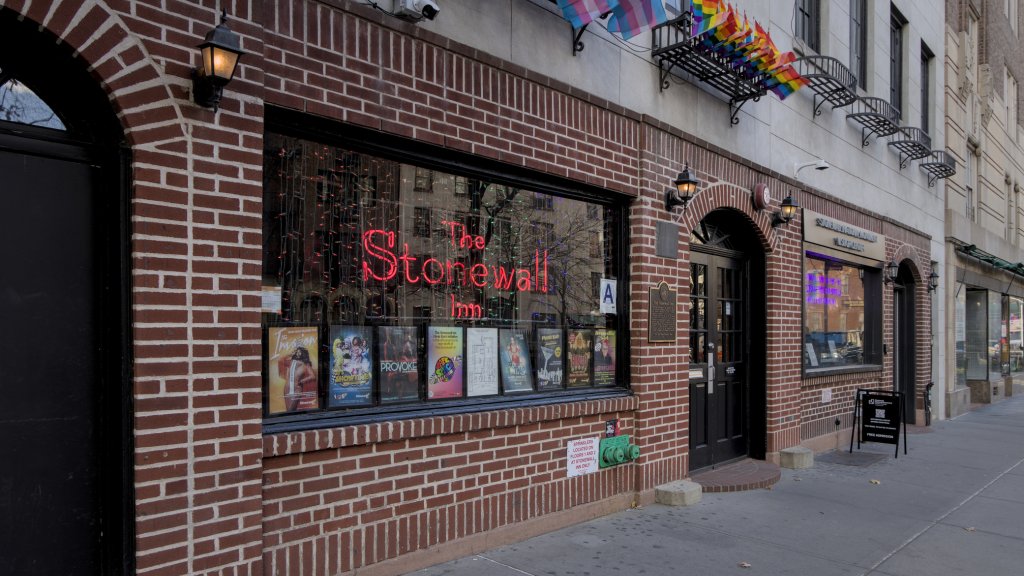
A journey back in time with a difference: more than five decades after the historic Stonewall uprising (German), people can now, for the first time, take a virtual tour of a detailed reconstruction of the bar where one of the most important events in the modern LGBTQ+ civil rights movement took place in 1969. A new three-dimensional model shows the original Stonewall Inn in New York’s Greenwich Village neighbourhood as it looked in the summer of that year.
Key points at a glance
- Historical reconstruction: a new digital 3D model shows the original Stonewall Inn in New York as it looked in the summer of 1969.
- Virtual tour: visitors can explore the entrance, cloakroom, dance floor and the jukebox’s location at the time, among other features.
- Extensive research: the NYC LGBTQ Historic Sites Project and Making Gay History developed the model using historical documents, photographs and eyewitness accounts.
- An important site in LGBTQ+ history: a police raid on 28 June 1969 triggered several days of protests that became a symbol of the modern LGBTQ+ civil rights movement.
- Original interiors lost: today’s Stonewall Inn occupies only part of its former footprint. Virtually nothing remains of the original interior.
- The digital reconstruction can be explored online free of charge worldwide.
A glimpse into 1969
The digital reconstruction was developed by the NYC LGBTQ Historic Sites Project and the organisation Making Gay History. The project has now been unveiled to mark LGBTQ+ History Month in October. The depiction is based on historical documents, photographs and eyewitnesses’ oral recollections. It encompasses both the original rooms of the Stonewall Inn and the surrounding Stonewall National Monument. Users can move virtually through the entrance area, cloakroom and dance floor. The former location of the jukebox has also been reconstructed. The project aims to convey what the bar looked like before the events of June 1969 made it famous around the world.
The most comprehensive resource yet
Ken Lustbader, co-director of the NYC LGBTQ Historic Sites Project, described the reconstruction as a documentation project unlike any before it. “This is the most comprehensive resource to date showing us what the bar’s interior looked like in 1969 and what the atmosphere was like. It has been reconstructed with the utmost care using archival materials and historical research.” He also stressed: “For us as preservationists, it is important to understand and experience the bar as it existed at the time of the Stonewall uprising, which unfolded in the surrounding streets.” Lustbader also highlighted the possibilities offered by digital technologies. “Immersive technologies such as this 3D model create a powerful, immediate connection to our shared LGBTQ+ and American history, of which Stonewall is an inseparable part.” The reconstruction is accessible online. There is no need to travel to New York.
Remarkable eyewitness accounts
Eric Marcus, executive director of Making Gay History and founder and host of the award-winning podcast of the same name, also sees the project as a new way to bring history to life. “The 3D model is accessible to anyone, anywhere – all you need is a smartphone or computer and an internet connection. It is an incredibly powerful way to connect with our community’s history.” Making Gay History documents, among other things, the recollections of people who experienced important events in the LGBTQ+ movement first-hand. “This new digital tool complements the stories we feature in our podcast – when we hear older LGBTQ+ people describe in their own voices what they saw and experienced during the Stonewall uprising.”
Marcus pointed to the opportunity to connect the events described with their historical setting. “Thanks to this easily accessible tool, we can now see exactly what the long-lost place looked like that these people experienced before and on the night of the uprising.” Until now, the bar’s original appearance could only be pieced together from archival material and descriptions. “When I tell people that virtually nothing remains of the Stonewall Inn’s original interior, I can now send them the link to the 3D model so they can see what the place looked like more than 50 years ago.”
The Mafia as operators
The history of the Stonewall Inn dates back to the 1930s. At that time, the establishment at 51–53 Christopher Street in Manhattan operated under the name Bonnie’s Stonewall Inn. Ownership changed several times over the following decades. In 1967, three Mafia members reopened the establishment as a gay bar. A central role was played by Tony Lauria, known by the nickname “Fat Tony”. It was not unusual at the time for criminal organisations to run such establishments. Gay people faced social discrimination and state persecution. Many patrons therefore wanted to avoid contact with the police.
The operators were able to exploit this situation, for example by diluting alcoholic drinks and selling them without fear of complaints to the authorities. Some customers were also blackmailed with threats to make their sexual orientation public. The Stonewall Inn was estimated to be the largest gay bar in the United States at the time. One distinctive feature was the dance floor. Unlike in many other New York gay bars, dancing was allowed there. This made the venue particularly popular with younger patrons and an important meeting place for the gay community.
Police raid in June 1969
In the early hours of 28 June 1969, New York police raided the Stonewall Inn. Such operations were not uncommon at the time. Gay bars were regularly searched on the pretext of disorderly conditions or the need to check compliance with alcohol licensing regulations. Police could also arrest people whose clothing was considered inappropriate for their sex by the standards of the time. This put drag queens at particular risk. Patrons of the Stonewall Inn were also affected by such measures. There had already been a police raid at the bar just a few days before 28 June. When officers intervened again on that hot summer night, patrons resisted.
The confrontations spread into protests on the surrounding streets, lasting several nights. They became a central reference point for the modern LGBTQ+ civil rights movement in the United States and beyond. On the first anniversary of the uprising in 1970, a commemorative march was held in New York. It is regarded as the city’s first gay and lesbian Pride march. The demonstration commemorated the previous year’s events while also making gay people’s demands for social acceptance and equal rights publicly visible. In the decades that followed, Stonewall became a worldwide symbol of resistance to discrimination against sexual and gender minorities.
The bar’s eventful history
The historic site itself, however, changed considerably. Almost nothing of the original interior survived. The Stonewall Inn closed just a short time after the uprising. It was not until the period between 1987 and 1989 that a bar named Stonewall once again operated at 51 Christopher Street. After it closed, the original vertical “Stonewall” sign was also removed. In 1990, an establishment called Jimmy’s Stonewall Place opened next door at 53 Christopher Street. A year later, it was renamed Stonewall. Since 2006, the bar has been run by its current management under the name Stonewall Inn. However, it occupies only part of the space taken up by the original establishment in the 1960s. The interiors of that time no longer exist. Anyone visiting the Stonewall Inn today is therefore entering a historically significant place, but no longer sees the original layout and furnishings of 1969.
The Stonewall Inn’s historical significance has been officially recognised several times in the United States. In 1999, the site was added to the National Register of Historic Places, the national register of historically significant sites. In 2000, it was designated a National Historic Landmark, a further distinction recognising its outstanding importance in American history. Finally, in 2016, Stonewall was declared the first National Monument in the United States explicitly dedicated to the LGBTQ+ civil rights movement. Go straight to the 3D model here.








