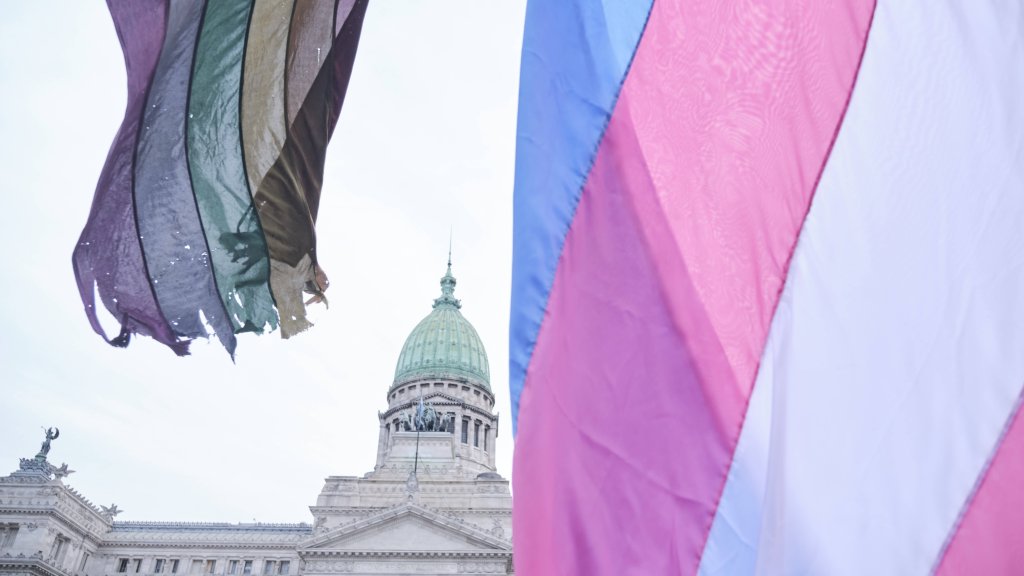
A group of dozens of youths chased and brutally beat several trans women in the Argentinian capital, Buenos Aires. At least six people were injured in the attack in the Bosques de Palermo. The perpetrators are alleged to have attacked their victims with sticks, stones and other objects. Afterwards, participants shared footage they had filmed of the violence on social media.
The key points at a glance
- Violence in Buenos Aires: several trans women were attacked by a large group of youths in the Bosques de Palermo in early November.
- At least six injured: the perpetrators struck with sticks, stones and other objects. One woman suffered a serious ear injury.
- Up to 200 attackers: while initial reports put the number of youths at 50 to 60, women who witnessed the attack have since spoken of up to 200 participants.
- Videos online: the attackers shared footage of the violence on social media, accompanied by transphobic insults.
- Investigation launched: prosecutors are investigating suspected assault motivated by hatred of the victims' gender identity.
- Protests at Pride: thousands of people demonstrated in Buenos Aires for justice and better protection for LGBTQ+ people.
- Rising hate crime: according to Argentinian organisations, the number of documented hate crimes against LGBTQ+ people rose by around 62 per cent in 2025.
Community in shock
The Argentinian judicial authorities are investigating assault, taking into account a possible hate motive based on the victims' gender identity. The incident only became public after several days, prompting protests across the country. The attacks also became a central issue at the Pride demonstration in Buenos Aires. According to reporting by the Spanish newspaper “El País”, the attack took place near the Lago de Regatas. The area concerned, within the extensive park, is known as a place where trans women who are sex workers spend time and work. According to the reports, the youths initially began provoking and insulting the women. They then turned to physical violence, chasing their victims and beating them.
Around 200 attackers
Accounts differ as to the actual number of people involved. Initial reports put the figure at 50 to 60 youths, many of whom were reportedly on bicycles. Some women who witnessed the attack have since described a considerably larger group of 150 to 200 people. Accounts of the perpetrators' actions are particularly shocking. Videos appeared on Instagram and TikTok that had been posted by participants themselves. The footage was accompanied by transphobic insults and mocking emojis. One post contained the Spanish phrase “A correr a los trabas”, which includes a derogatory term for trans people and translates roughly as “Go on, chase the trans women”. Another participant explicitly described himself as a “matatrans”, meaning “trans killer”. According to the Buenos Aires city ombudsman's office, the Defensoría del Pueblo, at least one of the victims suffered a serious injury to an ear, but none of the victims' lives were in danger.
Serious injuries
The witnesses include trans activist Noelia Pérez, also known as Noe “La Diosa”. She was at the scene during the attack and managed to reach safety. Speaking to Radio Provincia, Pérez reported significant injuries to several women. One victim reportedly suffered a head injury that required ten stitches. Another woman's injuries reportedly included damage to silicone implants. “They cut off one woman's ear and injured another woman's head, back, leg and silicone implants. Bruising around the eyes. It was an extremely serious incident. It was all planned,” the activist said, according to Argentinian media.
Planned brutal attack
Pérez believes the perpetrators came to the park specifically to attack the women. Among the reasons she cited was that they had already brought objects that could be used as weapons. There were also reportedly attempts to steal handbags and mobile phones. “They came specifically to hurt us, to beat us, to kill us. It was a full-blown hunt. They treated us like animals. They came to hunt us down,” Pérez said.
Other victims also described dramatic scenes. A woman named Leticia told television channel C5N that she had hidden among trees while other women were surrounded by attackers. Bystanders had been unable to intervene. Valen, one of the injured women, told news website “Infobae” how she had been beaten and had tried to defend herself with a stick. In her view, she could have been killed if she had remained on the ground.
Prosecutors seek witnesses
The investigation is being led by the Fiscalía Penal public prosecutor's office in Buenos Aires. The office, whose responsibilities include discrimination offences, is headed by prosecutor Andrea Scanga. According to the newspaper “La Nación”, CCTV footage has been requested. Investigators are also seeking witnesses who can help identify the attackers. Apparently, no arrests have been made so far.
Meanwhile, several victims sought support from the ombudsman's office. There, they met María Rachid, who heads the institute against discrimination. At a press conference, the women said this was the third time since the start of the year that they had been victims of a similar attack. They demanded more effective protection and firmer action against the violence. “This is something we have been experiencing for a very long time. It is unbearable now,” the victims said. Noelia Pérez also criticised what she saw as unequal treatment by the authorities. In her view, if 50 trans people had gone hunting for men together, they would have been arrested and imprisoned immediately.
Calls for action
After the violence became public, the Federación Argentina LGBT+ announced that it would pursue criminal proceedings. The organisation wants those responsible to be identified and held legally accountable. “We will tolerate neither violence nor impunity,” the organisation said. Amnesty International also responded to the incident. The human rights organisation called on the investigating authorities to explicitly examine a possible discriminatory motive for the attack and to ensure the protection of the women affected. The victims also received support from well-known Argentinian female singers.
The attack also shaped the Pride parade in Buenos Aires last weekend. Thousands of people took part in the demonstration to demand justice for the injured women and better protection against discrimination. Pride took place a day before Pope Leo XIV's planned arrival in Argentina. Weeks earlier, the papal visit had already prompted disputes between the organisers and the capital's authorities. The city administration had initially announced restrictions on public events during this period for security reasons. LGBTQ+ organisations opposed postponing the Pride parade. The demonstration ultimately went ahead as planned, albeit on a different route.
Hate crimes against LGBTQ+ people
The attack in Buenos Aires comes at a time when Argentinian human rights organisations are recording a marked increase in violence against LGBTQ+ people. Only recently, a gay activist was also brutally attacked. According to the Observatorio Nacional de Crímenes de Odio LGBT+, a total of 227 hate crimes against LGBTQ+ people were documented in Argentina in 2025. The figure a year earlier was 140. This represents an increase of around 62 per cent. According to the EU Agency for Fundamental Rights, 90 per cent of attacks are never reported. In the view of several LGBTQ+ organisations, statements by President Javier Milei and his government's policies contribute to reinforcing prejudice and social hostility towards sexual and gender minorities. There is, however, no direct link between the government's political positions and the acts of violence.








