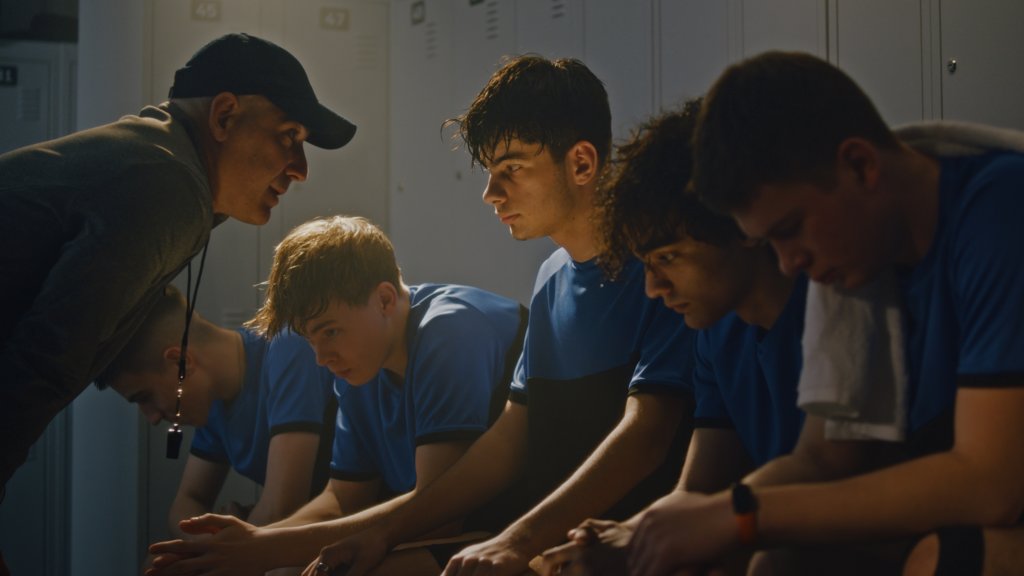
Gay footballers in Italy should receive greater protection against discrimination. A new initiative by the Jungdemokraten in the southern Italian city of Lecce aims to highlight persistent homophobia in sport and spark a public debate about the treatment of LGBTQ+ people. Under the title “Nobody Talks About It”, it will focus in particular on the silence surrounding homosexuality in football, the difficulties of coming out and the responsibilities of clubs, the media and politicians.
Key points at a glance
- Initiative against homophobia: the Jungdemokraten in Lecce, southern Italy, want to raise public awareness of discrimination against and exclusion of gay athletes.
- Silence in professional football: fear of hostility and damage to their careers means many gay footballers continue to hide their sexual orientation.
- Youth and amateur football also affected: peer pressure and traditional notions of masculinity can lead young athletes to conceal their identity or give up sport.
- Criticism of the media and politicians: the organisers are calling for more responsible reporting on coming out and more political action against homophobia.
- Public discussion planned: academics, journalists and psychologists will discuss practical improvements in Lecce.
The problem in men's football
The organisers believe significant barriers to being open about one's sexual orientation persist, particularly in men's football. They say that while social attitudes have changed in many areas, traditional notions of masculinity and strength still shape the atmosphere in many teams. The small number of openly gay professional footballers is not, they argue, an indication that there are hardly any gay players. Rather, fear of negative reactions from teammates, coaches, club management and fans may lead those affected to conceal their sexual orientation.
Fear of coming out
Several well-known athletes have publicly described how gay footballers continue to face prejudice even in professional sport. Czech footballer Jakub Jankto (German) spoke after coming out about his fear of being judged by others. Australian professional footballer Josh Cavallo (German) has also spoken about homophobia and the difficulties of being accepted in football as an openly gay player. In the Italian initiative's assessment, the problem extends far beyond professional sport. Particularly in youth and amateur football, peer pressure, derogatory remarks and rigid gender stereotypes could lead young gay athletes to suppress their identity.
The consequences could range from social isolation and self-censorship to withdrawing from club life altogether. The initiative therefore aims not only to tackle overt discrimination but also to address less visible forms of exclusion. Alessandro Mongelli, who is responsible for sport and entertainment at the Jungdemokraten, sees a stark contradiction between the social values of sport and the experiences of many LGBTQ+ athletes. “Sport should teach respect, teamwork and the value of personal effort. Yet it remains one of the areas in which it is particularly difficult to be yourself. In sports considered especially ‘masculine’, it is hard to find active athletes who have come out. Not because there are no athletes from the LGBTQ+ community there, but because the silence speaks for them,” Mongelli explained.
Protection against discrimination
For many gay athletes, keeping their sexual orientation private remains a conscious decision. Mongelli sees this as the consequence of an environment in which coming out can carry personal and professional risks. “Unfortunately, silence is still often the best way to survive in an environment that seems increasingly toxic and closed-minded. Fortunately, things are slowly improving. More and more athletes feel safe enough to come out, breaking through the wall of silence that so often surrounds sport.”
The initiative aims to make these mechanisms visible and advance the discussion about change within sports clubs. This also involves asking how teams, coaches and club officials can create an atmosphere in which nobody has to fear being disadvantaged because of their sexual orientation. Mongelli also stresses: “With ‘Nobody Talks About It’, we are not claiming that we will break this silence. But we at least want to make the issue visible, because it is often handled poorly or, worse still, forgotten entirely.” To this end, experts from academia, the media and human rights work will be brought together. “We will speak to people who study the phenomenon, report on it and stand up for rights every day. Because a changing room, a spectator stand or a sports ground on the outskirts of town must be safe places for everyone.”
Criticism of media coverage
Another focus of the initiative is the media's treatment of gay athletes. In the organisers' view, coming out in professional sport is still often portrayed as an extraordinary event rather than a natural expression of personal freedom. Finn Capoccia, who is responsible for rights, equal opportunities and the European Union at the Jungdemokraten, is therefore calling for a fundamental shift in public perception. “In a society where younger generations are loudly demanding a world without prejudice, sport and everyone involved in it have a duty to adapt. Yet despite the move towards a more open and diverse future, we still experience a bitter reality far too often: an athlete simply coming out becomes a media event and a pretext for unjustified attacks on the LGBTQ+ community, which is systematically portrayed as a minority to be pushed to the margins.” The initiative therefore also wants to discuss how the media can report on homosexuality in football without violating players' privacy or reinforcing existing prejudices. In particular, it will address the question of how public visibility and personal self-determination can be reconciled.
Psychological pressures
Alongside the potential damage to a career caused by coming out, the initiative is also focusing on the psychological consequences of discrimination. A hostile team atmosphere, it argues, can directly affect athletes' wellbeing and performance. Those regularly subjected to insults or forced to hide their identity may be unable to concentrate fully on training and competition. Capoccia therefore believes greater attention must also be paid to the mental health of gay athletes. “As more and more people feel the need to be open and express their identity and sexuality freely, it is unacceptable to allow space for insults or tolerate a hostile environment that prevents athletes from pursuing their passion without worry.”
The importance of a supportive environment, he says, goes beyond protection against discrimination. “In sport, the psychological component is fundamental. Inner calm helps develop the winning mindset that enables people to make the best possible use of their physical performance and existing skills to achieve their intended result.” The organisers therefore also see clubs as having a responsibility to foster a respectful team atmosphere and offer appropriate support to those affected.
Politicians and clubs
In the view of Lecce's Jungdemokraten, isolated expressions of solidarity against homophobia are not enough. Instead, the issue must be addressed on an ongoing basis in sports policy and within club structures. Capoccia criticises both the media and political decision-makers for having done too little so far to improve the situation. “Although the issue is of central importance, the media do not give it enough space, and politicians struggle to find a forward-looking approach to improving current conditions.”
Through their initiative, the Jungdemokraten therefore want to facilitate an exchange between sports clubs, academics, media representatives and human rights organisations. It is particularly important to the organisers to reach people directly involved in youth and amateur football. Coaches, club chairs and support staff could make a decisive contribution to tackling discrimination at an early stage and supporting young athletes. The initiative's aims will be presented and discussed this coming Sunday at Manifatture Knos in Lecce. “We want to create a space for listening and open discussion. Because nobody should feel forced to choose between who they are and the sport they love,” the organisers explain.








