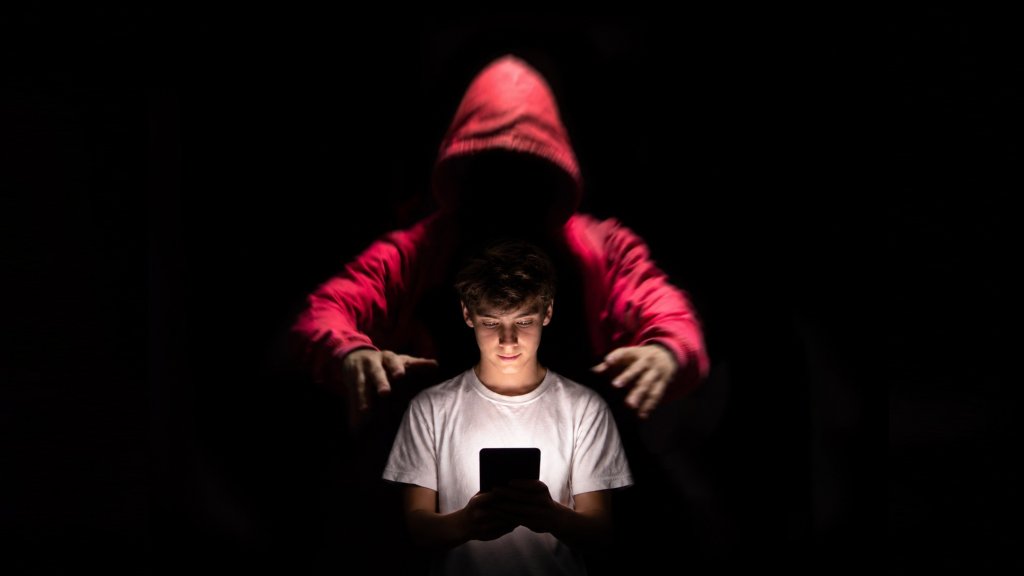
Sexual harassment, blackmail using intimate images and targeted approaches by adults are part of everyday digital life for many teenagers in Germany. A new survey now reveals how widespread these experiences are and how little many parents know about the dangers and their legal consequences.
Key points at a glance
- Widespread sexual violence: 33 per cent of 16- to 18-year-olds say they have already experienced sexual harassment, assaults or violence online.
- Targeted abuse: more than one in four teenagers is approached online by adults with sexual intentions. One in ten boys receives unsolicited nude images.
- Particular vulnerability: gay and queer teenagers can be particularly vulnerable to blackmail and sexual assaults because of discrimination, keeping their sexual orientation secret and fear of being outed against their will.
- Major gaps in parents’ knowledge: 57 per cent do not know the term cybergrooming, while 82 per cent have never heard of sextortion. 58 per cent do not know that adults can be committing a criminal offence by sending unsolicited sexual images to minors.
- Parents remain the first port of call: 38 per cent of the teenagers surveyed would turn to their parents first if they experienced sexual violence online, and 22 per cent to their peers.
- New awareness campaign: Federal Minister for Family Affairs Karin Prien and Commissioner for Child Sexual Abuse Issues Kerstin Claus today presented the fifth edition of the campaign “Don’t shirk your responsibility!”. Entertainer Riccardo Simonetti is also supporting the initiative.
Sexual assaults are an everyday occurrence
According to a Civey survey commissioned by the Federal Ministry for Family Affairs and the Independent Federal Commissioner for Child Sexual Abuse Issues, 33 per cent of 16- to 18-year-olds have already experienced sexual harassment, assaults or violence online. This means that one in three teenagers in this age group reports such experiences. More than a quarter of all teenagers are approached online by adults with sexual intentions. One in ten boys is sent unsolicited nude images. One in ten 16-year-old girls has been asked online by adults to undress in front of a camera.
The assaults often take place where teenagers spend a considerable proportion of their free time: on social networks, messaging services, online games and digital group chats. To mark the European Day on the Protection of Children against Sexual Exploitation and Sexual Abuse, Federal Minister for Family Affairs Karin Prien and Independent Federal Commissioner Kerstin Claus presented a new awareness campaign in Berlin today. Under the slogan “Don’t shirk your responsibility!”, it aims to raise awareness of the dangers among parents and other adults and encourage them to better protect children and teenagers in digital spaces.
Focus on LGBTQ+ teenagers
Sexual violence online can affect any minor. However, gay and queer teenagers may face additional risks. This applies particularly when they have not yet disclosed their sexual orientation or gender identity to their family or social circle. Many teenagers use the internet to find information about their sexuality, meet like-minded people or talk openly about their feelings for the first time. For LGBTQ+ teenagers in particular, digital communities can be important places for sharing experiences and finding support. However, perpetrators can also exploit this search for understanding and belonging.
Adults may, for example, pose as teenagers of the same age, build trust and then try to coerce them into providing intimate images or performing sexual acts. Such a situation becomes particularly dangerous when perpetrators threaten to out someone against their will. A gay teenager whose family does not know he is gay could, for example, be put under pressure because he fears his parents’ reactions. Perpetrators can deliberately exploit this fear to demand further images, money or sexual acts. Fear of rejection, discrimination or violence within their own social circle can also lead those affected to keep assaults secret. Anyone who fears that talking to their parents would also mean disclosing their sexual orientation may seek help later or not at all. This creates a particular vulnerability to blackmail.
Perpetrators’ methods
The campaign draws attention to various forms of sexual violence online. In what is known as cybergrooming, adults deliberately contact minors with the aim of initiating sexual acts or obtaining sexual content. This often begins with seemingly harmless conversations in chats, games or on social networks. Perpetrators may pose as teenagers or build a relationship of trust through compliments, attention and personal conversations. They may then try to obtain sexual images or persuade those affected to perform sexual acts in front of a camera.
Another form is sextortion, in which people are blackmailed using intimate images or videos. Perpetrators may, for example, threaten to forward the material to friends, family members or classmates unless their demands are met. So-called deepnudes are also an increasing problem. These are images generated or manipulated using artificial intelligence that appear to show people naked. Such images can be created without the involvement or consent of those affected. If they are then shared in class group chats, for example, this can cause considerable psychological distress and lead to further forms of blackmail or bullying.
Major gaps in parents’ knowledge
The Federal Commissioner and the Federal Ministry commissioned their own study from polling institute Civey for the campaign. In July 2026, 1,500 parents of children aged 13 to 18 and 500 teenagers aged 16 to 18 were surveyed. The results reveal not only the extent of sexual assaults but also significant gaps in adults’ knowledge. For example, 57 per cent of the parents surveyed have never heard of cybergrooming. Just 18 per cent are familiar with the term sextortion. There is also uncertainty about whether certain acts are criminal offences.
More than half of parents, 58 per cent, do not know that adults can be committing a criminal offence if they send unsolicited sexual images to minors. These include so-called dick pics: unsolicited images of a penis. Fewer than half of parents, 44 per cent, also know that people commit a criminal offence if they pay minors for sexual acts. Another finding is particularly worrying: a third of parents do not report sexual assaults against children and teenagers to the police because they do not know which acts are criminal offences. This lack of knowledge can mean that perpetrators are not held accountable and those affected do not receive adequate support.
The first people teenagers turn to
Despite these gaps in knowledge, the survey shows that parents play a central role when it comes to sexual violence online. 38 per cent of 16- to 18-year-olds say they would turn to their parents first if they had experienced sexual violence online. This puts parents well ahead of peers, whom 22 per cent would approach first. The findings highlight the importance of a trusting relationship between teenagers and their parents. This sense of security is particularly important for gay and queer teenagers. If parents make it clear that they accept their child’s sexual orientation or gender identity, this can remove an additional barrier to disclosing sexual assaults.
Greater responsibility
At the campaign launch, Federal Minister for Family Affairs Karin Prien stressed that sexual violence online had long ceased to be a marginal phenomenon. “These figures make it shockingly clear how real and commonplace sexual violence online is for children and teenagers. Every child has the right to be safe online too and to be protected from assaults,” the CDU politician said. Children and teenagers needed particular attention, she said. At the same time, parents needed more support. “Parents want to protect their children, but often feel at a loss when faced with the dangers in digital spaces. We must empower them and give them guidance so they can keep talking to their children and seek help if they suspect something is wrong,” Prien said.
The campaign was intended to make it clear that adults must take responsibility when there are indications of sexual assaults. “That is exactly what this campaign stands for: taking responsibility instead of looking away,” the minister explained. Prien also referred to the recommendations for action from the Independent Expert Commission on the Protection of Children and Young People in the Media. In the minister’s view, however, individual awareness-raising measures are not enough. A comprehensive political strategy was needed. “From early media education and empowering parents and professionals to clear rules and binding obligations for platform providers,” Prien said.
The problem is underestimated
The Independent Federal Commissioner for Child Sexual Abuse Issues, Kerstin Claus, also warned against underestimating the problem. “The problem of digital sexual violence against children and teenagers is bigger than most parents and adults imagine,” Claus said. It was particularly important to make parents aware that many sexual assaults online can be prosecuted. She also warned against accepting sexual boundary violations in digital spaces as inevitable or without legal consequences. “Children must not grow up feeling that anything goes online and that the internet is a space where offences go unpunished, or even where the law does not apply,” she stressed.
The joint campaign by the Federal Ministry of Education, Family Affairs, Senior Citizens, Women and Youth and the Independent Federal Commissioner for Child Sexual Abuse Issues is being run for the fifth time in 2026. Videos, posters, leaflets, postcards and brochures are intended to inform parents and other adults about the various forms of digital abuse. Several prominent figures are also taking part in the initiative. They include entertainer Riccardo Simonetti, who has publicly advocated for LGBTQ+ rights for years. Simonetti underlines the importance of open conversations between parents and children about potential dangers online. “I believe you can never be too young to talk to your parents about the dangers on the internet,” the entertainer explains.








