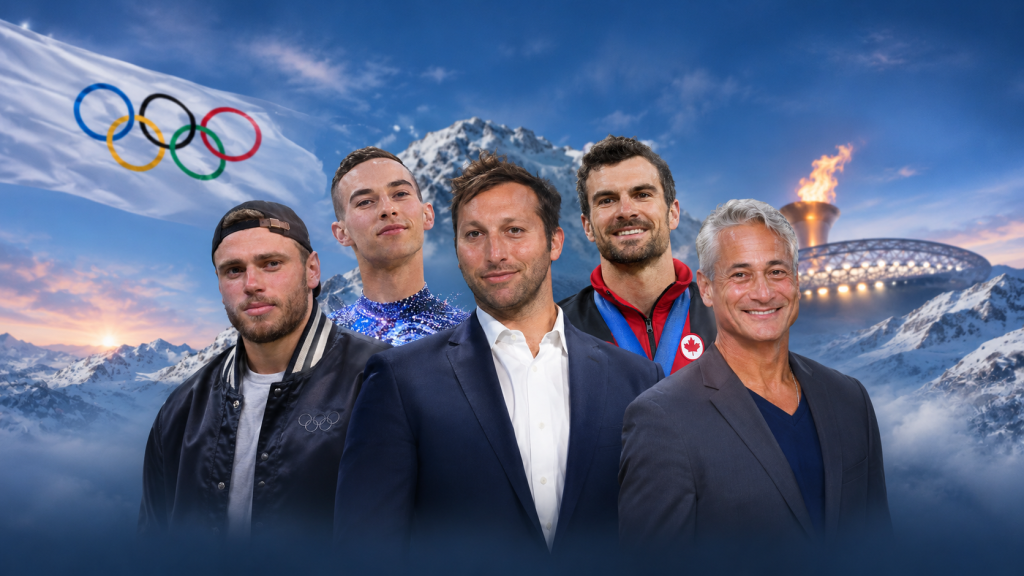
For many gay elite athletes, the decision to be open about their sexual orientation comes with considerable anxiety. They fear negative reactions from fans, sponsors or teammates and possible repercussions for their sporting careers. Yet several of the most successful Olympians look back on a very different experience: for them, coming out ranks among the most important and best decisions of their lives.
Key points at a glance
- Coming out as liberation: five successful Olympians describe how their lives changed after they publicly came out as gay.
- Ian Thorpe regrets his long silence: the Australian swimming star concealed his sexual orientation for fear of distractions during his career.
- Gus Kenworthy faced a serious crisis: after winning a silver medal in 2014, the freestyle skier struggled so much with hiding his sexuality that he developed suicidal thoughts.
- Adam Rippon feared repercussions: the figure skater worried that judges might give him lower scores after he came out.
- Eric Radford felt stronger: the Canadian Olympic champion says he became freer and more expressive on the ice after coming out publicly.
- Greg Louganis encourages young athletes: the four-time Olympic diving champion has advocated for LGBTQ+ people for decades.
A taboo in men's sport
Being gay was long considered a taboo subject, particularly in men's elite sport. Accordingly, reports about gay athletes often focused on uncertainty, rejection and fears of professional consequences. Now, more and more athletes are openly identifying as LGBTQ+. At least 186 openly LGBTQ+ athletes competed at the 2020 Summer Olympics in Tokyo. At the 2022 Winter Games in Beijing, there were at least 36. High participation was also recorded at the 2024 Summer Games in Paris. The experiences of five well-known Olympians show how different the path to coming out publicly can be. All describe a sense of personal liberation, which in some cases also affected their sporting performances.
Fear of distraction
Australian swimmer Ian Thorpe (44) won five Olympic gold medals during his career, making him one of his country's most successful athletes. He made a particular impression at the 2000 Olympic Games in Sydney. In front of a home crowd, he won three gold and two silver medals. During his competitive career, however, Thorpe avoided speaking publicly about being gay. It was not until 2014, around 14 years after his major successes in Sydney, that he made his sexual orientation public. Today, the former swimming star regrets not having taken that step sooner.
In an interview with the Australian newspaper Daily Telegraph, Thorpe explained that he had wanted to avoid any possible distraction during his career. He had feared that public discussions about his sexuality could affect his focus on sport. “Every time it is suggested that you might be gay, you see it as something negative. And as a young person, you turn it into something much bigger than it really needs to be. So I answered ‘No’.” When Thorpe finally spoke publicly about being gay in 2014, he received widespread support. He now wants to share that experience with younger athletes who are not yet living openly because they fear possible reactions. “I feel comfortable saying that I am a gay man,” he explained. “And I don't want other people to have to feel the way I did back then. You can grow up, feel comfortable and be gay.”
A serious personal crisis
For American freestyle skier Gus Kenworthy (35) (German), the period following one of his greatest sporting successes turned out to be a particularly difficult time in his life. At the 2014 Winter Olympics in Sochi, he won a silver medal. Numerous interviews and public appearances followed. Because his media engagements took place around Valentine's Day, Kenworthy was repeatedly asked about his love life. The athlete, who had not yet come out publicly, found these situations extremely distressing. He had to answer questions about his private life without being able to speak openly about being gay. His mental health deteriorated significantly at the time: “I thought about killing myself because I couldn't imagine waking up every day and lying all day long,” he told the BBC.
In 2015, Kenworthy finally decided to come out publicly. On Twitter (now X), he posted the three words “I am gay”. The decision made him extremely nervous. “The night before, I knew that everything would change and everyone would know my truth,” he recalled. “I could barely sleep, and when the article came out, I was an emotional wreck.” The reactions, however, were much more positive than he had feared. Many people contacted him to express their support. “I received so much support, and that was the most important realisation. I heard from people I would never have expected to hear from. And I remember how loved I felt.”
Worries about lower scores
American figure skater Adam Rippon (37) (German) also initially feared professional repercussions from coming out publicly. Rippon was one of the best-known members of the American team at the 2018 Winter Olympics in Pyeongchang, South Korea. He won a bronze medal there in the team event. His decision not to meet the then US Vice President Mike Pence attracted additional attention. Pence was controversial because of his opposition to gay people's rights. Before Rippon spoke openly about being gay, however, he had considerable doubts of his own. “When I came out, I was afraid it would affect how I was judged,” Rippon told the US sports broadcaster ESPN.
His concerns proved unfounded. He competed at the Olympic Games as an openly gay athlete and was subsequently celebrated in the US. Looking back, Rippon described coming out as an experience that had fundamentally changed his self-confidence. “It's just incredibly frightening, and there are so many things that come with it. But you feel so powerful,” he explained. “When that weight lifts from your shoulders, it's as though the sky opens up and you could move mountains. That experience made me feel strong and brave.”
Freer on the ice
Canadian figure skater Eric Radford (46) made history at the Winter Olympics. He became the first openly gay male athlete to win a gold medal at a Winter Games. Radford says that coming out publicly changed not only his private life but also how he performed as an athlete. He had already spoken openly about being gay with friends and relatives. “I had come out to my friends and family, so I felt very comfortable around them and was at peace with myself. But when I came out publicly, that feeling carried over onto the ice even more strongly, because I no longer had to hide anything from anyone in public.”
Radford compared the relief to the feeling of shedding a heavy burden. “It was as though bricks were being lifted from my shoulders. When you initially come out only at home, within your family, you feel lighter because you can be more yourself.” His expressiveness as an athlete also changed, he said. “I remember just feeling so free and being much more expressive on the ice. I also felt much more connected to Meagan because I was no longer pretending to be someone I wasn't.” Meagan Duhamel was Eric Radford's long-time figure skating partner.
Victories despite an HIV diagnosis
American diver Greg Louganis (66) is also among the most successful gay Olympians. At the 1984 Summer Olympics in Los Angeles and the 1988 Games in Seoul, he won a total of four gold medals. His successes at the Seoul Games came amid particular difficulties. During the competition, Louganis hit his head on the diving board. Despite the accident, he continued competing and won gold again. At the same time, he was living with an HIV diagnosis that was not publicly known at the time. In the 1980s, given the limited treatment options, HIV infection was considered a life-threatening condition with an extremely poor prognosis for many of those affected.
Alongside the pressure to perform in sport, Louganis therefore also had to cope with the psychological burden of keeping his diagnosis secret. He came out publicly as gay at the Gay Games in 1994. In the decades that followed, the former diver became a prominent advocate for LGBTQ+ people. “We all carry a hero within us who can help us be the best version of ourselves. If we continue to express that, then we will have lived a life we can be proud of,” the elite athlete said.








