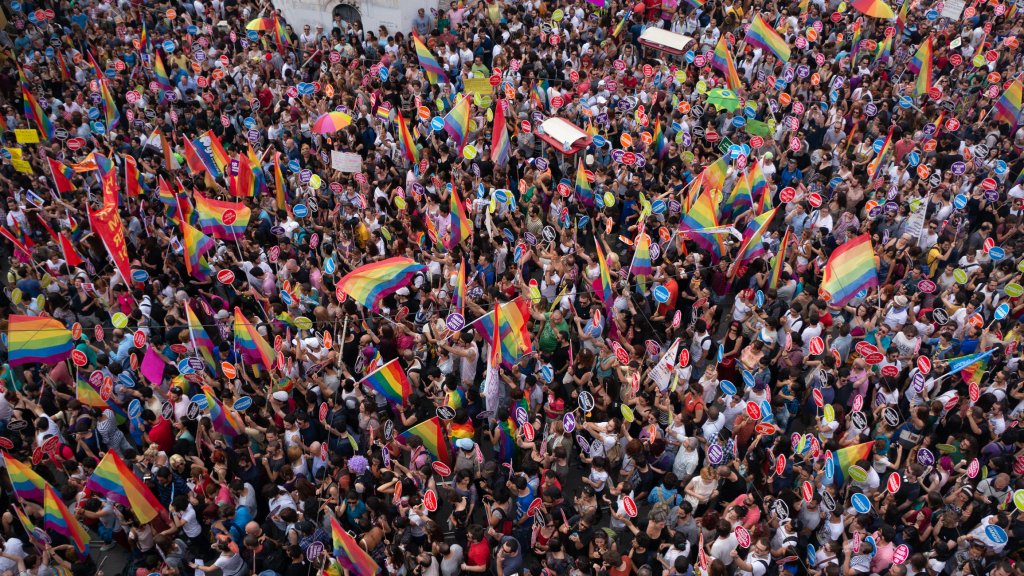
The Pride movement could in future gain a place on UNESCO’s list of the intangible cultural heritage of humanity (German). The Netherlands is currently preparing a nomination. Demonstrating that people worldwide see the movement as a significant cultural tradition is expected to be crucial to the initiative’s success. A new petition has now also been launched to give the initiative momentum — around 10,000 people have signed so far.
The key points at a glance
- UNESCO lists more than 800 living traditions as intangible cultural heritage of humanity.
- According to the campaign, none of these traditions has so far come from the LGBTQ+ community.
- The Netherlands is preparing to nominate the Pride movement for the UNESCO list.
- Pride is understood here as a living culture encompassing celebration, remembrance and protest.
- A petition aims to show that people worldwide regard the Pride movement as cultural heritage worth protecting.
Pride as a living culture
According to the organisers, UNESCO recognises more than 800 living traditions as intangible cultural heritage. However, they say that no tradition from the LGBTQ+ community has yet been included. The organisers explicitly understand Pride as more than just an annual parade. The movement also encompasses collective celebration, remembrance and protest. They say these forms of expression are passed on within the community, shaping a living culture. At the same time, Pride and LGBTQ+ people continue to face restrictions and attacks in many places. The planned UNESCO nomination is therefore also intended to highlight the movement’s cultural and social significance.
A petition for worldwide support
To support the Netherlands’ bid, the organisation All Out has launched a petition. It aims to document that Pride genuinely has important cultural significance for the people who live it and help shape it. Alongside their signatures, supporters can contribute personal stories about what Pride means to them. The organisers believe that participation on the broadest possible scale can strengthen the nomination. “It takes less than a minute — and could make history,” the appeal states. The campaign also encourages people to share the petition on social media and with people they know. The more people express their support, the greater the weight the cause will carry, the organisers say.
More than celebrating and demonstrating
The initiative thus raises a fundamental question: can a social movement consisting of protest, remembrance, community and public celebration also be understood as a cultural tradition? The organisers’ answer is yes. They describe Pride as “living culture” passed on from generation to generation. Inclusion on the UNESCO list would give this history and its associated traditions greater international visibility.








