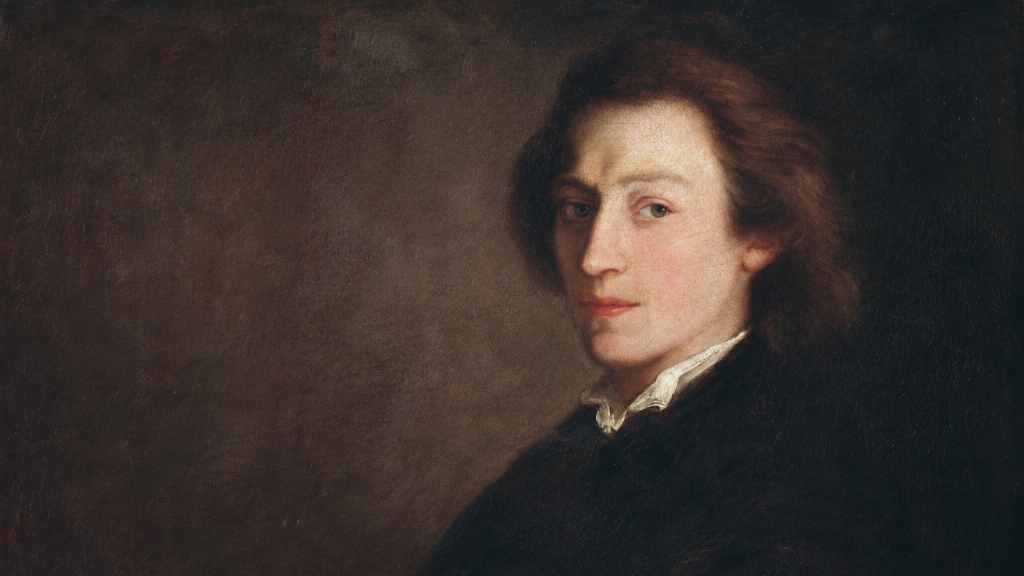
Frédéric Chopin is one of the most important composers in music history and is still regarded as a national hero in Poland. His piano works are known worldwide, but his private life continues to raise questions. In particular, his passionate letters to male friends suggest that the musician, who died in 1849, had romantic feelings for men. A recent book examines this evidence, challenging traditional accounts of his life. Poland, meanwhile, is now digging in its heels, refusing to entertain the possibility that the composer was gay.
Key points at a glance
- New insights into Chopin: Swiss music journalist Moritz Weber examines the celebrated composer’s relationships and love letters in his book “Chopins Männer”.
- Intimate words to a childhood friend: Chopin wrote numerous letters to landowner Tytus Woyciechowski, expressing his affection and longing.
- Gaps in the historical record: Many documents have been lost or censored. How Chopin himself would have understood his sexual orientation cannot be conclusively established.
- New cinema release sparks debate: The Polish biopic “Chopin – Eine Sonate für Paris” portrays a fun-loving composer but largely leaves out possible same-sex relationships.
- Poland refuses to entertain the possibility of a gay national hero and is digging in its heels.
Love letters to Tytus
Swiss music journalist and radio editor Moritz Weber has studied Chopin’s correspondence and historical documents in depth. In his book “Chopins Männer”, he paints a picture of the composer that differs markedly from the long-established image of an artist attracted exclusively to women. Weber had already presented his research in the Swiss radio series “Chopin Was Gay – and No One Was Supposed to Find Out” in 2020. His investigation centres on Chopin’s relationship with Tytus Woyciechowski, a landowner whom the composer had known since childhood. The surviving letters document an exceptionally intense emotional bond. Chopin wrote to his friend: “You taught me to feel.” Elsewhere, he declared: “I love only you.”
Physical affection was also explicitly mentioned in the correspondence. Chopin announced, for example: “I will caress you again in a week.” Another remark by the composer is particularly personal. In it, he recalled “the dirty dream I had about you”. For Weber, such phrases are among the strongest indications that Chopin’s feelings for Woyciechowski may have gone beyond an ordinary friendship. Effusive expressions of affection between men were admittedly not unusual in the 19th century. In Weber’s interpretation, however, the repeated declarations of love and erotic allusions also allow for a romantic or sexual reading.
The lovers’ long separation
The bond between Chopin and Woyciechowski was made considerably more difficult by the political and personal upheavals of their time. After Chopin moved to Paris and revolutionary events unfolded in Poland, the two men lost touch for a long time. In all, they did not see each other again for 19 years. Woyciechowski later married and became the father of four children. Chopin’s attachment to his childhood friend was also reflected in his music. More than ten compositions are associated with dedications to Woyciechowski. However, the surviving letters represent only one side of the correspondence. Woyciechowski’s letters to Chopin are said to have been burnt during the Second World War. A significant part of the historical record is therefore missing. Whether Woyciechowski returned his friend’s feelings cannot be clearly established.
Chopin’s sexuality remains taboo
Traditional biographies portrayed Chopin primarily as a sensitive artist whose love life revolved around women. Weber challenges this account. He also considers stories about the composer’s alleged engagements insufficiently substantiated or later inventions. In his view, social attitudes towards homosexuality played a decisive role in this. In the 19th century, same-sex relationships carried considerable social stigma in many places. Later biographers, too, often viewed evidence of homosexual feelings through the moral values of their own time. In addition, parts of Chopin’s correspondence were censored or lost.
Weber did not limit his investigation to Chopin’s private correspondence. He also studied historical documents on the social circumstances of homosexual men in Paris. In Paris, Chopin moved in artistic circles that included homosexual men. The composer was therefore familiar with a social environment in which same-sex relationships were possible despite public disapproval. In a letter from the 1830s, he described Parisian life with striking enthusiasm: “One can enjoy oneself here with cautious ease. Huge things, magnificent urinals, where there is nevertheless no room to urinate. Everyone educated, everyone washed!”
New Chopin film
While historical research is opening up new perspectives on Chopin’s private life, a recent cinema production takes a different focus. The Polish film “Chopin – Eine Sonate für Paris”, directed by Michał Kwieciński, is now also showing in German cinemas. Eryk Kulm plays the lead role. He portrays the composer not only as a melancholy artist, but also as a self-confident, sometimes vain and humorous young man who enjoys Parisian social life. This marks a departure from the traditional image of the sickly musician who longs for his Polish homeland and expresses his feelings primarily through piano compositions. His tuberculosis becomes a pivotal part of the plot.
After the diagnosis, he is advised to get fresh air and sunshine. The possibility of marriage is also raised, something the composer does not feel emotionally capable of. Frédéric Chopin died of tuberculosis in 1849 at the age of 39. Writing in “Welt”, culture journalist Manuel Brug criticises the film for avoiding an examination of Chopin’s possible same-sex feelings despite its more modern portrayal. In his view, the production offered an opportunity to consider his relationship with Woyciechowski or other evidence of Chopin’s love for men. Brug also criticises the film for changing historical facts in the interests of dramatic storytelling.
Poland and its national hero
The question of Chopin’s sexual orientation also touches on the composer’s importance to Polish national identity. Chopin is one of the country’s best-known figures internationally. Warsaw’s airport bears his name, and his music is part of Poland’s cultural identity. Traditional accounts often portray him as a patriotic artist whose work is closely linked to a longing for his homeland. The possibility that he was gay does not readily fit this historically established image. The way such questions are addressed also remains strongly influenced by conservative social and religious beliefs. The Catholic Church has traditionally held considerable cultural influence in Poland. Certain circles in Poland are therefore determined to keep insisting that the composer was not gay.
The handling of Chopin’s possible homosexuality recalls the controversies surrounding other famous composers. One example is the Russian musician Peter Tschaikowsky, whose same-sex relationships and personal letters were likewise long subject to concealment and sanitised accounts. Among those with whom Tschaikowsky exchanged personal letters was his brother Modest, who was also homosexual.








